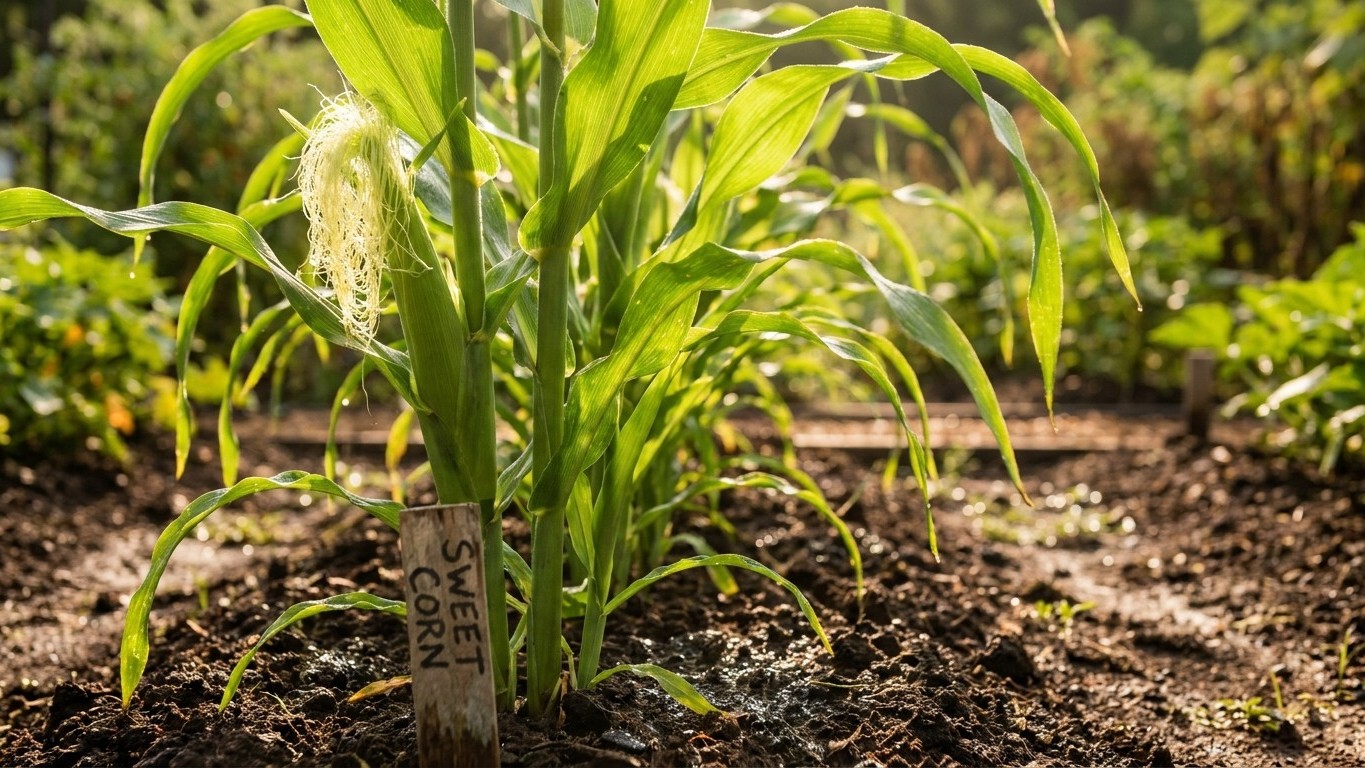

Sweet corn can ripen in Wyoming, but only in the narrow window between when the soil finally warms and when the first fall frost lands. That window is real, it is short, and it punishes any variety chosen for a longer growing season somewhere else. Get the soil temperature right, pick a variety built for 60 to 70 days, and a harvest is possible. Push past that, and the ears never fill before the cold returns.
The short answer
Start with the date most gardeners fixate on: the last spring frost, which falls between May 7 and May 18 across the state, based on NOAA NCEI climate normals. That date matters for tomatoes and peppers. It does not matter for sweet corn, at least not directly. Corn germinates by soil temperature, not by whether frost is still a risk. Soil needs to sit above 60 F, and that threshold arrives well after the last frost date, sometimes stretching into early June at higher elevations where the ground holds onto spring chill longer than the air does.
That gap between frost date and soil-ready date is the part most planting calendars skip. A gardener who sows the day after the last frost, using the frost date as the green light, will drop seed into soil still too cold to sprout it reliably. The seed can rot before it germinates. So the real starting line for sweet corn in Wyoming isn’t a date on a calendar. It’s a soil thermometer reading.
Once that threshold is met, the clock starts: sweet corn needs 60 to 90 days from planting to maturity, according to Utah State University Extension. Count forward from a realistic planting date, likely early to mid-June for many parts of the state, and measure against the first fall frost, which arrives between September 24 and October 5. That gives roughly 110 to 125 days of usable growing time in a typical year, tighter at elevation, looser at lower valley locations where the frost date and soil warm-up both run earlier.
A 60-day variety fits that window with room to spare. A 90-day variety is cutting it close, and in a year where soil warms late or frost arrives early, it may not finish at all. Roughly 130 frost-free days exist at 6,000 feet on average, but frost is possible in any month at higher elevations. That single fact should shape every planting decision made here. Season extension, meaning cold frames, row cover, or black plastic mulch to warm soil faster, isn’t a nice-to-have in this climate. It’s close to mandatory for anyone planting on the later end of that maturity range.
Heat is a smaller factor than season length. The reference station near Cheyenne averages just 10.4 days a year above 90 F, according to NOAA NCEI climate normals. That’s a mild heat load compared to corn country in the Midwest, and it means water stress and heat damage are rarely the reason a Wyoming corn crop fails. The failure, when it happens, almost always traces back to timing rather than temperature extremes.
Does a late variety fit here?
The maturity number printed on a seed packet, whether it says 60 days or 90 days, isn’t a suggestion. It’s the manufacturer’s estimate of how long that variety needs from planting to harvest under decent conditions. In a state where the growing season runs roughly 110 to 130 days depending on elevation, that number decides whether a variety is even worth planting.
The 60-day variety
A 60-day variety is the safer bet almost everywhere in Wyoming. Planted once soil hits 60 F, likely by early June in most locations, it reaches maturity by early August with weeks to spare before the first fall frost in late September or early October. That buffer matters. It absorbs a cool, slow spring, a delayed planting date, or a stretch of overcast weather that slows growth. It also opens the door to a second planting a few weeks later for an extended harvest, something a longer-season variety simply doesn’t allow.
Higher elevation gardens benefit most from staying on the short end of the maturity range. Where frost can show up outside the normal window, a 60-day variety is the difference between a full harvest and a crop cut short by an early cold snap.
The 90-day variety
A 90-day variety is a harder case. Run the math from a June planting date to the earliest recorded fall frost, September 24, and there’s barely enough time, with almost no cushion for a cold spring, a late planting, or a slow germination stretch. In a favorable year at a lower-elevation, longer-season location, it might finish. In an average or difficult year, especially anywhere near the 6,000-foot mark, it plainly does not fit. Frost possible in any month at higher elevations isn’t a rare exception here; it’s a standing risk that a 90-day variety has no margin to absorb.
For most Wyoming gardeners, the honest recommendation is to leave the 90-day varieties for a warmer climate and stick to something rated closer to 60 or 70 days, treating any extra maturity time as a gamble rather than a plan.
What goes wrong here
- Soil sown too cold. Seed goes in right after the last frost date because that’s the date everyone remembers, but the soil hasn’t reached 60 F yet. Seeds rot or germinate unevenly, leaving gaps in the row. The remedy is simple: check soil temperature directly with a thermometer rather than relying on the frost date as a proxy, and wait until it holds above 60 F for several consecutive days before planting.
- A variety too late for the season. A 90-day variety gets planted because it promises bigger ears or better flavor, but the growing window here, roughly 110 to 130 days depending on elevation, doesn’t leave enough room once the soil-warming delay is factored in. The remedy is choosing a variety in the 60 to 70 day range and treating anything longer as a poor fit for this climate, not a challenge to be overcome with extra effort.
- Sweetness lost because two types tasseled together. This one has nothing to do with frost dates or elevation. Sweet corn types, su, se, and sh2, cross-pollinate if they release pollen and silk at the same time, and the result is starchy, disappointing ears regardless of how well the season went. The source gives no isolation distance to plant by; what matters is timing. Stagger planting dates so tasseling doesn’t overlap, keep different types in separate blocks, and always plant sweet corn in blocks of three or more rows rather than single rows, since block planting is what makes reliable pollination possible in the first place.
Common questions
Can sweet corn be planted before the last frost date in Wyoming?
No. Planting depends on soil temperature reaching above 60 F, which happens well after the last frost date of May 7 to May 18. Planting by the frost date alone risks seed rot in soil that’s still too cold.
Is a 90-day sweet corn variety a realistic choice anywhere in Wyoming?
It’s a tight fit at best. Given the state’s frost-free window, roughly 130 days at 6,000 feet, and the fact that frost can occur in any month at higher elevations, a 90-day variety has almost no margin for a slow spring or an early fall frost. A 60 to 70 day variety is the more reliable choice statewide.
How many rows of sweet corn should be planted for good pollination?
Utah State University Extension recommends blocks of three or more rows rather than single rows or long single lines. Block planting improves how well pollen reaches the silks across the planting.
Why does sweet corn sometimes taste starchy instead of sweet?
This usually traces back to cross-pollination between different sweet corn types, su, se, or sh2, that tasseled at the same time nearby. The fix is timing plantings so the types don’t tassel together, not adding distance between them.