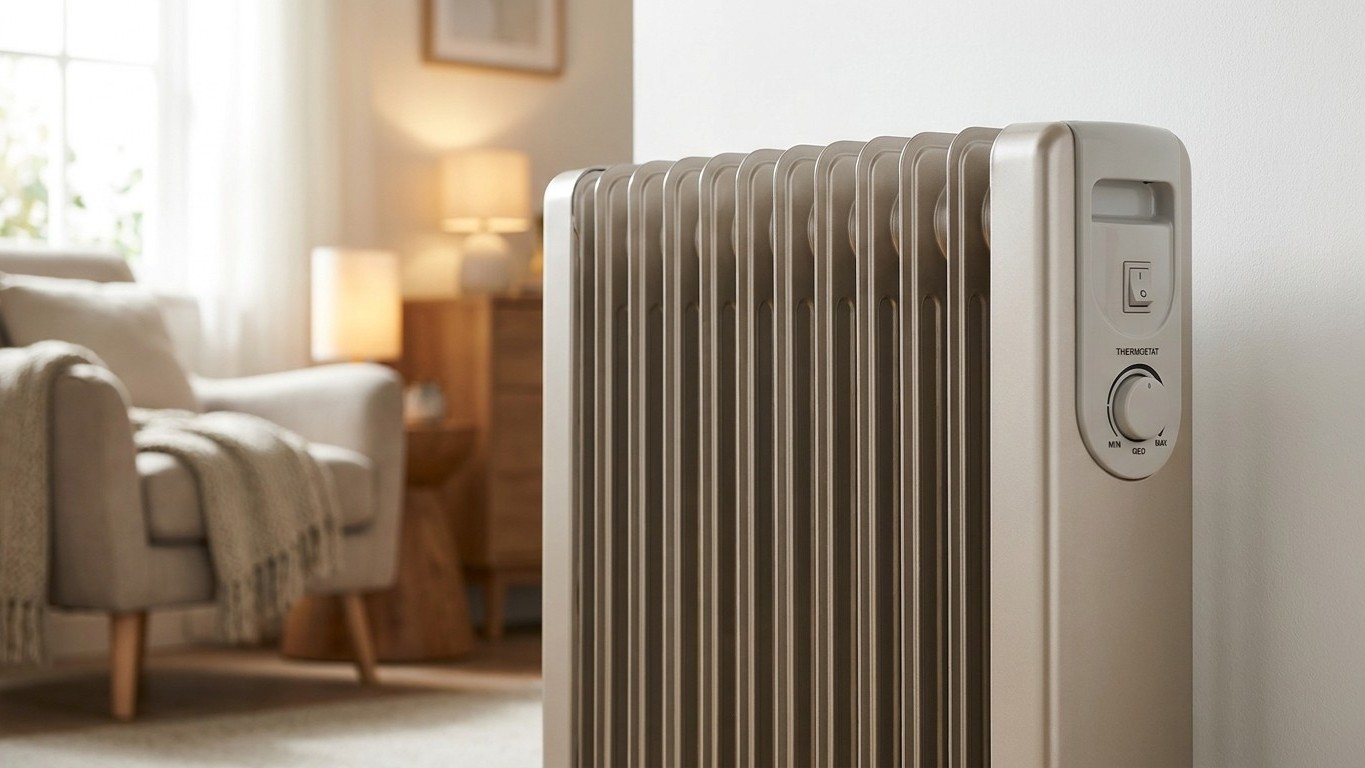

The oil in an oil-filled radiator heater sits sealed inside the metal fins for the life of the appliance. It never gets burned, never runs low, and never needs a refill. What it does is absorb heat from an electric element and hold onto it, releasing warmth slowly into the room long after the element has switched off. That’s the entire trick behind these heaters, and it’s why they behave so differently from a fan heater or a space heater with exposed coils.
The oil is not a fuel

Here’s the confusion the name creates almost every time: people assume “oil-filled” means the unit burns oil the way a furnace burns heating oil or a lamp burns kerosene. It doesn’t. The oil inside these radiators, usually a diathermic (heat-conducting) oil, is not combustible in any practical sense during normal use, and it is not part of the fuel supply at all. The heat comes entirely from a standard electric resistance element submerged in that oil, the same basic technology as an electric kettle or a toaster, just wired to a lower wattage and spread across a larger surface.
Once the manufacturer seals the unit at the factory, the oil is meant to stay there permanently. There’s no maintenance port, no fill cap, no dipstick. If a radiator is leaking oil or if someone tells you it’s “low” and needs topping up, that unit has a fault, not a routine service need. A sealed system that’s losing fluid has a cracked weld, a corroded fin, or a manufacturing defect, and the right response is to unplug it and stop using it, not to search for replacement oil. Reputable manufacturers don’t sell top-up fluid for a reason: there’s nothing on the market for consumers to add, and doing so would compromise a design that was never meant to be opened.
What the sealed oil actually does
The physics here is simple thermal mass. Oil holds heat far more effectively than the metal fins alone would, so once the element heats the fluid, that fluid keeps radiating warmth into the room even as the Thermostat cycles the element on and off. That’s why these heaters feel warm to the touch well after they’ve technically “shut off,” and why the room temperature doesn’t spike and dip the way it does with a heater that has no thermal reservoir. It’s a storage system, not a combustion system, and every practical trait of these heaters, the slow warm-up, the slow cool-down, the near-total silence, traces back to that one design choice.
The rooms it fits
Because the heat builds gradually and lingers after shutoff, an oil-filled radiator earns its keep in spaces where someone is settled in for a while. A bedroom is the obvious fit: no fan noise to interrupt sleep, no blowing air to dry out sinuses, and no need for instant heat since most people aren’t jumping into a freezing room at 11 p.m. A home office where you’re parked at a desk for three or four hours works the same way. A living room used most evenings benefits too, since the appliance has time to build a steady baseline of warmth rather than chasing a target temperature that keeps slipping.
These heaters also suit anyone sensitive to airborne dust or allergens, since there’s no fan pulling air across a heating element and recirculating whatever’s floating in the room. That’s a real, measurable advantage over convection or fan-forced space heaters in a room with pets, carpeting, or anyone with respiratory issues.
Where the slow response works against you
Flip the scenario and the same trait becomes a liability. A garage or workshop you’re only in for twenty minutes has no patience for a heater that takes ten of those minutes just to get warm. A bathroom, where you want heat the second you step out of the shower, is a poor match for the same reason. Anywhere you need warmth on demand rather than warmth that builds over time, an oil-filled radiator will disappoint you, and a radiant heater or a fan-forced ceramic unit will serve you better. If you’re weighing which category actually fits your space, the guide to space heater types breaks down how radiant heaters differ from convection heaters like this one, and which rooms suit each.
It is not cheaper to run
This is the claim worth correcting directly, because it shows up in nearly every retail listing and product description: an oil-filled radiator is not more efficient than any other electric heater at the same wattage. Electric resistance heating converts electricity to heat at essentially the same rate no matter what shape the appliance takes. A 1,500-watt oil-filled radiator draws 1,500 watts from the wall and delivers 1,500 watts worth of heat, exactly like a 1,500-watt fan heater, a 1,500-watt ceramic heater, or a 1,500-watt panel heater. There’s no efficiency bonus hiding in the oil.
What the thermal mass actually changes is the pattern of heat delivery, not the total amount of energy converted. Because the oil keeps radiating warmth after the Thermostat cuts the element’s power, the room’s temperature swings less sharply than it would with a heater that stops producing heat the instant it shuts off. That’s a comfort improvement, a smoother, steadier feel to the room, not an efficiency improvement on your electric bill. Two 1,500-watt heaters running the same number of hours in the same room will cost you the same amount, regardless of which one has oil inside it.
The industry blurs this distinction constantly, pairing words like “energy-saving” with oil-filled models as if the storage mechanism itself trims wattage. It doesn’t. If a specific unit uses less electricity, it’s because it’s a lower-wattage model or because its Thermostat cycles more aggressively, not because of the oil. Judge running cost by wattage and hours of use, the same math that applies to any other electric heater, not by the presence or absence of oil.
Surface temperature, tipping and care
The absence of an exposed heating element doesn’t mean the surface is safe to touch. The metal fins on an oil-filled radiator can reach a genuinely high surface temperature, hot enough to cause a burn on contact, even though there’s no glowing coil or open element to see. That matters most for households with young kids or pets who might lean against the unit or grab a fin out of curiosity.
The other physical hazard is shape-related. These heaters tend to be tall, narrow columns, and a column sitting on carpet or a rug, rather than a hard, flat, level floor, has a higher center of gravity and less stable footing. A pulled cord, a bumped leg, or an excited dog can tip it over. Placement on a firm, level surface away from foot traffic reduces that risk considerably.
The U.S. Fire Administration’s clearance guidance names this exact appliance type directly: “Keep anything that can burn at least 3 feet from all heat sources including fireplaces, wood stoves, radiators, space heaters or candles.” That’s not a general suggestion aimed at furnaces, it explicitly lists radiators alongside other home heat sources, and it applies to blankets, curtains, upholstered furniture, and stacks of paper just as much as to a fireplace hearth.
The agency’s broader guidance backs up how these units should be handled day to day: “Turn space heaters off when leaving the room or going to bed,” and, on a related note that surprises some homeowners, “Never use an oven to heat your home.” For anyone running other heating equipment alongside a portable unit, the USFA also recommends you “maintain heating equipment and chimneys by having them cleaned and inspected each year by a professional.”
The numbers behind that advice are worth sitting with. The U.S. Fire Administration’s 2017-2019 report on portable heater fires in residential buildings found an estimated annual average of 1,100 fires, 65 deaths, 150 injuries, and $51 million in property loss tied to portable heaters. Portable heaters accounted for about 3% of home heating fires overall, but about 41% of fatal home heating fires. That gap, rare as a fire cause, disproportionately deadly when a fire does start, is the single fact that should shape how carefully anyone places and uses one of these units.
The only maintenance these heaters need
Because there’s no oil to check, no filter to swap, and no element to replace under normal conditions, the real maintenance list is short. Dust accumulates between the metal fins over a season of use, and that buildup can slightly reduce heat output and act as a minor fire load if it’s thick enough. Wipe or vacuum between the fins with the unit unplugged and fully cooled, and that’s essentially the whole job. Beyond that, a visual check for a frayed cord or oil residue at the seams is the closest thing to routine upkeep this appliance requires.
Common questions
Do oil-filled radiators ever need the oil replaced?
No. The oil is sealed at the factory and designed to last the lifespan of the heater. If oil is visibly leaking or the unit appears low, that indicates a defect, and the safe response is to stop using it rather than attempt a refill.
Are oil-filled radiators safer than other space heaters?
They lack an exposed glowing element and run a fan-free, so they don’t stir dust or pose a direct contact burn from a coil. But the fins still reach high surface temperatures, and tall column models can tip, so the same clearance and supervision rules that apply to any space heater still apply here.
Why do oil-filled radiators feel warm long after they turn off?
The oil inside acts as a thermal reservoir. It absorbs heat from the electric element while the unit is running, then keeps releasing that stored heat into the room even after the thermostat cuts power to the element, which is why the fins stay warm well after the “on” cycle ends.
Will an oil-filled radiator lower my electric bill compared to other heaters?
Not on its own. Running cost depends on wattage and hours of use, not on whether the heater contains oil. A 1,500-watt oil-filled unit and a 1,500-watt fan heater cost the same to run for the same number of hours; the oil changes comfort and temperature stability, not electricity consumption.