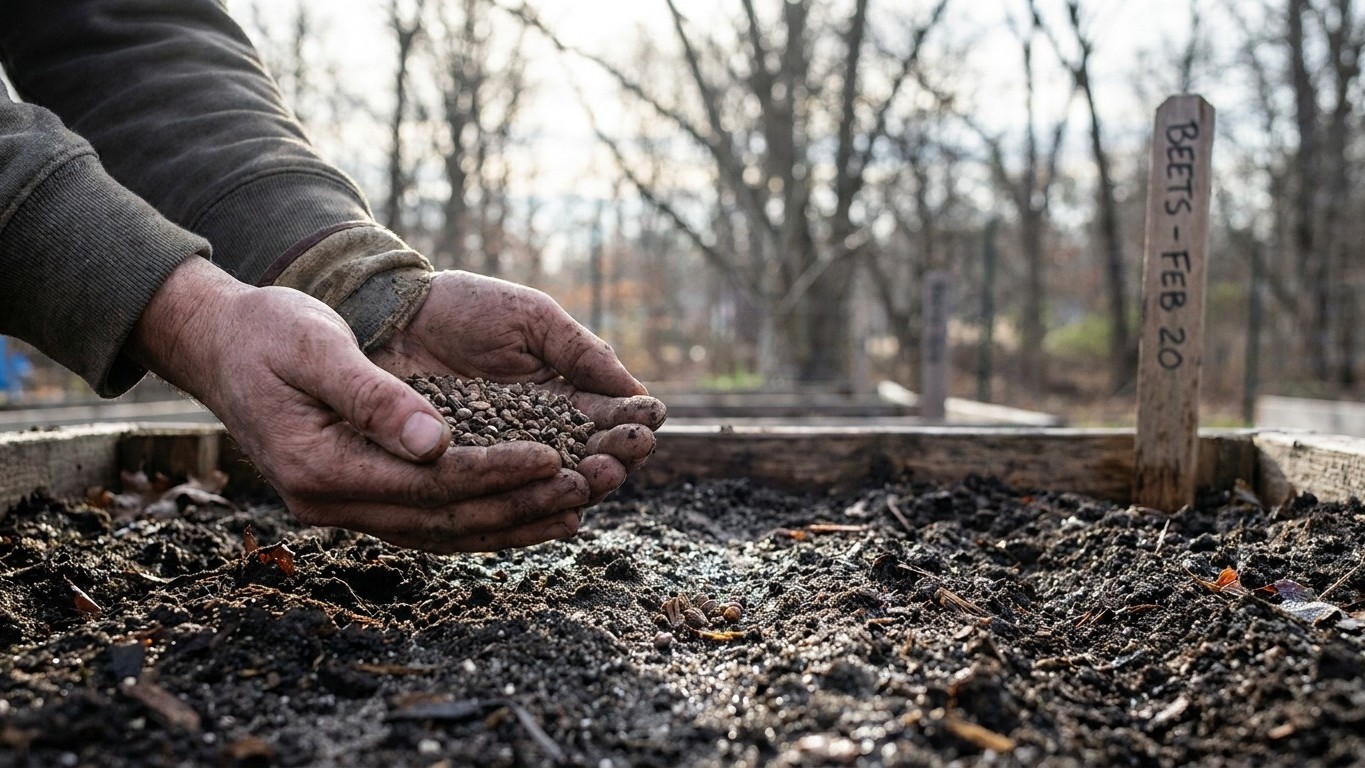

Sow beets in Nova Scotia from late April into early June, starting roughly two to three weeks before the average last spring frost of May 7. That planting window, seeded directly into the ground, gives beets 60 to 80 days to size up before Nova Scotia’s cooler fall weather sets in. Soil texture and drainage on this province’s dominant ground change how forgiving that window actually is.
The short answer
Nova Scotia’s most common mapped soil is a Podzol, the acid, leached profile that forms under conifer cover once rain has stripped the bases out of the topsoil. Across the province’s agricultural regions, the median surface reading comes out to about 52 percent sand, 10 percent clay and 38 percent silt, a loam-to-silt texture, with organic matter around 2.1 percent and a pH near 5.2, which counts as strongly acid. Drainage class on this soil is imperfect, meaning water moves through slower than beets prefer and can sit at the root zone longer than it should after a wet stretch.
That combination cuts two ways for a beet grower. Utah State University Extension describes the crop’s ideal bed as deep, sandy and well-drained, built up with organic matter, capped at no more than 1 inch of composted material per 100 square feet so the soil doesn’t turn too rich and leafy at the root’s expense. Nova Scotia’s provincial-scale soil gets the sand fraction roughly right but falls short on drainage and runs well past the acidity beets tolerate comfortably. A strongly acid, imperfectly drained bed makes raised rows, added coarse sand or compost worked into the top several inches, and a lime application based on an actual soil test look less like optional upgrades and more like the baseline for a Nova Scotia beet patch.
On the heat side of the equation, the published record used for this page does not include a count of days per year the reference weather station passes 90 F, so no number is offered here. Woodiness in beets follows heat above 85 F combined with water stress, according to Utah State University Extension, and that is a separate mechanism from the cold-and-thirst bolting risk covered in the next section. Growers in Nova Scotia should watch soil moisture through any dry, sunny stretch rather than assume the province’s coastal reputation rules out heat-driven toughness in the root.
None of this describes any one garden. Nova Scotia’s agricultural land spans hundreds of individual soil series, and the Podzol figures above are a provincial median, not a reading from a specific yard. River-bottom ground, drained wetland, and anything a builder has cut or filled will differ from this profile entirely. A soil test remains the only way to know where a particular bed actually sits on acidity, texture and organic matter before deciding how much lime, sand or compost it needs.
The six weeks that decide it here
Sowing beets two to three weeks ahead of the average May 7 last frost means the first six weeks of growth land inside Nova Scotia’s early spring, the stretch when the ground is still cold from winter and daylight is lengthening but air temperatures stay unsettled. That timing is not a guess pulled from a calendar; it follows directly from the frost normal published for the Halifax Stanfield station, which is a mean date, not a guarantee. In roughly half of all years the last frost falls later than May 7, so a bed sown at the “two to three weeks before” mark can still meet a frost after emergence, and the seedlings need to be treated as exposed until the date has clearly passed.
Spring in this stretch of Atlantic Canada carries its own temperament: a maritime climate keeps temperature swings less extreme than an inland province, but it also brings damp, overcast runs followed abruptly by drier, breezier days as fronts move through. That variability matters more for beets than steady weather in either direction would, because the crop’s most sensitive stage for bolting sits inside exactly this window. Utah State University Extension is specific on the mechanism: water stress during the first six weeks after seeding pushes beets toward premature flowering, meaning the plant abandons root growth and bolts to seed instead of bulking up the beet itself.
In practice, that means the imperfectly drained Podzol ground described above cuts both ways during these six weeks. A cold, wet spring can leave the root zone saturated, which does not by itself cause bolting, but the same soil can dry out fast and unevenly once a breezy, sunny stretch arrives, and it is that dry spell, arriving on top of young beet seedlings, that raises bolting risk. Consistent, moderate moisture through this early stretch, rather than either a soggy bed or a parched one, is what the six weeks actually call for. Mulching lightly once seedlings are up helps steady soil moisture through the swings this spring tends to produce.
What goes wrong here
- Bolting from a dry spell in the first six weeks. A sunny, breezy run of days right after emergence dries out a bed that was wet only a week earlier, and the beet responds by flowering instead of forming a root. Water evenly through this stretch and mulch to buffer the swings between wet and dry that Nova Scotia’s spring tends to produce.
- Woody roots from heat and thirst later in the season. This is a separate failure from bolting, tied to temperatures above 85 F combined with a dry spell once the plant is well established. Keep watering consistent through any warm run in summer rather than assuming the coastal climate makes heat stress unlikely.
- Poor germination and stunted roots in acid, imperfectly drained ground. The province’s dominant Podzol soil runs strongly acid at a median pH near 5.2, well below what beets tolerate comfortably, and drains slower than the crop prefers. A soil test followed by lime, plus raised rows or added sand to improve drainage, addresses this before seeding rather than after a poor stand shows up.
- Forked or misshapen roots in heavy, undrained or freshly manured beds. Sandy, low fractions of clay generally favor straight roots, but compacted patches, rocks, or fresh organic matter piled on too thick, beyond the 1-inch-per-100-square-feet guideline, can split a beet root as it grows around an obstruction. Work compost in evenly and remove stones from the seed row before sowing.
Common questions
Can I sow beets earlier than late April in Nova Scotia?
Beets tolerate cool soil better than many root crops, but sowing well ahead of the two-to-three-week window before the May 7 average last frost raises the odds of a frost hitting seedlings before they’ve hardened off, since frost falls later than that average in roughly half of all years.
Do I need to test my soil before sowing beets in Nova Scotia?
Yes. The province’s dominant mapped soil runs strongly acid at a median pH near 5.2, well outside what beets prefer, but that figure describes hundreds of soil series averaged together, not any individual garden. A soil test is the only way to know how much lime a specific bed actually needs.
How long from sowing to harvest for beets in Nova Scotia?
Sixty to eighty days, counted from the day the seed goes into the ground, not from any transplant, since beets are direct-sown rather than started indoors and moved out.
What causes a bitter or woody beet root?
Heat above 85 F paired with water stress later in the season toughens the root, according to Utah State University Extension. That is distinct from bolting, which comes from water stress in the first six weeks after sowing; the two failures call for the same remedy, steady watering, but they happen at different points in the plant’s growth and for different reasons.