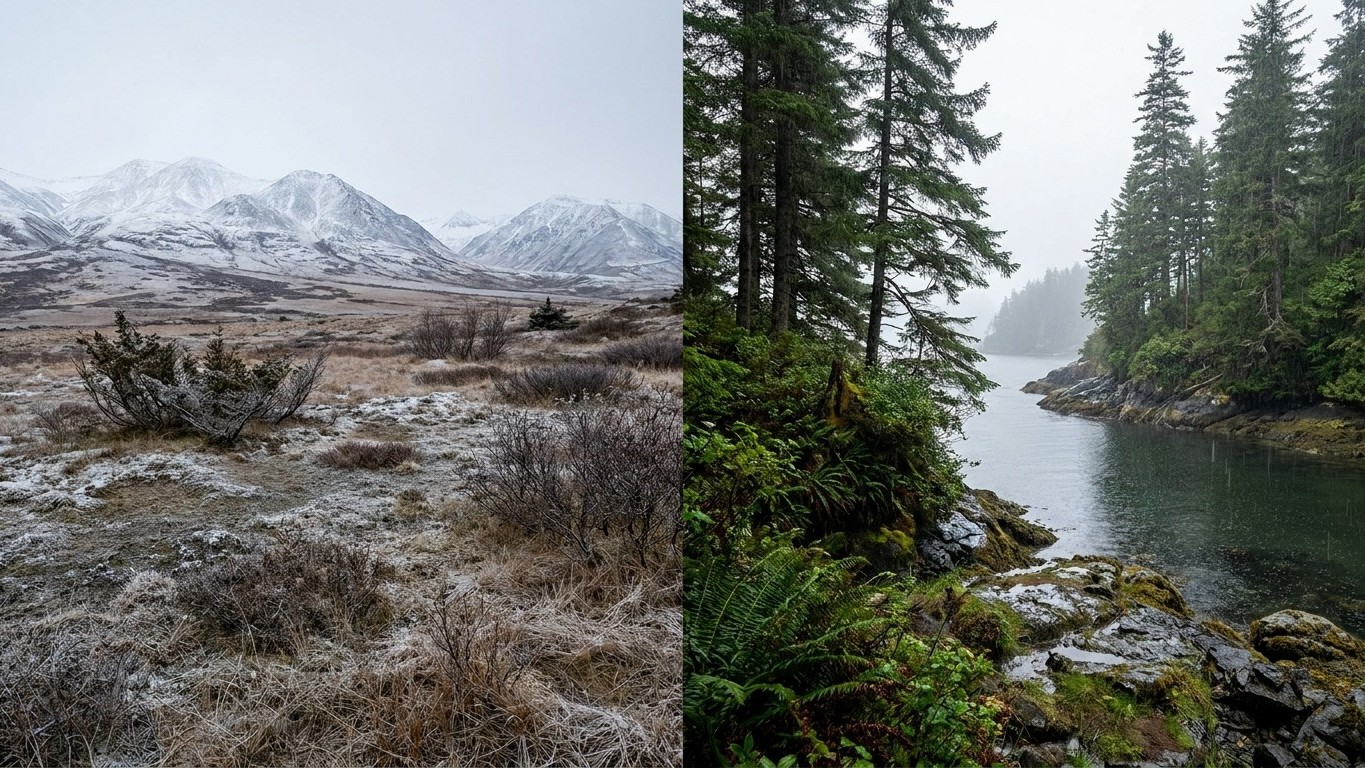

California’s hardiness range runs from USDA zone 5a in the high Sierra to 11a along the coast and desert edges. Cross that range against the 65 Trees, Shrubs and Perennials documented on this site, and the answer is not what most gardeners expect: none of them fail everywhere in the state, but all 65 fail somewhere in it. The real story is where.
What will not survive a winter in California

Start with the number that matters most: zero. Of the 65 landscape plants this site tracks, none are rated hardy across the entire 5a-11a range California covers, and none are excluded from the entire range either. Every single one survives winter in at least part of the state. That is the direct result of a hardiness span this wide. Five zones and change, from a Sierra winter that can flirt with minus 20°F to a coastal winter that barely dips below 40°F, is enough room for almost any documented species to find a foothold somewhere between those two extremes.
That does not make California a blank check for planting. It means the failures here are not about cold at all, at least not for most of the list. Look at where the 65 plants actually drop out of their hardiness range, and the exclusions cluster almost entirely at the warm end, zones 9a through 11a. A plant “hardy” up to zone 8b but not into 9a is not being killed by a California winter. It is running into a summer it cannot handle, or a winter that never gets cold enough to let it go properly dormant. Hardiness ratings measure survival at the cold limit; the warm limit on the same list is usually a heat or chill-hour ceiling, not a frost line, and California’s lower zones sit right on top of it.
So the honest framing for this state is not “these plants will freeze here.” It is closer to the opposite. A gardener in Fresno or Sacramento or along the coastal strip who reaches for a plant rated hardy up through zone 8 needs to ask whether that plant wants a real winter chill it will never get, not whether it can survive one. The failures below the fold in this territory are heat failures wearing a cold-hardiness label.
| Plant | Documented hardiness range | Where it drops out of California’s span |
|---|---|---|
| Amelanchier canadensis | Zones 4a-8a | Not hardy in 8b, 9a, 9b, 10a, 10b, 11a, the state’s warm end |
| Syringa vulgaris | Zones 3a-7a | Not hardy in 7b through 11a, most of the state’s lower-elevation and coastal zones |
| Picea abies | Zones 3a-7b | Not hardy in 8a through 11a |
| Ficus carica | Zones 6b-9b | Not hardy in 5a, 5b, 6a, 6b (Sierra cold) or 10a, 10b, 11a (deep warm end) |
| Magnolia grandiflora | Zones 6a-9b | Not hardy in 5a, 5b (Sierra cold) or 10a, 10b, 11a (deep warm end) |
None of these are wiped out by a California winter as such. They are simply mismatched to one edge of a state that spans an unusually wide temperature range.
The plants that work in part of the state and not the rest
This is the section that a single national gardening guide cannot give a California reader, because there is no single answer. All 65 documented plants fall into the “hardy in part of the state” bucket, and the pattern is lopsided. The overwhelming majority drop out only at the warm end, zones 9a through 11a or some slice of it. A much smaller handful drop out at both ends at once. None of the 65 fail only in the state’s cold zones.
Plants like Acer rubrum, Quercus alba, Cornus florida, Ilex verticillata, Achillea millefolium and Echinacea purpurea are typical of the first group: hardy through the state’s cooler and mid-range zones, then excluded starting somewhere around 9a or 10a. A gardener in the Sierra foothills or the cooler interior valleys is in the clear with most of this list. A gardener in coastal Los Angeles or the low desert edge is working with a shorter list.
A smaller group drops out at both ends, which matters because it rules out both the coldest mountain gardens and the warmest coastal or desert ones at the same time, leaving only the state’s middle zones as a fit.
| Plant | Documented hardiness range | Zones it does not cover in this state |
|---|---|---|
| Ficus carica | Zones 6b-9b | 5a, 5b, 6a, 6b and 10a, 10b, 11a |
| Hydrangea macrophylla | Zones 6a-9b | 5a, 5b and 10a, 10b, 11a |
| Lagerstroemia indica | Zones 6a-9b | 5a, 5b and 10a, 10b, 11a |
| Magnolia grandiflora | Zones 6a-9b | 5a, 5b and 10a, 10b, 11a |
| Weigela florida | Zones 4a-8a, plus a middle window | 7a, 7b and 9a, 9b, 10a, 10b, 11a |
Finding out which of these zones applies to a given yard is the first step, and it is not something a state-level range answers on its own. This site’s insulation page carries the county-level hardiness zone picture for California, and that is the resource to check before shopping the list above against a specific address.
The soil and the summer they will be planted into
California’s official state soil is the San Joaquin series, an Alfisol, and the surface profile runs roughly 51 percent sand, 18 percent clay and 32 percent silt, a loam to silt-loam texture with a surface pH near 6.1. That soil is described as moderately well drained, not poorly drained and not sharply drained. For a newly planted tree or shrub, that middle-of-the-road drainage matters more in winter than the temperature does. Woody roots sitting in water for weeks lose oxygen and rot long before cold does any damage, and a moderately well drained profile gives a plant some margin, though not the fast drainage of a pure sand.
The San Joaquin series is one representative soil, not a guarantee about any particular yard. A hillside garden, a valley bottom, or a lot a builder graded and compacted years ago can behave nothing like the mapped series, which is exactly why a soil test on the actual planting site is worth more than any state-level number.
Summer rainfall is where California’s numbers get stark. Across June, July and August the reference station used for this page’s climate data records about 0.1 inches of rain total, with August itself averaging 0.0 inches. That is not a dry summer in the way the Southeast or Midwest understands dry. It is close to no summer rain at all. On a sandy, moderately well drained soil, that scant rainfall drains and evaporates almost as fast as it falls; on a heavier clay it would linger a little, but 0.1 inches across three months barely registers on either. The soil texture that normally decides how a summer rain behaves stops being the deciding factor once the rain itself has all but disappeared. What decides plant survival at that point is water applied by hand or by irrigation system, not what falls from the sky.
When to plant, here
The climate normals for this page’s reference station show no freeze in an average year at all, zero days at or below 32°F across three decades of records. That figure describes coastal and southern California, where the growing-season constraint is heat, drought and water availability rather than frost. It does not describe the whole state. Northern California, the Central Valley floor on cold nights, and the Sierra foothills and higher elevations do freeze, sometimes hard, and a planting calendar built on a frost-free coastal station would be wrong for those gardens.
The reasoning behind planting windows holds regardless of which part of the state a reader gardens in: a woody plant put in the ground needs time to grow roots into the surrounding soil before it is asked to carry a full canopy of leaves through summer heat, or to face a hard freeze with an undersized root system. That is why spring and fall are the two windows that keep coming up, even where frost itself is not the deciding factor.
| Window | What it suits | Main risk |
|---|---|---|
| Spring | Root establishment before summer heat and the near-total dry season arrive | A late cold snap in the colder inland and mountain zones, or a fast transition straight into 90°F-plus heat before roots have spread |
| Autumn | Cooler air, lower water demand, and roots that keep growing even after leaves drop, in frost-free coastal and southern zones especially | In the state’s coldest zones, a shorter window before the ground turns cold enough to stop root growth |
The frost dates behind any of this are averages recorded at one reference station over three decades, not a promise for a specific yard in a specific year. And whichever window a plant goes into the ground in, water it through its entire first season regardless of what its mature drought tolerance rating says. Those ratings describe plants with roots already established in the soil around them, not a plant still building that root system.
Where to read about each one
Every plant named on this page comes from the same source: the North Carolina Extension Gardener Plant Toolbox, a university extension database, with its documented hardiness ranges crossed against California’s own 5a-11a span to produce the buckets above. These are hardiness ranges specifically, and they are a different measurement from the apple variety adaptation zones tracked elsewhere on this site under fruit varieties; the two systems answer different questions and should not be read as interchangeable.
Among the trees on this list, the state’s readers have Acer rubrum, Acer saccharum, Amelanchier canadensis, Betula nigra, Carpinus caroliniana, Cercis canadensis, Cornus florida, Ginkgo biloba, Juniperus virginiana, Lagerstroemia indica, Liquidambar styraciflua, Magnolia grandiflora, Nyssa sylvatica, Picea abies, Pinus strobus, Platanus occidentalis, Quercus alba, Quercus rubra, Thuja occidentalis and Tilia americana to check against their own zone.
The shrub list runs to Aronia arbutifolia, Buxus sempervirens, Clethra alnifolia, Fothergilla gardenii, Hydrangea macrophylla, Hydrangea paniculata, Ilex glabra, Ilex verticillata, Itea virginica, Kalmia latifolia, Physocarpus opulifolius, Spiraea japonica, Syringa vulgaris, Viburnum dentatum and Weigela florida.
Among perennials, the documented options include Achillea millefolium, Amsonia hubrichtii, Asclepias tuberosa, Baptisia australis, Anacis verticillata, Echinacea purpurea, Heuchera americana, Iris sibirica, Lavandula angustifolia, Monarda didyma, Phlox paniculata, Rudbeckia fulgida, Salvia nemorosa and Hylotelephium spectabile.
Each name on those three lists has its own zone-by-zone breakdown worth checking individually, since the table earlier in this page shows how differently a warm-end limit and a cold-end limit can split the same state.