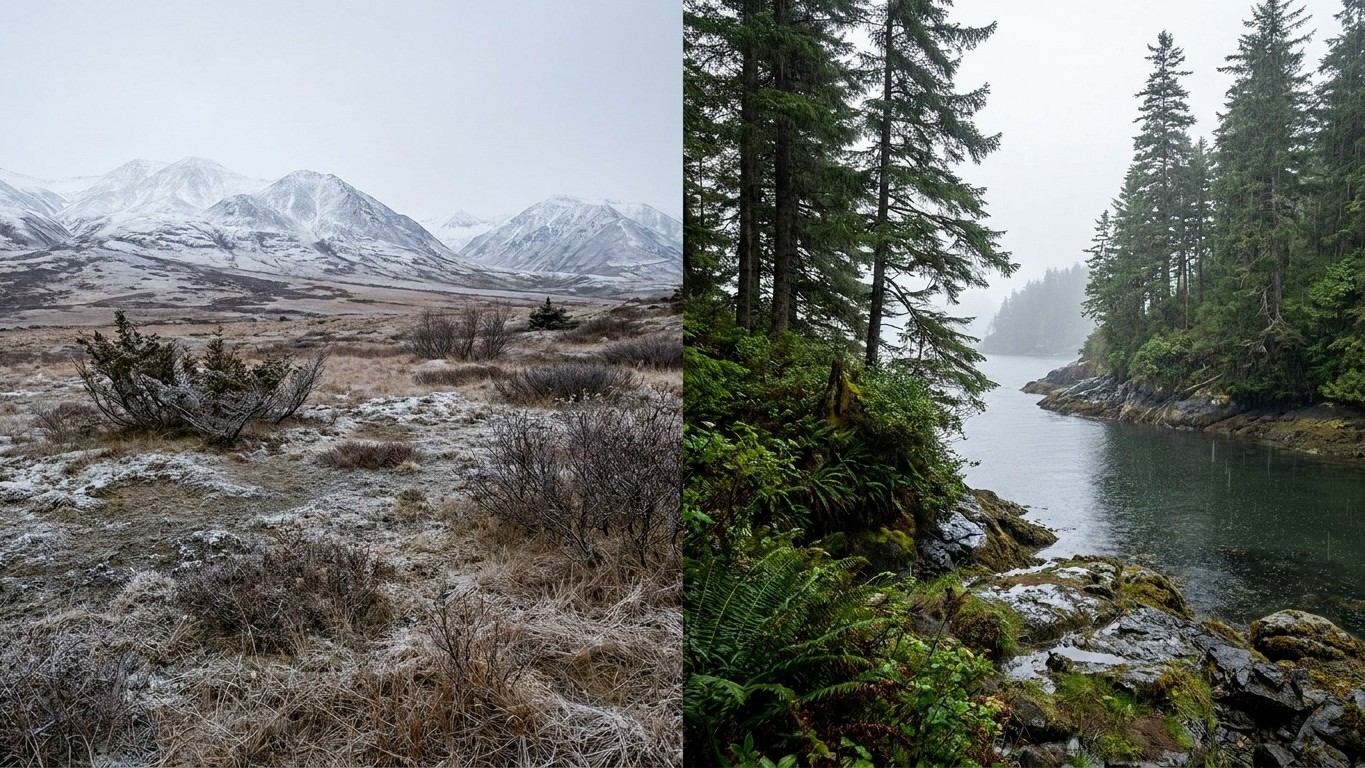

Wyoming’s hardiness range runs from 3a to 6a, a spread wide enough that a shrub thriving in Cheyenne can freeze out entirely near Jackson or up in the Bighorns. Before picking anything for a Wyoming yard, the more useful question is which plants fail everywhere in that range, which fail only in part of it, and which cover the whole state without a gap.
What will not survive a winter in Wyoming

Crossing the state’s 3a-6a range against the 65 landscape plants this site documents turns up a short list: just one plant fails across the entire range. That’s not a statement about everything that grows in Wyoming, only about the plants tracked here, but it’s still the cleanest fact on this page. Everything else in the documented set survives somewhere in the state, either everywhere or in part of it.
The single failure is the common fig. Its hardy range sits well above 6a, the state’s warmest zone, so even the mildest pockets of Wyoming don’t reach far enough into fig territory for it to make it through a normal winter outdoors. That’s a cold mismatch, not a heat one.
| Plant | Type | Where the mismatch is |
|---|---|---|
| Ficus carica (common fig) | Fruit | Too cold : Wyoming’s warmest zone (6a) still falls short of the fig’s minimum |
Worth saying once: “hardy” here means the plant can survive the winter, not that it will look happy doing it. A plant rated hardy at the warm edge of its range is often sitting at its heat limit rather than its cold one, which matters in a state where summer sun at elevation can be intense even while nights stay cool. A shrub can clear the winter test and still sulk through August.
The absence of a long failure list is itself useful information. It means the real work in choosing plants for Wyoming isn’t filtering out doomed candidates, it’s figuring out which zone of the state a given yard sits in, since that’s what decides the next 34 plants on the list.
The plants that work in part of the state and not the rest
Thirty-four of the 65 documented plants are hardy in part of Wyoming and not the rest, and every one of them fails at the same end of the spectrum: the cold end. None of the 34 struggle at the warm edge of the state’s range; the mismatch, in every case, is winter cold in the coldest zones (3a through the mid-range), with the warmer zones covered fine.
They split into three tiers by how deep the cold problem goes.
Fails only in the coldest zones, 3a-3b
This is the largest group, hardy from 4a upward: Diospyros virginiana, Morus rubra, Prunus domestica, Pyrus communis, Rubus idaeus, Rubus occidentalis, Sambucus canadensis, Heuchera americana, Monarda didyma, Phlox paniculata, Salvia nemorosa, Hylotelephium spectabile, Ilex glabra, Kalmia latifolia, Weigela florida, Betula nigra, Cercis canadensis, Nyssa sylvatica, Platanus occidentalis, and Quercus rubra.
Fails through 3a-4b, hardy from 5a up
Asimina triloba, Fragaria virginiana, Fragaria x ananassa, Prunus persica, Amsonia hubrichtii, Lavandula angustifolia, Buxus sempervirens, Fothergilla gardenii, Itea virginica, Cornus florida, and Liquidambar styraciflua all need 5a or warmer.
Fails through 3a-5b, hardy only in 6a
Three plants clear only the mildest zone the state has: Hydrangea macrophylla, Lagerstroemia indica, and Magnolia grandiflora.
| Plant | Fails in | Hardy from |
|---|---|---|
| Diospyros virginiana | 3a, 3b | 4a |
| Heuchera americana | 3a, 3b | 4a |
| Betula nigra | 3a, 3b | 4a |
| Cercis canadensis | 3a, 3b | 4a |
| Quercus rubra | 3a, 3b | 4a |
| Asimina triloba | 3a, 3b, 4a, 4b | 5a |
| Lavandula angustifolia | 3a, 3b, 4a, 4b | 5a |
| Cornus florida | 3a, 3b, 4a, 4b | 5a |
| Liquidambar styraciflua | 3a, 3b, 4a, 4b | 5a |
| Hydrangea macrophylla | 3a, 3b, 4a, 4b, 5a, 5b | 6a |
| Lagerstroemia indica | 3a, 3b, 4a, 4b, 5a, 5b | 6a |
| Magnolia grandiflora | 3a, 3b, 4a, 4b, 5a, 5b | 6a |
None of this tells a reader which tier applies to their own property without knowing their zone first. The state’s insulation page carries the county-level zone picture for Wyoming, and that’s the fastest way to check whether a given yard sits in the 3a-3b band, the deeper 3a-4b band, or up near the 6a edge where nearly the full list applies.
The soil and the summer they will be planted into
Wyoming’s representative soil, the Forkwood series, is an Aridisol: a dry-climate profile, generally alkaline, sometimes carrying salts, with a surface pH around 7.2. The texture runs loam to silt, roughly 42 percent sand, 20 percent clay, 38 percent silt, and organic matter sits low, around 1.5 percent. It’s well drained.
For a woody plant, drainage matters more than almost anything else in that description. Winter wet, not winter cold, is what actually kills a lot of shrubs and young trees, since saturated soil around dormant roots invites rot in a way dry cold rarely does. A well-drained Aridisol like Forkwood works in a plant’s favor there. The near-neutral to slightly alkaline pH is a different story for a handful of species on the earlier list, Kalmia latifolia and Ilex glabra among them, which generally want acidic ground and will need an amended bed rather than native Forkwood soil straight from the ground.
None of this is a guarantee about any one yard. Forkwood represents the state, not every garden in it. A river bottom, a hillside, or ground a builder has graded and filled can differ completely, which is exactly why a soil test on the actual planting site is worth more than any state-level average.
What the summer rain adds to that picture
Wyoming averages about 5.8 inches of rain across June, July and August, out of 15.4 inches for the year. August is the driest of the three summer months at 1.52 inches, with June at 2.16 and July at 2.11. That’s a modest amount of rain, and it doesn’t mean much on its own, since the soil underneath decides how far it goes.
On the sandy-loam side of Forkwood’s texture, an inch of rain moves through fast and doesn’t linger for roots to use over the following days. On a heavier clay pocket elsewhere in the state, the same inch sits longer. Neither reading turns into a watering schedule by itself. What matters is that a well-drained, sandy-leaning soil paired with under six inches of summer rain means new plantings dry out faster than the rainfall total alone suggests, especially through a hot August.
When to plant, here
The last spring frost across Wyoming’s reference station falls between May 7 and May 18, and the first fall frost arrives between September 24 and October 5. Those dates aren’t a promise, they’re 30-year averages built around freeze probabilities at one station, and at elevation frost can show up in almost any month. Still, they frame the two realistic windows for putting a woody plant in the ground.
The logic behind both windows is the same: a tree or shrub needs time to grow roots before it’s asked to either leaf out or face a hard freeze. Plant too late in spring and the plant is pushing leaves before its roots have anchored. Plant too late in fall and winter arrives before roots have gotten established, which is a bigger problem in the coldest part of the state’s range, 3a and 3b, where the frost-free season is shortest and there’s less runway after planting before the ground locks up.
| Window | What it suits | Main risk |
|---|---|---|
| Spring, after the last frost (May 7-18) | Container stock, plants that need a full growing season to establish before their first winter | A late cold snap after an early warm spell, or planting too early into still-wet spring soil |
| Fall, before the first frost (Sept 24-Oct 5) | Bare-root and balled-and-burlapped trees and shrubs, giving roots a head start while soil is still warm | A shortened window in the coldest zones, where hard frost can arrive before roots have anchored |
Whichever window is used, watering through the first season matters regardless of what a plant’s drought tolerance rating says. Those ratings describe plants that are already established, with root systems doing the work; a first-season planting hasn’t built that yet and depends on supplemental water no matter how drought-tolerant the species eventually becomes.
Where to read about each one
Among the plants that suit at least part of Wyoming, the trees list includes Acer rubrum, Acer saccharum, Amelanchier canadensis, Carpinus caroliniana, Ginkgo biloba, Juniperus virginiana, Picea abies, Pinus strobus, Quercus alba, Thuja occidentalis, and Tilia americana as full-range performers, with Betula nigra, Cercis canadensis, Cornus florida, Liquidambar styraciflua, and Magnolia grandiflora among those that only cover part of the state.
Shrubs with full coverage include Aronia arbutifolia, Clethra alnifolia, Hydrangea paniculata, Ilex verticillata, Physocarpus opulifolius, Spiraea japonica, Syringa vulgaris, and Viburnum dentatum, while Buxus sempervirens, Fothergilla gardenii, Hydrangea macrophylla, Ilex glabra, Kalmia latifolia, and Weigela florida are the partial-coverage shrubs from the list above.
On the perennial side, Achillea millefolium, Asclepias tuberosa, Baptisia australis, Echinacea purpurea, Iris sibirica, and Rudbeckia fulgida hold up across the whole state, while Heuchera americana, Lavandula angustifolia, Monarda didyma, Phlox paniculata, Salvia nemorosa, and Hylotelephium spectabile need the milder zones.
The hardiness ranges behind every name on this page come from a university extension plant database, crossed here against Wyoming’s own zone range. That’s a separate system from the apple variety adaptation ranges tracked elsewhere on this site, which describe fruiting performance for named apple cultivars rather than winter survival for landscape trees and shrubs, and the two shouldn’t be read as the same kind of number.