
Prune panicle and smooth hydrangeas in late winter while they’re still dormant, roughly mid-January through late February in most of Alabama, finishing before growth resumes ahead of the state’s last spring frost window of March 19 to April 3 in Birmingham. Bigleaf, mountain, oakleaf, and climbing hydrangeas get cut back right after they finish blooming, usually June or early July, never in fall or winter.
What this comes down to in Alabama
The single biggest factor in hydrangea pruning isn’t the calendar. It’s which of two bloom habits your shrub follows, and Alabama’s climate just tells you where the safe windows fall for each. Panicle hydrangeas (Hydrangea paniculata) and smooth hydrangeas (Hydrangea arborescens) flower on wood the plant grows that same season. Cut them back hard in late winter and they still bloom on schedule, because the flowering wood hasn’t formed yet. Bigleaf hydrangeas (Hydrangea macrophylla), mountain hydrangeas (Hydrangea serrata), oakleaf hydrangeas (Hydrangea quercifolia), and climbing hydrangea (Hydrangea anomala subsp. petiolaris) do the opposite. They set next year’s flower buds by late summer, tucked into wood that’s already a year old, so a pruning cut in October or February takes off buds that were never going to be replaced before spring.
That distinction is what the frost data actually helps with. Birmingham’s last spring frost lands somewhere between March 19 and April 3, based on NOAA’s 1991-2020 climate normals. For new-wood bloomers, that date marks the point where dormant pruning needs to already be finished, because cuts made after buds have swollen and growth has started slow the plant down and delay bloom. For old-wood bloomers, the spring frost window matters less than the pruning happening at the right point after flowering, which in Alabama typically wraps up by early summer for bigleaf types and a bit later for oakleaf.
Alabama’s USDA hardiness zones run from 7a in the higher elevations of the north to 9a along the Gulf Coast, a spread wide enough that winter dieback on old wood behaves differently depending on where you garden. A bigleaf hydrangea in a colder pocket of the state may lose some flower buds to frost regardless of pruning timing, which is a separate issue from when you cut, but it changes how much old wood you’re actually working with each spring.
Working it out for your own garden
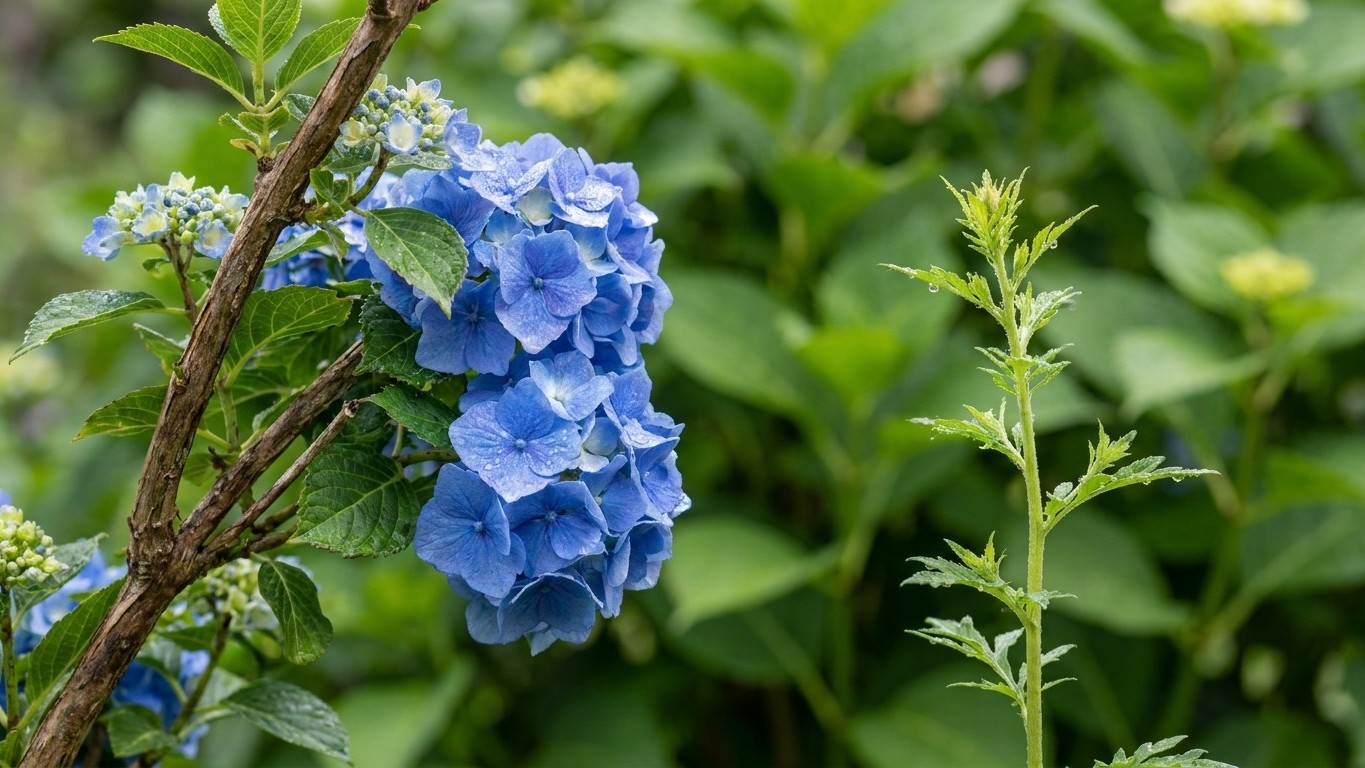
Start by identifying the bloom habit, because that decision drives everything else. Panicle hydrangeas usually have cone-shaped flower clusters and stiff, upright stems. Smooth hydrangeas have rounder, mophead-style blooms on softer wood and often die back close to the ground in winter anyway. Bigleaf hydrangeas have thick, glossy, rounded leaves and either mophead or lacecap flowers. Oakleaf hydrangeas have distinctive lobed leaves shaped like oak foliage. If you’re not sure which you have, watch where the flower buds sit relative to last year’s growth before you make a single cut.
For the new-wood group, the arithmetic runs backward from the frost window. Birmingham’s last spring frost falls between March 19 and April 3. Growth on panicle and smooth hydrangeas typically starts pushing in the weeks leading up to that window as soil and air temperatures climb, so finishing pruning six to eight weeks ahead of the window’s open date gives a reasonable target. That places the safe cutting period from roughly mid-January through late February, shifting toward the earlier end in a mild winter and later if a cold snap has kept the ground frozen. There’s no single correct date here, only a range that narrows as your own local frost pattern becomes clearer season to season.
For the old-wood group, the working backward runs the other direction. These shrubs need enough of the growing season left after pruning to push new stems and set the following year’s flower buds before the first fall frost arrives, which in Birmingham falls between November 2 and November 16. Cutting a bigleaf or oakleaf hydrangea back hard in early summer, right after bloom, leaves a comfortable stretch of warm months for that bud-setting to happen. Waiting until August or September to do the same cut leaves the plant far less time before dormancy, and any bud set that season is rushed or skipped entirely, which shows up as a bare spring the following year.
Climbing hydrangea is the outlier worth a separate note. It blooms on old wood like bigleaf types, but it’s slow to establish and rarely needs more than shaping after flowering, so treat any pruning on it as light maintenance rather than a hard annual cutback.
What changes across the state
Alabama’s frost timing and growing season length are not the same from the Tennessee Valley to Mobile Bay, and that spread matters more for pruning than most gardeners expect. Northern Alabama’s higher elevations sit in USDA zone 7a, where winters run colder and spring arrives later than the Birmingham reference point suggests. Gardeners there should lean toward the back end of the dormant pruning window for panicle and smooth hydrangeas, since cutting in mid-January in a colder pocket still leaves plenty of dormant time before growth starts.
Moving south toward the Gulf Coast, the state warms into zone 8b and 9a, and the growing season stretches noticeably longer at both ends. Old-wood bloomers along the coast often finish their spring flush earlier in the season than they would farther north, which pulls the safe post-bloom pruning window earlier too, sometimes into late May rather than June or July. The coast also holds heat later into fall, which can tempt gardeners to keep shaping bigleaf hydrangeas well into September. That extra warmth doesn’t change the underlying rule that bud set needs to happen well ahead of the first frost, wherever that frost falls locally.
Distance from the coast and elevation both nudge these windows without ever producing a second precise date to plan around. Treat Birmingham’s frost figures as a reference point, not a boundary line, and expect your own timing to drift earlier or later depending on which part of the state you’re in.
The mistakes this state punishes
The most common mistake in Alabama is pruning bigleaf or oakleaf hydrangeas during a warm stretch in late winter or early spring, mistaking a mild February for the start of the growing season. Those shrubs already set their flower buds the previous summer, so a late-winter cutback removes the coming season’s blooms entirely, regardless of how warm the weather feels.
A second mistake runs the other direction: pruning panicle or smooth hydrangeas too late, after growth has already started pushing toward the last frost window. Cuts made once new shoots have emerged waste the plant’s early energy and can delay bloom by weeks. If January and February have passed and buds are already swelling, it’s better to skip the hard cutback that year and just remove dead or crossing wood.
The third mistake is specific to old-wood bloomers left unpruned too late in summer. Cutting a bigleaf hydrangea back in August, after a delayed spring bloom or a second flush, doesn’t leave enough of the growing season for new bud set before the first fall frost between November 2 and 16 in the Birmingham area. The fix is straightforward: treat “right after bloom” as a real deadline, not a loose suggestion, and get old-wood pruning done within a few weeks of the flowers fading rather than whenever the schedule allows.
Checking this against your county
Birmingham’s frost data is a starting point, not a guarantee for your particular yard. Suburban and rural gardens often see later spring frosts and earlier fall frosts than an airport weather station records, sometimes by one to two weeks, and elevation adds further variation on top of that. Before locking in a pruning date, check with your county extension office through the Alabama Cooperative Extension System, and look for the state’s own hydrangea guidance to confirm how local conditions match up with the reference figures used here.
Common questions
Can I prune hydrangeas in Alabama in the fall?
Not for old-wood bloomers like bigleaf, mountain, oakleaf, or climbing hydrangea, since fall pruning removes flower buds already set for next spring. Panicle and smooth hydrangeas tolerate a fall cut better, but late winter still gives more reliable results because it’s closer to when new growth actually begins.
What happens if I prune a bigleaf hydrangea in spring?
A spring cutback removes the flower buds that formed the previous summer, so the shrub typically produces little or no bloom that year. The plant itself usually survives fine and sets new buds for the following season, but you lose a full year of flowers.
Do all hydrangeas need pruning every year?
No. Many hydrangeas do fine with just deadheading and removal of dead or damaged wood most years, and only need a harder cutback every few seasons to control size or renew older stems.
How do I know which type of hydrangea I have if the tag is long gone?
Look at the leaves and flower shape first: oakleaf hydrangeas have lobed foliage unlike any other type, panicle hydrangeas have cone-shaped blooms, and bigleaf hydrangeas have thick, glossy, rounded leaves with mophead or lacecap flowers. When in doubt, wait a season and watch where new flower buds form relative to old wood before pruning.