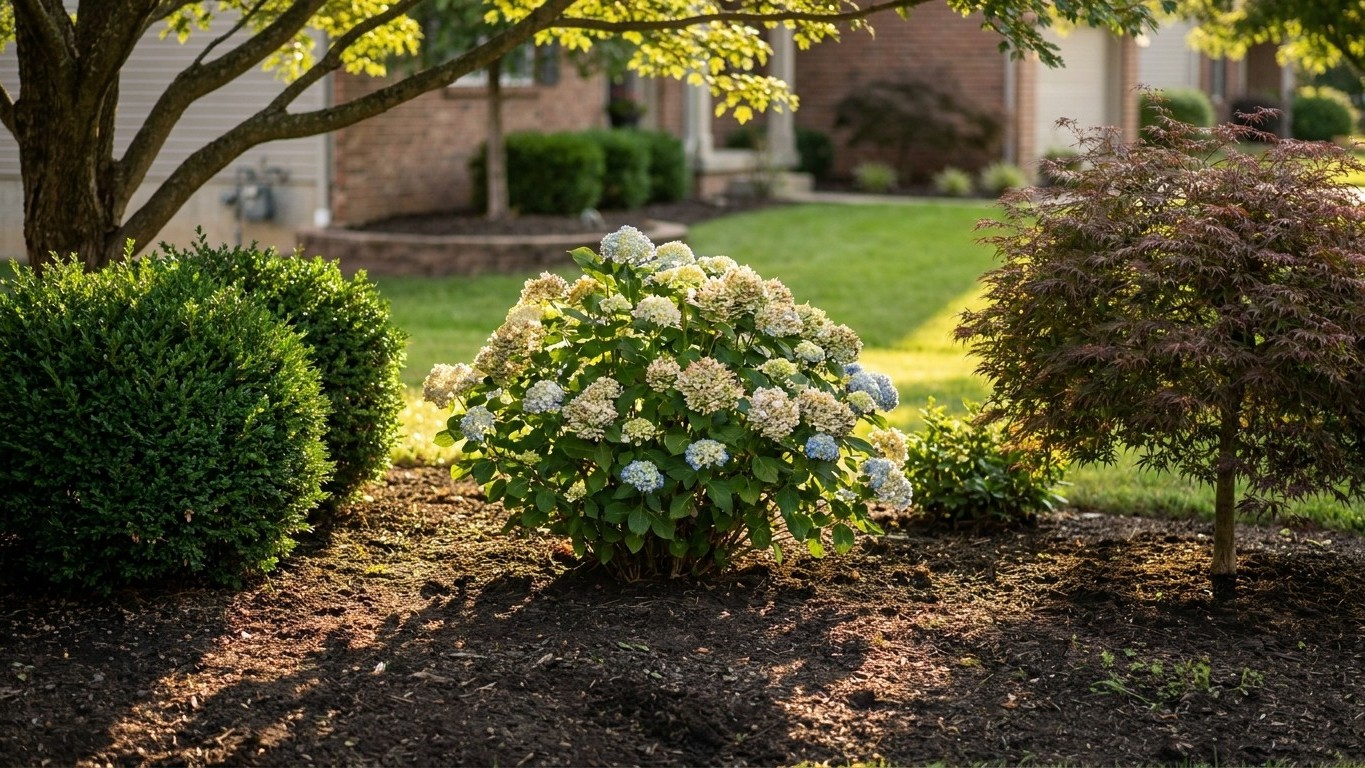

Alabama gardeners can grow hydrangeas successfully almost anywhere in the state, but the shrub you choose and the winter protection it needs depend heavily on which hydrangea type you plant. Panicle and smooth hydrangeas shrug off Alabama winters without help. Bigleaf hydrangeas, the ones prized for blue and pink blooms, need more careful siting and sometimes a wrap when a hard freeze lands after new growth has started.
When to plant Hydrangeas in Alabama
The reference point for frost timing in this guide comes from the Birmingham airport weather station, where NOAA’s 1991-2020 Climate Normals put the last spring freeze between March 19 and April 3, and the first fall freeze between November 2 and November 16. Those are averages for one location, not a promise for your yard. Rural and suburban gardens, especially in the hill country of north Alabama or anywhere with a low-lying frost pocket, often see that last spring freeze arrive a week or two later and the first fall freeze show up a week or two earlier. Check your own county’s extension office before you commit a shrub to open ground.
Container-grown hydrangeas from a nursery are the standard way most Alabama gardeners start, and the safest planting windows sit on either side of the growing season. Fall planting, from late September through November before the ground gets cold, lets roots establish over a mild Alabama winter without the stress of summer heat. Spring planting works too, once the Birmingham-area freeze risk has passed in early April, but a north Alabama gardener should count a buffer week onto that date given the same freeze pattern arrives later at elevation.
Growing hydrangeas from seed is rare and slow, and almost nobody in Alabama does it that way, since named varieties don’t come true from seed and the process takes years to produce a blooming shrub. Propagation by softwood cuttings is the practical route for gardeners who want to multiply a plant they already have. Take a four to six inch cutting from a non-flowering stem in June or early July, strip the lower leaves, and root it in a moist mix kept out of direct sun. Rooting takes four to eight weeks. Count backward from that November 2 to November 16 fall freeze window at the reference station, and a cutting taken in early June has enough time to root and establish a modest root system before cold weather, though a newly rooted cutting still benefits from a sheltered spot or a container that can be moved in for its first winter rather than being planted straight into open ground going into that first frost.
Whichever route you take, avoid planting a hydrangea during a stretch of hot, dry weather even if it falls inside the safe window. A cloudy day or the cool of early morning gives new roots a better start than a July afternoon.
Soil and site preparation
Hydrangeas want morning sun and afternoon shade almost everywhere in Alabama. The state’s summer heat is intense enough that a spot with full afternoon sun will scorch leaves and wilt blooms by early July, even with regular watering. A site under the dappled edge of taller trees, or on the east side of a house, usually gives the balance these shrubs need.
Soil texture matters more than most gardeners expect. Hydrangeas want a loose, well-drained bed that still holds moisture, which in practice means working several inches of compost or aged organic matter into the top foot of soil before planting, not after. Heavy Alabama clay, common across much of the Piedmont and Black Belt regions, holds water so well that roots can sit wet and rot unless the bed is amended or slightly raised. A raised bed of four to six inches above grade solves a clay drainage problem without changing anything else about the site.
Amend soil weeks ahead of planting, not the same day. Compost needs time to integrate with existing soil structure, and any pH adjustment (which also affects bloom color in bigleaf types, covered further down) works gradually rather than overnight. Test soil pH before amending if you want predictable bloom color rather than guessing.
Spacing depends on mature size. Panicle hydrangeas that reach six to eight feet need that much room on all sides for air circulation, which also cuts down on fungal leaf disease in Alabama’s humid summers. Smaller bigleaf and smooth varieties can go three to four feet apart. Dig the planting hole twice as wide as the root ball but no deeper, set the crown level with the surrounding soil, and water in thoroughly before mulching.
Varieties that suit Alabama
Alabama’s long, humid growing season and mild winters favor hydrangea types that tolerate heat without needing constant babying. The traits that matter most here are heat tolerance through July and August, resistance to the fungal leaf spots that thrive in humidity, and whether a variety blooms on old wood, new wood, or both, since that determines how forgiving it is of a late spring freeze or a badly timed pruning cut.
Panicle hydrangea (Hydrangea paniculata) blooms on new wood, which means a late frost that damages old growth doesn’t cost you the season’s flowers. Varieties in this group, widely sold under names like Limelight, tolerate more direct sun than other types and handle Alabama summers with minimal fuss. Smooth hydrangea (Hydrangea arborescens), including the classic Annabelle type, also blooms on new wood and is native to parts of the eastern United States, giving it a natural comfort with the region’s humidity and rainfall pattern.
Oakleaf hydrangea (Hydrangea quercifolia) is native to the Southeast and the best-suited type for Alabama specifically, since it handles heat, humidity, and some drought better than any other hydrangea species, with the bonus of fall foliage color that other types don’t offer.
Bigleaf hydrangea (Hydrangea macrophylla), the type most people picture when they think of blue or pink hydrangea blooms, is the trickiest fit. Older bigleaf varieties bloom only on old wood, so a late freeze that kills those buds means no flowers that year. Reblooming types sold under series names like Endless Summer produce flowers on both old and new wood, which hedges against exactly that Alabama spring frost risk described above.
| Type | Blooms on | Alabama fit | Good for |
|---|---|---|---|
| Panicle | New wood | Excellent, full sun tolerant | Sunny beds, hedges |
| Smooth | New wood | Very good | Cottage borders |
| Oakleaf | Old wood | Excellent, native, heat tough | Woodland edges |
| Bigleaf (reblooming) | Old and new wood | Good with siting care | Color displays |
What to plant alongside
Hostas, ferns, and astilbe share the same shade and moisture preferences as hydrangeas without competing hard for the same nutrients, which makes them reliable underplanting in a shaded bed. Azaleas and camellias, both common in Alabama landscapes, share similar acidic soil preferences and bloom at different times, extending color through the season without crowding the hydrangea’s root zone.
For pollinator draw, native perennials like bee balm or coneflower planted at the sunnier edge of a hydrangea bed bring in bees without shading out the shrub itself. This is a genuine benefit, not a folk claim, since hydrangea flowers themselves offer limited nectar value and diversifying the bed helps overall pollinator traffic in the yard.
Skip planting hydrangeas directly under shallow-rooted, thirsty trees like maples, which will out-compete a young shrub for both water and nutrients in Alabama’s summer heat. Large-leaf hydrangeas also don’t pair well immediately next to lawn grass, since turf grass roots pull moisture from the same shallow soil layer the hydrangea depends on.
Some gardeners claim marigolds or garlic planted nearby repel hydrangea pests. There’s no real evidence behind that pairing for this shrub specifically. Aphids and spider mites, the two pests that do show up on Alabama hydrangeas, aren’t documented as repelled by companion planting, and the better defense is the cultural practices covered below.
Watering, feeding and support
Hydrangeas earned their name from a Greek root meaning water vessel, and the plant lives up to it. Deep watering twice a week during dry stretches, enough to soak the root zone six to eight inches down, beats a daily light sprinkle that only wets the surface. A finger test two inches into the soil tells you honestly whether it’s time to water or not.
A two to three inch layer of mulch, pulled back slightly from the stem base, holds soil moisture through Alabama’s hot months and moderates root temperature. Replenish it in spring as it breaks down.
Feed with a slow-release, balanced fertilizer in early spring as new growth starts, and again lightly in early summer if the shrub looks like it needs a boost. Avoid heavy nitrogen feeding late in the season, which pushes soft new growth that won’t harden off before the first fall freeze.
Large panicle varieties, especially older or heavily blooming stems, can flop under the weight of a full flower head after a summer rain. A simple stake and soft tie, placed before the stem bends, prevents breakage better than trying to prop up a stem that’s already cracked.
Pruning timing depends entirely on which type you planted. Old-wood bloomers like oakleaf and most bigleaf types should be pruned right after flowering, since next year’s buds form on that summer’s growth. New-wood bloomers like panicle and smooth hydrangeas can be cut back hard in late winter, before spring growth starts, without any risk to that year’s flowers. Getting this backward is the single most common reason an established hydrangea stops blooming.
Common problems
Failure to bloom is the complaint that brings most Alabama gardeners to search for help, and it almost always traces back to pruning at the wrong time or a late spring freeze killing buds on an old-wood variety. If your hydrangea grows lush green foliage but produces no flowers, check your pruning calendar against the bloom-wood type before assuming disease or a soil problem.
Wilting on a hot afternoon, even with adequate soil moisture, is common and usually not a sign of trouble. Bigleaf hydrangeas in particular droop under intense sun and perk back up by evening. Wilting that persists into the next morning, though, points to a genuine watering or root problem rather than simple heat stress.
Leaf spots, brown or purplish blotches that spread across foliage in humid weather, come from fungal diseases like Cercospora leaf spot, which Alabama’s summer humidity encourages. Better air circulation from proper spacing, and watering at the soil line rather than overhead, cuts down the moisture on leaves that fungus needs to spread. Remove and dispose of badly spotted leaves rather than composting them.
Powdery mildew, a gray-white coating on leaves, shows up in the same humid conditions and responds to the same fix: more airflow, less overhead watering, and morning watering rather than evening so leaves dry before nightfall.
Yellowing leaves with green veins, a condition called chlorosis, usually signals a soil pH that’s too high for the hydrangea to take up iron properly. This is a soil chemistry issue, not a pest or disease, and a soil test is the only reliable way to confirm it before treating.
Pests that actually show up in Alabama
The Alabama Cooperative Extension System’s home garden pest list is built mainly around vegetable crops, and most of the insects on it (corn earworm, stink bugs, squash vine borer, cowpea curculio, Mexican bean beetle, spotted cucumber beetle, imported cabbageworm) target tomatoes, squash, beans, and cabbage rather than ornamental shrubs like hydrangeas. Two pests from that same extension list, though, do show up on hydrangeas specifically.
Aphids are the one worth watching from early spring onward, per that same extension timing. Look for clusters of small, soft-bodied insects, green or black, on new growth and the undersides of young leaves, along with a sticky residue called honeydew that can attract sooty mold. A strong spray of water knocks most aphid populations down without chemicals, and insecticidal soap handles a heavier infestation.
Spider mites are the other pest to watch, and they favor hot, dry conditions rather than the humid stretches that bring on fungal disease. Look for fine stippling or a bronzed, dusty look on leaves, sometimes with faint webbing on the undersides in a bad infestation. Because they thrive in dry heat, regular watering that keeps foliage from stressing is itself a partial defense, and a forceful hose spray on the leaf undersides disrupts their populations directly.
For anything else showing up on a hydrangea, a county extension office can identify it accurately rather than guessing from a vegetable-focused list that doesn’t cover it.
Harvest and end of season
Cutting hydrangea blooms for fresh arrangements works best in the cool of early morning, once the flower head has fully opened and feels papery rather than soft, which means it will hold up in a vase rather than wilting within hours. Cut the stem at an angle, strip lower leaves, and place it in water immediately.
For dried arrangements, let the blooms mature further on the plant until they feel slightly stiff and papery to the touch, usually in late summer, then cut and hang them upside down in a dark, dry spot for a couple of weeks. Blooms cut too early tend to shrivel rather than dry properly.
As the first fall freeze approaches, at the reference station between November 2 and November 16 but potentially a week or two earlier in outlying counties, stop feeding by late summer so new growth has time to harden before cold weather. New-wood bloomers can be cut back after their first hard freeze blackens the foliage. Old-wood bloomers should be left alone through fall, since next year’s flower buds are already set on this year’s stems, and a hard pruning now removes next spring’s blooms entirely. A four-inch layer of mulch over the root zone before the ground freezes protects roots through winter, and in the coldest pockets of north Alabama, wrapping a young bigleaf hydrangea’s buds in burlap gives extra insurance against a hard freeze damaging next year’s flowers.
Local help
Frost dates and pest pressure both shift from one Alabama county to the next, and the figures here only reflect one weather station and one statewide pest list. The Alabama Cooperative Extension System offers county-level planting calendars, soil testing, and pest identification specific to your area, and it’s worth a call before you commit to a planting date or a variety.
Common questions
Can hydrangeas survive Alabama winters without protection?
Panicle, smooth, and oakleaf hydrangeas handle Alabama winters without any wrapping or covering. Bigleaf hydrangeas, especially young or newly planted ones, benefit from mulch over the root zone and a burlap wrap around buds in the coldest north Alabama counties.
Why does my hydrangea have leaves but no flowers?
This is almost always a pruning timing problem or frost damage to old-wood buds. Check whether your variety blooms on old or new wood, and match your pruning schedule to that before assuming a soil or pest issue.
Do hydrangeas change color based on Alabama’s soil?
Only bigleaf hydrangeas change color, and only based on soil pH and available aluminum, not fertility. Acidic soil (lower pH) produces blue blooms, while alkaline soil pushes toward pink. This has no bearing on panicle, smooth, or oakleaf types, which stay white or green regardless of soil chemistry.
How much sun do hydrangeas need in Alabama specifically?
Morning sun with afternoon shade suits most hydrangeas in Alabama’s climate. Full, unshaded afternoon sun through the summer months scorches leaves and stresses blooms even with regular watering.
When is the safest time to plant a hydrangea in Alabama?
Fall, from late September through November, lets roots establish over a mild winter. Spring planting works too, once the local last frost date has passed, with an extra week of buffer recommended for gardens north of the Birmingham reference area or at higher elevation.