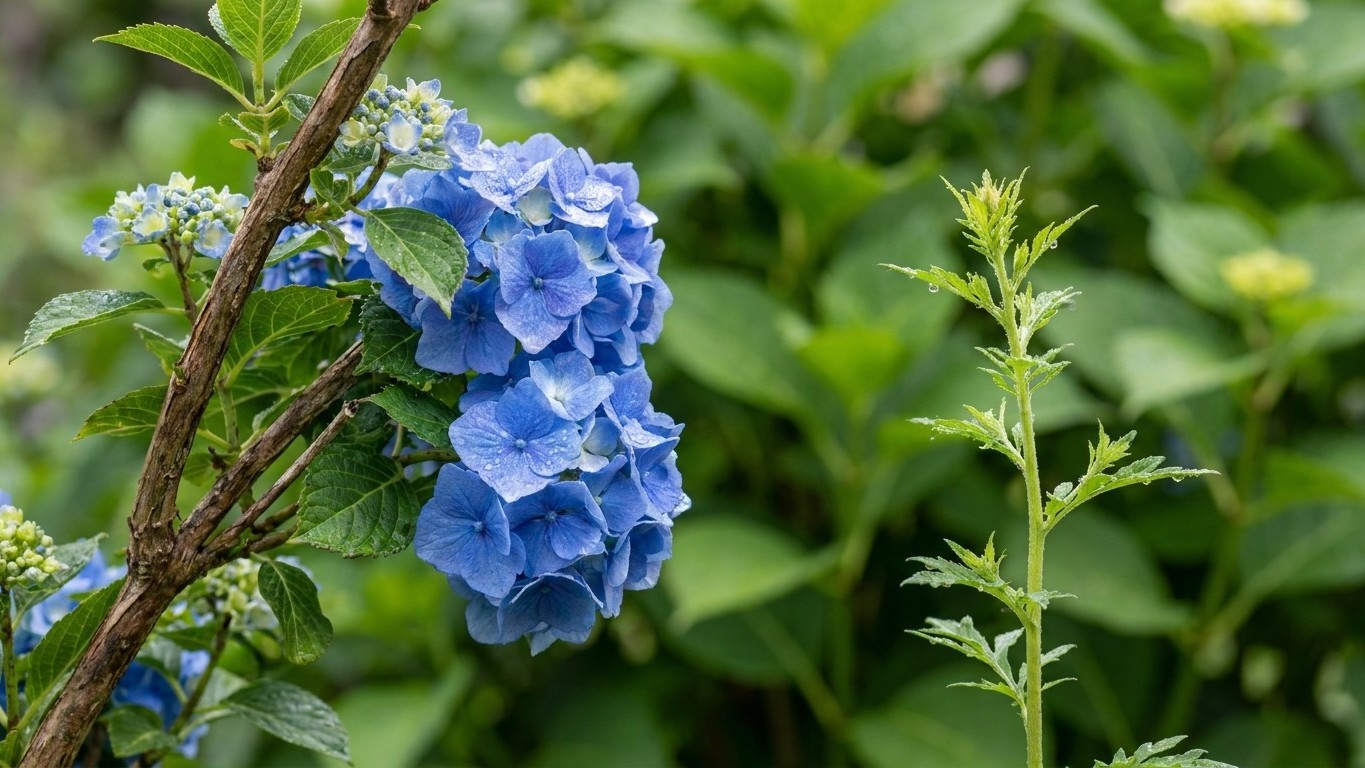

Pink or blue isn’t about the plant at all. It’s about what’s locked inside your soil. Alabama’s clay tends to sit on the alkaline side, especially across the state’s central Black Belt, and that chemistry keeps aluminum out of reach for hydrangea roots. Blue blooms need that aluminum. Shift the soil’s pH down and make aluminum available, and the same bush that bloomed pink last year will bloom blue this time around.
What this comes down to in Alabama
The short answer starts with soil chemistry, not the calendar: Alabama’s clay-heavy, often alkaline ground keeps aluminum unavailable to hydrangea roots, and that’s what keeps blooms pink from Mobile Bay up through the Tennessee Valley. But timing still matters for anyone trying to change that color. Based on climate normals recorded at Montgomery’s Dannelly Field, the last spring frost there falls somewhere between March 19 and April 3, and that window frames when a hydrangea breaks dormancy and starts pulling nutrients (including aluminum, if it’s available) up through its roots.
The pH threshold that flips the switch
Bigleaf and mountain Hydrangeas (the varieties that actually change color) shift blue once soil pH drops toward 5.5 and lower, where aluminum dissolves into a form roots can absorb. Push pH up toward 6.5 and beyond, and aluminum locks itself into compounds the plant can’t touch, so the bloom pigment reads pink instead. Alabama’s Black Belt, that band of dark, calcareous clay running roughly through the middle of the state, was formed over ancient chalk and limestone deposits, and it sits naturally alkaline. Gardens there start well above the blue threshold before anyone adds a single amendment.
Move north into the Appalachian foothills or south toward the sandy coastal plain near Mobile, and native soils run more acidic on their own, sometimes already low enough to nudge hydrangeas blue without any intervention. That’s why the same cultivar can bloom two different colors within a hundred miles, with nothing about the plant itself changed. The USDA Plant Hardiness Zone Map places the whole state across zones 7a to 9a, which speaks to winter cold tolerance, not soil pH, so a warm zone number tells you nothing about which color you’ll get.
Working it out for your own garden
Guessing at soil chemistry wastes a season. Every county office under the Alabama Cooperative Extension System runs soil tests that report pH directly, and that number is the only reliable starting point. A reading above 6.5 means you’re working against alkaline soil to get blue; a reading below 6.0 means blue might already be within reach with a light nudge, or you’re already there.
Testing before you treat
Pull soil from several spots around the root zone, not just one, since clay pH can vary within a few feet in Black Belt soils where old limestone fragments sit unevenly underground. Once you know your number, the fix runs in one of two directions: aluminum sulfate or elemental sulfur lowers pH and unlocks aluminum for blue; garden lime raises pH and keeps blooms pink, which matters if you’ve got a plant edging toward an unwanted lavender in more acidic ground. County extension staff can tell you how much to apply for your specific soil type and current reading, which matters more than any generic number, since Black Belt clay is buffered by all that underlying limestone and resists a pH shift far more stubbornly than sandy coastal soil does.
Timing the treatment around frost
Amendments need weeks in the ground before roots start actively drawing on them, and that’s where Montgomery’s frost window becomes useful. Since the reference last frost there runs March 19 to April 3, count backward six to eight weeks from the early end of that range, and you land in early-to-mid February as a reasonable point to get the first application down. That gives the amendment time to move through the root zone before the plant breaks dormancy and starts pulling nutrients for the season’s first flush of growth. Apply too late, after growth has already resumed and the ground has warmed through a few unseasonably warm days, and you’re asking the amendment to work on a plant that’s already set its early growth pattern, which slows how much color shift you’ll see by bloom time.
What changes across the state
A single soil description never covers the whole state, and Alabama’s terrain does a lot of the explaining. The Black Belt prairie, that historic cotton-growing swath through central Alabama, sits over chalky, calcium-rich parent material that keeps pH stubbornly high no matter how many seasons of amendment you throw at it. Gardeners there fight the alkaline baseline every year rather than solving it once.
North, south, and everywhere sandy
Head north into the foothills of the Appalachians, around Huntsville and the Sand Mountain plateau, and soils run more naturally acidic, often needing little help to hold hydrangeas blue. The Gulf coastal plain down toward Mobile brings sandy, well-drained soil that’s also naturally on the acidic side, though sand drains fast enough that amendments wash through quicker and need reapplying more often than clay holds onto them. Elevation plays a smaller but real role too: higher ground in the northeast corner of the state cools faster in fall and warms slower in spring, which shifts the practical planting and treatment calendar earlier or later than the Montgomery reference point without changing the underlying pH story. None of that changes the mechanism, only how hard you have to work against or with it depending on where your garden sits.
The mistakes this state punishes
Treating a Black Belt hydrangea once and expecting permanent blue is the most common letdown. That limestone-buffered clay pulls pH back up within a season or two, so color-changing treatment there is ongoing maintenance, not a one-time fix. Skip a year of reapplication and the next bloom cycle often drifts back toward pink or a muddy lavender in between.
Applying aluminum sulfate right after a hard frost, or worse, during a sudden warm spell that fools a gardener into thinking the ground has fully thawed, stresses roots that haven’t resumed active uptake yet and can scorch them outright. Wait until the soil itself has warmed, not just the air on a mild afternoon.
The other frequent error is skipping the soil test entirely and dumping amendment on a hunch. Alabama’s soils swing from strongly alkaline in the Black Belt to naturally acidic on Sand Mountain and along the coast, and applying a blanket treatment meant for one soil type onto the other either does nothing or overcorrects into a plant too stressed to bloom well at all.
Checking this against your county
Everything here is a state-wide starting point, and Alabama’s soil chemistry varies too much county to county for that to be the last word. Your county office of the Alabama Cooperative Extension System runs the soil tests that turn a general answer into one that fits your actual yard, and their hydrangea guidance accounts for local soil series in a way no statewide figure can.
Common questions
Can I turn a pink hydrangea blue without buying chemicals?
Coffee grounds and pine needle mulch add mild acidity over time, but they work slowly and rarely shift stubborn Black Belt clay enough on their own. A soil test first tells you whether a natural approach has any realistic chance before you invest a season waiting on it.
Does every hydrangea change color with soil pH?
No. Bigleaf and mountain hydrangeas respond to aluminum availability. Panicle hydrangeas bloom white regardless of soil chemistry, and oakleaf hydrangeas run white to pink through age, not pH. Check which type is planted before assuming a treatment will do anything.
How long before I see the color actually shift?
Expect a full growing season at minimum. Amendments need time to move through the root zone and get taken up before the next round of blooms forms, so a treatment applied in late winter typically shows results in that year’s bloom cycle rather than immediately.
If I stop treating the soil, will the color change back?
In Black Belt clay, usually yes, since the underlying limestone keeps pulling pH back toward alkaline once amendments stop. In naturally acidic soil elsewhere in the state, blue can hold on its own for longer without repeated treatment.