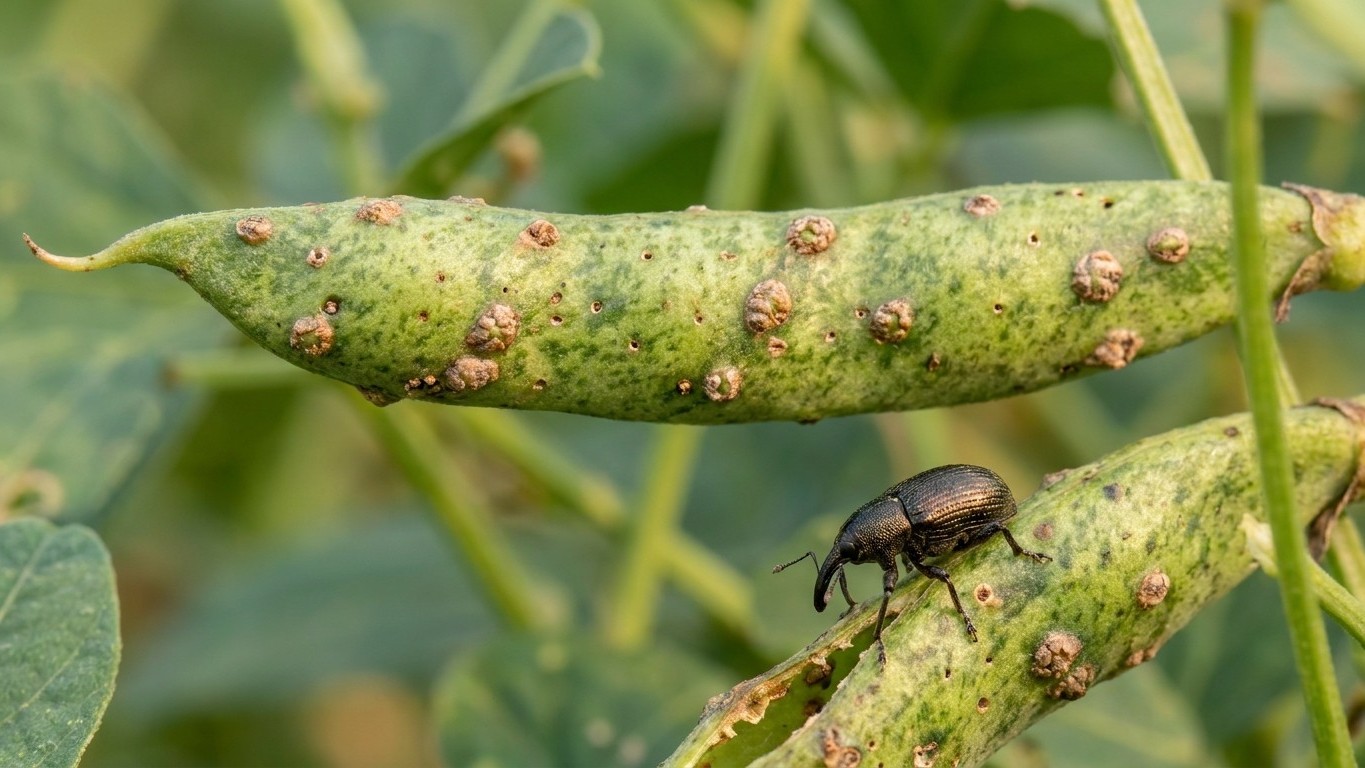

Cowpea curculio activity in Mississippi tracks the cowpea and southern pea growing season, roughly from pod set in late spring through harvest in fall. The state’s main home-garden pest guide doesn’t publish a week-by-week window for this specific weevil, so growers rely on the general biology of the pest and on when their own pods start forming.
The weeks to watch

Mississippi State University Extension’s home vegetable garden guide (Publication 2347) is thorough on many pests, but cowpea curculio isn’t one of the species it names in the material available. The publication details squash vine borer, pickleworm, leaf-footed bugs, yellowmargined leaf beetle, vegetable weevil, harlequin bug, and mole crickets, with clear seasonal notes for each. Cowpea curculio simply isn’t in that list, so there’s no county-level calendar to quote here. What follows is the general pattern for the species, not a locally verified date range.
Early-season activity
Adult weevils overwinter in plant debris and soil near old cowpea plantings, then become active as temperatures warm in spring. Early feeding is on foliage and blossoms, which causes minor cosmetic damage and rarely alarms anyone. This stage matters because it’s the only window where reducing adult numbers actually slows what comes next.
The generation that does the damage
Once pods begin forming, adults lay eggs inside the young pod wall, and the larvae that hatch feed inside the developing seeds. In the Deep South, cowpea curculio typically completes more than one generation per growing season, so pressure tends to build as summer goes on rather than hitting all at once. That’s a general trend, not a Mississippi-specific count.
Reading the calendar from your last frost

Cowpeas are a warm-season crop, so gardeners plant them after frost risk has passed, not right at the last frost date. For the Jackson-area reference station, NOAA’s 1991-2020 climate normals put the 30 to 70 percent probability window for a 32°F freeze between March 6 and March 22. That’s a station figure, not a promise for every yard: rural and elevated gardens in Mississippi often see frost linger one to two weeks past that.
The curculio doesn’t answer to a printed date. It answers to soil warmth and to when your cowpeas actually reach pod set, which is the stage it targets. Here’s the arithmetic a reader can redo with their own frost date:
- Start from your local last spring frost date (use March 6 to March 22 only if you’re near the reference station; check your own county extension office for a closer figure).
- Add the weeks it takes your cowpea variety to reach pod set, commonly cited as roughly 6 to 9 weeks after planting depending on variety and weather, to estimate when curculio pressure typically starts showing up in pods.
That gives a window, not a day. An early, warm spring pushes pod set earlier and pulls curculio pressure earlier with it; a cool, wet spring delays both. If you’re using row covers to keep early-season adults off young plants, that’s the point to have them on, and pods forming is the point to pull covers so pollinators can reach the blossoms.
What it attacks, and what the damage looks like

Pods that look otherwise healthy on the vine but carry small, dark, slightly sunken punctures or curved scarring on the surface are the first sign most gardeners notice. Split one of those pods open and the seeds inside often show dark tunneling, hollowed-out spots, or a grub sitting in the damage. Pods can also drop from the plant before they mature if infestation is heavy. The foliage feeding adults do earlier in the season is minor by comparison and rarely the reason anyone goes looking for a pest.
The larvae inside the pod are what actually destroy the crop, and that matters for treatment: once a larva is feeding inside a seed, nothing sprayed on the plant reaches it. Only the adult stage, feeding and laying eggs on the outside of the pod, is exposed to any intervention at all.
Host crops reported for cowpea curculio include:
- Cowpeas, southern peas, and black-eyed peas
- Crowder peas and cream peas
- Lima beans, as a secondary host in some reports
How Mississippi sits in this pest’s range

Cowpea curculio is Established across the Gulf Coast and much of the southeastern United States, wherever cowpeas and southern peas are grown as a garden or field crop. Mississippi sits well inside that range rather than at an edge of it, given how common southern peas are in home gardens across the state. For a pest with this kind of broad southern distribution, the difference from one state to the next tends to be timing tied to how long the growing season runs, not whether the insect shows up at all.
Because the state’s own home-garden publication doesn’t break out a Mississippi-specific window for this species, there isn’t a local dataset to point to for exact regional differences within the state either. Growers in the warmer southern counties should expect the pest’s active period to start somewhat earlier and run somewhat longer than in the cooler northern part of the state, following the same soil-warming logic that governs when cowpeas can safely go in the ground.
What actually works against it

These are ordered from least effort to most, and the order matters: try the cheap steps first, and know at what point they stop being useful.
- Plant early. Getting cowpeas in the ground as soon as soil has warmed enough gives pods a head start on the season’s curculio buildup, since populations tend to grow through the summer rather than peak on day one.
- Pick resistant or tolerant varieties where you can find them. Some cowpea varieties are reported by growers to hold up better than others, though this isn’t a precisely measured effect and varies by region and season.
- Hand-pick adult weevils in early morning. Adults are sluggish in cool morning temperatures and easy to knock into a can of soapy water. This only works before eggs are laid, since it targets the adult stage directly.
- Harvest pods promptly and often. Letting mature pods sit on the vine gives larvae more time to complete development and drop to the soil to pupate, so frequent picking interrupts that cycle.
- Clean up pod debris and crop residue after harvest. Adults overwinter in plant litter near where cowpeas grew, so removing and destroying old vines and dropped pods reduces the population that emerges next spring.
- Rotate where you plant cowpeas each year. Moving the crop away from where curculios overwintered makes it harder for emerging adults to find pods right away.
None of this helps once larvae are already inside the seed. At that stage, the only real option is pulling and destroying visibly infested pods so they don’t finish their cycle in your garden.
Common questions
Does cowpea curculio affect other beans besides cowpeas?
It’s primarily a pest of cowpeas, southern peas, black-eyed peas, and related crowder and cream peas. Lima beans are sometimes reported as a secondary host, but common green beans and snap beans aren’t typically affected by this species.
Can you eat pods with curculio damage?
Pods with visible surface scarring or hollowed seeds are generally not worth cooking; the damaged seeds are the part with feeding tunnels and frass inside. Sorting out and discarding affected pods at harvest is the usual approach rather than trying to salvage them.
Does row cover help against cowpea curculio?
Covers can help keep early-season adults off young plants before pods form, but they have to come off once blossoms open so pollinators can reach the flowers. Once pods are forming and adults have already had access, a cover on at that point does little against damage already underway.