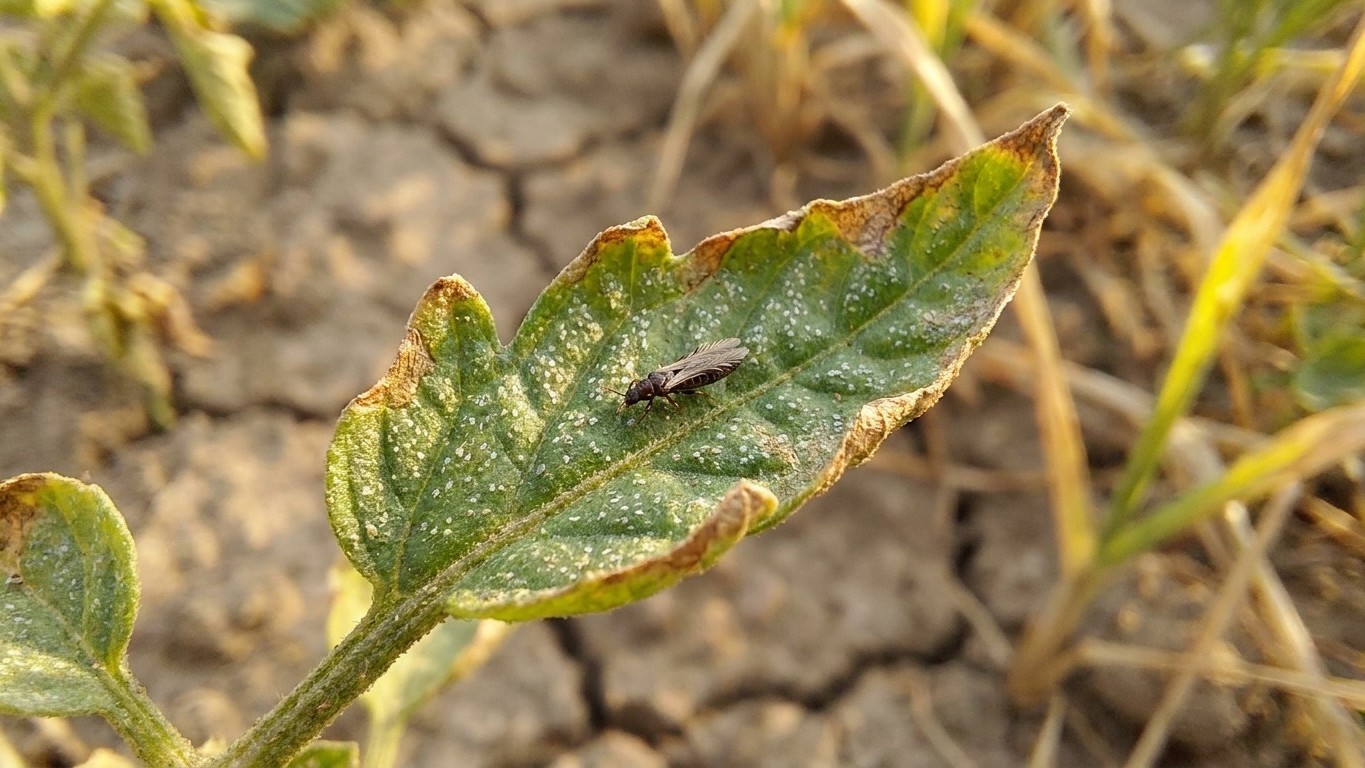

Chilli thrips show up in Florida whenever a stretch of hot, dry weather settles in, and that can happen anytime from spring through fall. UF/IFAS Extension doesn’t publish a fixed flight calendar for this species the way it does for some other pests, but it does flag vegetables planted in August or September as especially exposed, since that’s when heat-loving pests are already Established and looking for tender new growth.
The weeks to watch

Chilli thrips (Scirtothrips dorsalis) are heaviest during long hot, dry periods, according to UF/IFAS Extension’s Gardening Solutions pest guide. That’s the plain answer: no calendar date, just a weather pattern. Rain and cooler stretches knock populations back; a run of dry, hot days lets them build fast.
No published generation count for this species
UF/IFAS names a specific flight window for some Florida pests, eastern lubber Grasshoppers, for instance, run March or April through October or November, peaking in July and August. But that timeline belongs to the grasshopper, not to chilli thrips. For chilli thrips, the local extension service doesn’t break the season into named generations or flights. The guidance that does exist is the hot-dry trigger, and gardeners are better served tracking weather than trying to count broods.
The August-September planting risk
UF/IFAS specifically warns that vegetables planted in August or September are susceptible to pests that thrive in hot weather, and chilli thrips fit that description exactly. A fall garden started during that window meets thrips populations that have already had a full summer to build up on nearby ornamentals and weeds. Planting a few weeks earlier or later, when the heat has broken slightly, changes the odds.
Reading the calendar from your last frost

Chilli thrips don’t check a calendar. They respond to soil and air warmth, so an early spring pushes their active season forward and a cold, wet spring holds them back. What a Florida gardener actually has on hand is a frost date, and for north Florida (the Jacksonville area), NOAA’s 1991-2020 Climate Normals put the last spring freeze risk between February 16 and March 7, based on station USW00013889. That’s a range, not a guarantee, and it applies to north Florida specifically. Central and south Florida run essentially frost-free, and there the whole growing calendar flips: the main season runs through winter, and summer becomes the hard stretch to manage, including for this pest.
- Start from the local frost window, February 16 to March 7 for the Jacksonville area, and treat it as a range, since three of the last thirty years saw no freeze there at all.
- Count forward to the first sustained hot, dry stretch after transplanting rather than a fixed number of weeks: that’s the trigger UF/IFAS points to, and it will land later after a cool spring and earlier after a warm one.
What it attacks, and what the damage looks like

The tip-off usually isn’t the insect, it’s the plant. New growth curls, bronzes, or turns a rusty brown at the leaf edges and veins. Flower buds can blacken and drop before opening, and young fruit develops a scarred, corky patch where feeding happened. On pepper plants especially, that scarring on the fruit surface is often the first thing a gardener notices, long before they spot the thrips themselves, which are pale, thread-thin, and barely visible without magnification.
Both the larvae and the adults feed by rasping the surface of tender tissue and sucking up the contents, which means damage is concentrated wherever new growth is softest: shoot tips, young leaves, flower buds, and developing fruit. That matters for timing a response, because once larvae are established inside a curled, folded leaf, they’re physically shielded from anything sprayed on the surface.
Plants commonly affected in home gardens include:
- Peppers, where fruit scarring is the classic symptom
- Roses, with blackened, distorted buds
- Strawberries and blueberries
- Viburnum and other ornamental shrubs
How Florida sits in this pest’s range

This site currently documents chilli thrips for one territory: Florida. That’s not a ranking or a severity claim, it just means there’s no side-by-side comparison available yet with other states on this platform. What it does tell a Florida gardener is that the guidance here comes from a source built specifically for the state’s conditions, UF/IFAS Extension, rather than being adapted from somewhere else.
Florida’s warm, humid climate and long growing season give this pest more months of opportunity than a shorter-season state would, which is consistent with why the local extension guidance frames the risk around weather patterns (hot, dry stretches) rather than a hard start and end date. As more territories get added to this pest-by-state coverage, comparisons on timing and pressure will become possible; for now, the Florida-specific hot-dry pattern is the most reliable marker available.
What actually works against it

The cheapest, earliest moves matter most, because once larvae are tucked inside curled new growth, options narrow fast.
- Time the planting. Avoiding an August or September start, when possible, sidesteps the exact window UF/IFAS flags as riskiest for hot-weather pests, including chilli thrips.
- Use row covers on young transplants. A physical barrier keeps adults from laying eggs on tender new growth in the first place. It stops working the moment the cover comes off or the plant outgrows it, so timing removal matters as much as timing installation.
- Inspect new growth regularly. Catching curling, bronzed tips early lets a gardener remove and destroy them before the population inside spreads to the rest of the plant.
- Prune and destroy infested shoot tips. Because larvae hide inside curled leaves, physically removing that tissue takes out thrips that a surface treatment can’t reach.
- Clear fallen leaves and plant debris. Thrips and their pupae can shelter in litter at the base of plants, so a cleared bed removes a wintering-over spot.
- Rotate susceptible crops. Moving peppers and other host plants to a different bed each season keeps populations from building on the same soil year after year.
Several home remedies circulate for thrips generally, reflective mulches, sticky traps, and diluted soap sprays among them. Gardeners report mixed results with these, and controlled trials on their effectiveness against chilli thrips specifically are limited, so they’re worth treating as a possible supplement rather than a primary defense.
Common questions
Is chilli thrips the same as the regular thrips found on most garden plants?
No. Chilli thrips (Scirtothrips dorsalis) are a distinct species known for attacking the newest, tenderest growth and causing the bronzed, scarred symptoms described above, whereas other thrips species common in gardens often cause less severe cosmetic damage.
Can chilli thrips damage roses along with vegetables?
Yes. Roses are a commonly affected ornamental, showing blackened, distorted flower buds and damaged new leaves in addition to the fruit scarring seen on peppers.
Do row covers protect plants for the whole growing season?
No. Covers work while they’re in place over young transplants, but they have to come off as plants grow and need pollination, and that’s when regular inspection of new growth becomes the main line of defense.