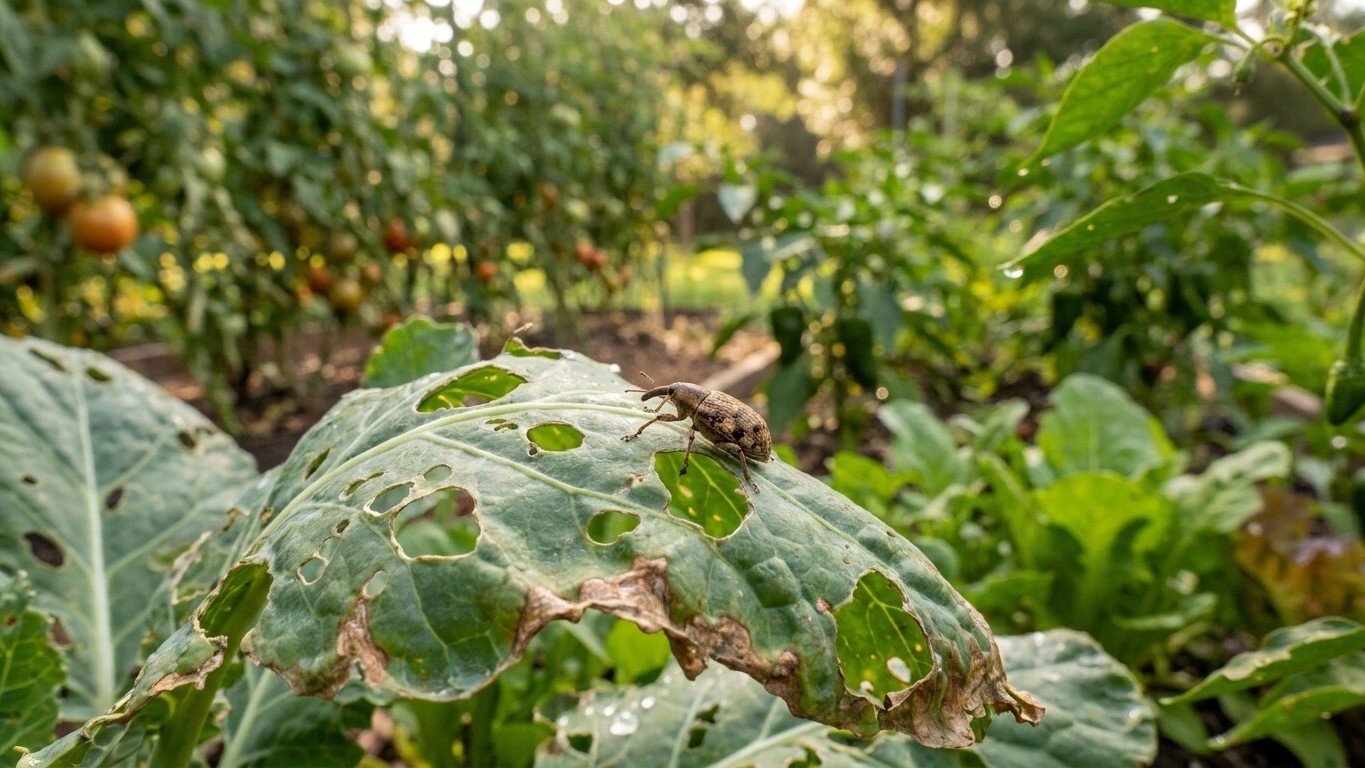

Vegetable weevils show up in Mississippi gardens fall through late spring, targeting root and leafy crops during the state’s cool months rather than summer. Row covers at fall planting, quick debris cleanup, and rotating cole crops and root vegetables are the main defenses, since once larvae tunnel into roots, no home remedy reaches them.
The weeks to watch

Mississippi State University Extension lists the vegetable weevil as active fall through late spring, grouping it with Yellowmargined leaf beetles as the state’s signature cool-season vegetable pests. That’s a long window, roughly six months, and it means gardeners can’t treat this as a one-time spring problem the way they might with a squash vine borer flight in June.
Fall arrival
Activity picks up as soil and air temperatures drop in autumn, right around when Mississippi gardeners are setting out turnips, cabbage, and other fall greens. This is the period Extension entomologists flag as the start of the pest’s active stretch, and it’s also when populations are easiest to catch early, before larvae have had a full season to build numbers underground.
Late-season activity into spring
The same publication carries the window through late spring, which means weevils that Established themselves in October or November are often still feeding on root crops in March and April. There’s no second distinct flight described in the Extension data, no clean break between a “fall generation” and a “spring generation.” It reads more as one continuous cool-season presence that fades once summer heat sets in, which lines up with why the state’s warm-season pests, like squash vine borer and pickleworm, dominate the calendar once temperatures climb.
Reading the calendar from your last spring frost
The vegetable weevil doesn’t answer to a frost date the way a tomato transplant does. It’s a cool-season insect, so by the time the last spring frost arrives, it has usually already had months to work. That flips the usual gardening logic: instead of watching the frost date to know when a pest arrives, use it to gauge how much head start the weevil already has.
- Start with your county’s last spring frost window. At the reference weather station used for Mississippi climate normals, that range runs March 6 to March 22, based on NOAA’s 1991-2020 data. Suburban and rural gardens often see frost a week or two later than this airport figure, so check local county extension data before setting a firm date.
- Count backward to fall planting, not forward from frost. Since Extension lists vegetable weevil activity as beginning in fall, a garden with cole crops or root vegetables in the ground by October has likely had weevils present for four to five months before that March frost window even arrives. Protection has to start at fall transplanting, not at the spring frost line.
What it attacks, and what the damage looks like

Most gardeners notice the damage before they ever see the insect. Leaves show ragged, notched edges along the margins, sometimes stripped down to the veins on young seedlings. Below ground, root crops can develop tunnels and scarring that aren’t visible until the plant is pulled or the vegetable is cut open, which is often the first real confirmation of what’s been happening all along. Larvae do the bulk of the underground feeding, while adults chew foliage above the soil line, so timing any response to the visible stage of damage matters for what still has a chance of working.
Crops most commonly affected include:
- Turnips
- Cabbage and other cole crops
- Carrots
- Potatoes
- Beets
- Spinach
A wilting or ragged-looking cole crop in late fall, paired with pitted or tunneled roots at harvest, is the combination that points to this pest rather than something like a leaf-footed bug, which sticks to tomatoes and peppers in late summer instead.
How Mississippi sits in this pest’s range
Mississippi State University Extension’s publication on home vegetable garden pests doesn’t rank the vegetable weevil against neighboring states or offer a severity scale, so there’s no county-by-county breakdown to lean on here. What the source does establish is that the pest fits squarely into the state’s cool-season pest complex, alongside yellowmargined leaf beetles, in a way that’s consistent with the mild winters found across much of the humid Southeast.
That absence of a comparative ranking isn’t an oversight to read too much into. It generally reflects that this is a pest gardeners deal with broadly across the Gulf South rather than one concentrated in a single pocket of the state. The practical takeaway for Mississippi gardeners is that the calendar, not the map, is what matters most. Whether you garden in the Delta or along the coast, the fall-through-spring window from the same Extension source is the one to plan around, since no data here suggests one region of the state sees a meaningfully different timeline.
What actually works against it

Home defenses against vegetable weevil work best cheap and early, before larvae have moved underground.
- Clear garden debris after harvest. Old cole crop stems, root scraps, and fallen leaves give overwintering adults and larvae a place to shelter through cold snaps. Removing this debris in late fall takes away that shelter before the population has a chance to settle in for the season.
- Rotate root and cole crops. Moving turnips, cabbage, and carrots to a different bed each year makes it harder for weevils that survived in the soil to find a host plant immediately after emerging. This works because the insect doesn’t travel far on its own; it relies on the crop being right where it left off.
- Time fall planting carefully. Setting out transplants slightly later, once the heaviest fall emergence has passed, can reduce the window young seedlings are exposed to feeding adults. This won’t help once weevils are already established in the bed.
- Use row covers at transplant. A physical barrier over young seedlings in fall keeps adults from laying eggs near the plant. This only works before larvae hatch and move into the soil or root tissue; once they’re inside, a cover does nothing.
- Hand-pick visible adults. Checking foliage in early morning, when weevils are less active, and removing them by hand can knock back a small infestation. This is realistic for a backyard bed, much less so for a larger plot, and it has no effect on larvae already tunneling underground.
Home remedies like diatomaceous earth barriers or copper tape around beds are common in gardening circles, but there’s no consistent research showing they control vegetable weevil specifically. Treat them as unproven rather than reliable.
Common questions
Can adult vegetable weevils fly?
No. Adults are flightless, which is part of why they don’t spread quickly across a garden on their own and why crop rotation and debris removal are effective at limiting local buildup.
Does the vegetable weevil survive Mississippi winters?
Yes. Unlike pickleworms, which Mississippi State Extension notes do not overwinter in the state, vegetable weevils are part of the cool-season pest group active fall through late spring, meaning they persist through the state’s mild winter months rather than dying off.
Is it too late to do anything once roots show tunneling?
Mostly, yes for that crop. Once larvae have bored into a turnip, carrot, or potato, no home measure reaches them inside the root. The practical response is harvesting and removing the affected plants, then focusing prevention efforts on debris cleanup and rotation before the next fall planting.