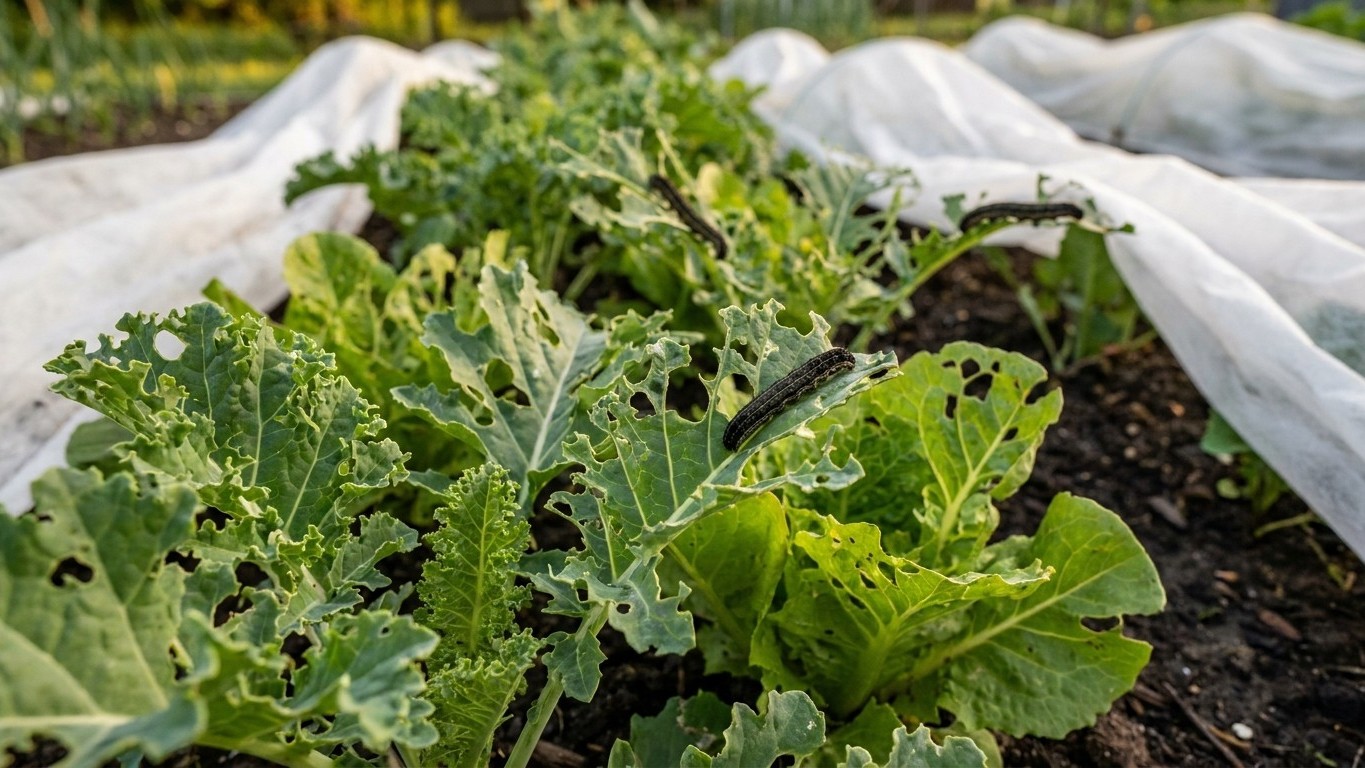

Armyworms turn up in British Columbia gardens and hayfields from late spring through early fall, feeding at night in bands that can strip a patch of grass or vegetable leaves within days. There’s no province-specific flight calendar published for this pest, so timing follows soil warmth and wind-borne moth arrivals rather than a fixed date. Row covers early, and daily scouting once nights turn warm, catch the problem before it spreads.
The weeks to watch

Damage typically shows up between late May and September, with the heaviest feeding during the warmest stretch of summer. The BC Ministry of Agriculture and Food does not publish a species-specific flight window for armyworms the way some prairie provinces track true armyworm for cereal crops. That gap matters: without a local trap-count bulletin, gardeners here have to rely on the general pattern seen across temperate North America rather than a BC-dated forecast.
Spring migrants
Moths of both true armyworm and fall armyworm don’t overwinter in Canada’s colder interior. They ride wind currents north each year, arriving progressively later the farther north they go. On the coast, where winters are milder, some larvae may survive in sheltered spots, but the bulk of the population still depends on that yearly northward push.
Late-summer buildup
The second wave, usually the one gardeners notice, builds through July and August as moths that arrived earlier complete a generation and lay again. Warm, humid stretches speed up egg-to-larva development, so a hot summer can compress the usual timeline and bring visible damage on faster than a cool one would.
Reading the calendar from your last frost

Armyworm activity tracks soil and air warmth, not the calendar on your wall, so the one date worth anchoring to is your last spring frost. For the Vancouver area, Environment and Climate Change Canada’s 1981-2010 climate normals put that mean date at March 18, measured at the Vancouver Int’l A station. That’s a midpoint, not a guarantee: in one year out of two, frost actually falls later than March 18, and inland or upland parts of the province often trail weeks behind the coast.
Working from that frost date, the arithmetic looks like this:
- Start from your local last frost date (March 18 on average near Vancouver, later inland).
- Add roughly six to eight weeks of warm-soil growth before larvae are numerous enough to cause visible feeding damage on transplants.
That puts the earliest realistic damage window in early-to-mid May for coastal gardens, sliding into June for cooler interior valleys. Covers should go on at transplanting and stay put through that six-to-eight-week stretch, then come off once plants are large enough to outgrow moderate leaf loss.
What it attacks, and what the damage looks like

The first sign is usually ragged, chewed leaf margins or entire seedlings mowed down overnight, sometimes with grass lawns showing brown, thinning patches that look like drought stress but spread in a moving front. Look closer and you’ll often find dark green or brown caterpillars with pale stripes curled at the soil line during the day, feeding only after dusk. It’s the larval stage doing all the damage; adult moths don’t feed on plants at all, which means any treatment aimed at the flying moths won’t stop the chewing you’re seeing.
Crops and turf at risk in BC gardens include:
- Lawn grasses and pasture grasses
- Corn and other cereal grains
- Leafy vegetables such as lettuce and spinach
- Beans and other low-growing legumes
- Young transplants of nearly any tender vegetable
Because larvae hide during daylight, a lawn or bed can look untouched at breakfast and skeletonized by the next morning. That nocturnal habit is part of why the damage so often gets blamed on something else, drought, disease, or rabbits, before anyone spots the caterpillar itself.
How British Columbia sits in this pest’s range

Armyworms are wide-ranging pests found across most of temperate North America, and British Columbia falls within that broad range rather than at some unusual edge of it. What differs province to province isn’t whether the pest shows up, it’s when and how heavily. Coastal BC’s milder, wetter spring tends to push the first noticeable feeding a bit later than in the Fraser Valley’s warmer inland pockets, and later still than in the hotter cereal-growing regions of the prairies.
BC’s provincial extension resources don’t run the kind of annual armyworm trap-count bulletins that Manitoba and Saskatchewan publish for their cereal growers, where true armyworm outbreaks can hit wheat and barley hard enough to justify formal monitoring. That leaves BC gardeners working from general pest-biology guidance rather than a province-tuned forecast. It’s a gap worth knowing about if you’re used to checking a seasonal pest bulletin before planting, because for this particular insect, that kind of local dated guidance simply isn’t published here yet.
What actually works against it

Cheapest and earliest interventions work best, since armyworm larvae become far harder to stop once they’re large and feeding heavily.
- Clear garden debris and thatch in fall. Moths lay eggs in grassy, sheltered spots, so removing dead leaves and thick thatch cuts down on overwintering and early-season egg sites.
- Delay or stagger transplanting where practical. Younger, hardened-off transplants set out slightly later can miss the peak of an early moth flight, since the insect’s timing depends on warmth arriving at your location, not on your calendar.
- Use floating row covers from transplant through the six-to-eight-week risk window. A physical barrier stops egg-laying moths from reaching leaves in the first place; this only works before larvae are already present underneath.
- Hand-pick at dusk or after dark with a flashlight. Larvae feed at night and hide in soil or thatch by day, so checking after sundown catches them mid-meal, when they’re easiest to find and remove.
- Rotate vulnerable crops annually. Moving grasses and grains away from last year’s infested bed reduces the odds that a fresh generation emerges right where the previous one fed.
- Encourage natural predators like birds and ground beetles. Leaving some undisturbed ground cover nearby gives these predators a base, though this works as a background pressure rather than a fast fix.
Once larvae have tunneled into stems or grown past the early instar stages, covers and hand-picking lose most of their effect, since the damage is already done and the larvae are harder to spot or reach. Some gardeners report success with diatomaceous earth barriers around beds; trials on how well this actually deters armyworm specifically are limited, so treat it as a supplementary measure rather than a guaranteed stop.
Common questions
Do armyworms survive British Columbia winters?
In the coldest interior regions, no. Most of the population arrives fresh each year as moths migrating north on wind currents. Milder coastal pockets may allow some overwintering, but the bulk of BC’s armyworm pressure each season comes from that yearly northward movement rather than local survivors.
Can armyworms damage a lawn without touching the vegetable garden?
Yes. Lawns and pasture grasses are among their preferred hosts, and a lawn can show brown, thinning patches while nearby vegetable beds stay untouched, especially if those beds are covered or the grass offers easier feeding.
Is it worth spraying at the first sign of moths?
Moths themselves don’t feed on plants, so targeting them does nothing to stop the chewing damage. Watching for the caterpillars and their feeding signs, ragged leaves, thinning turf, dark green striped larvae at the soil line, gives a far more useful signal for when action is actually needed.