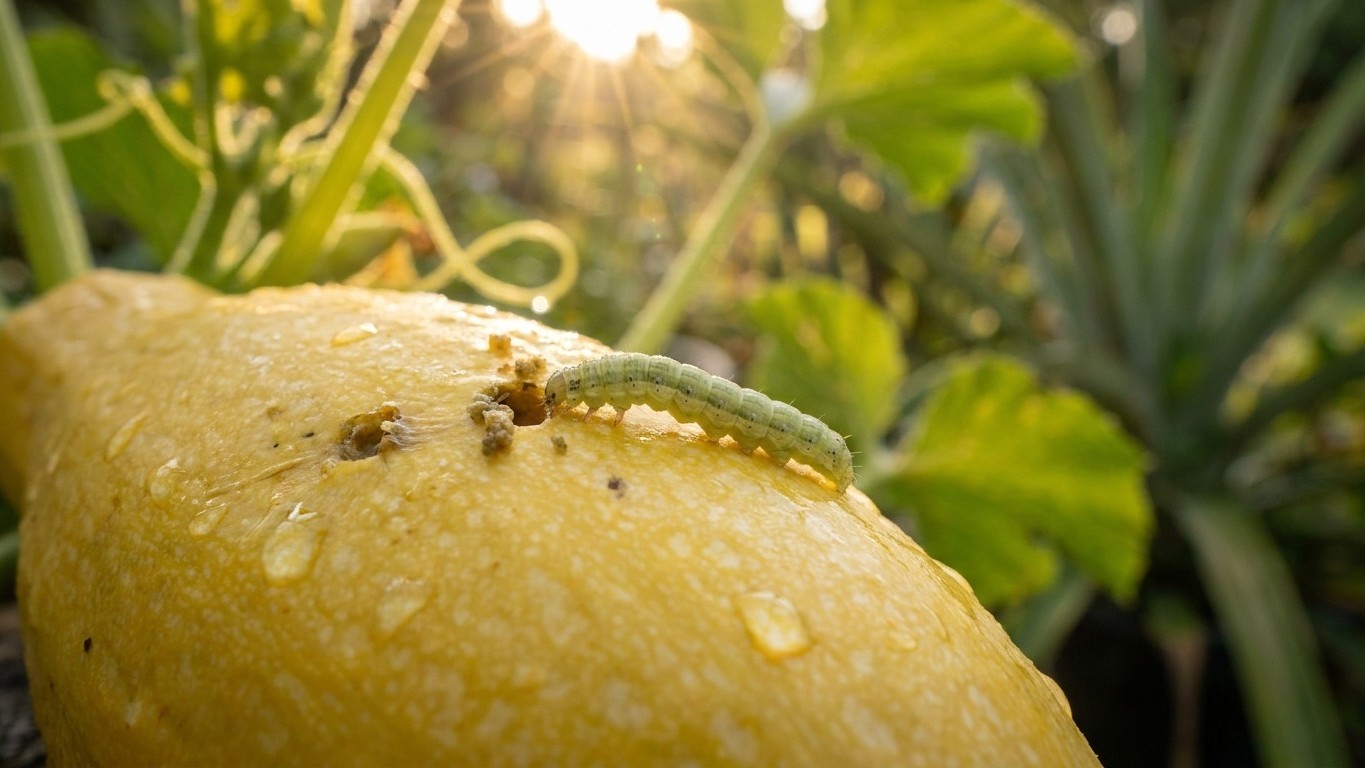

Pickleworm shows up late in the Mississippi growing season, not early, and it never overwinters here. That single fact drives everything else: when to expect damage, why early-planted squash often escapes it, and why the tools that stop it (row covers, hand-picking, timely harvest) only work if you use them before the larvae disappear inside the fruit.
The weeks to watch

Pickleworm pressure in Mississippi is a late-summer and early-fall problem, and Mississippi State University Extension is specific about why: this insect does not overwinter in the state. Every pickleworm feeding on a Mississippi vine arrived there as a moth that flew in from farther south, which means the population has to rebuild itself from scratch every year before it can do real damage.
Why nothing happens early
Cucurbits planted right after the last frost usually grow, flower, and set their first fruit before pickleworm moths have migrated far enough north in meaningful numbers. Extension’s pest calendar for the home garden groups pickleworm with squash vine borer as pests that get “much heavier late season,” rather than giving it a fixed spring date, because the timing depends on migration, not on a local overwintering population waking up.
The late-season buildup
By midsummer, moths moving up from warmer source populations have had time to establish, lay eggs, and produce offspring on whatever cucurbits are already in the ground. That’s why damage tends to snowball from July onward and why late-planted squash, cucumbers, and cantaloupe often take the worst hits, right when a gardener expects an easy fall harvest instead.
Reading the calendar from your last frost

The one date most Mississippi gardeners actually track is the last spring frost, and at the NOAA reference station used for the state’s 1991-2020 climate normals, that 32°F freeze risk falls somewhere between March 6 and March 22. Treat that as a normal for a weather station, not a promise for your yard: rural and suburban gardens typically see frost linger one to two weeks later than an airport reading, and higher ground pushes that later still.
Pickleworm doesn’t answer to that frost date the way a cold-sensitive seedling does. It answers to how far north the migrating moth population has advanced by a given week, which is a function of a warm or cool spring farther south, not of when your soil thawed.
- Start from your county’s actual last frost, adjusted later than the March 6-22 station range if you’re outside town.
- Count the growing weeks it takes your cucurbits to reach flowering and early fruit set, then recognize that pickleworm risk climbs independently of that count, arriving on its own late-summer schedule regardless of when you transplanted.
Practically, that means row covers matter less at planting time and more from midsummer forward, right as blossoms open and moths start showing up looking for a place to lay eggs.
What it attacks, and what the damage looks like

Most gardeners notice the vine before they ever see the insect. A healthy-looking squash plant develops a wilting runner tip, or a cucumber vine shows small, round holes plugged with a moist, greenish frass, the larva’s own waste packed into the entry hole like a cork. Open a squash blossom that’s stayed closed too long and you may find the culprit feeding right inside the flower before it ever reaches the fruit.
The larval stage does essentially all the damage. Adult pickleworm moths only lay eggs; it’s the caterpillar that bores into buds, blossoms, and then the fruit itself, which is why any control aimed at eggs or adults has a narrow window before the real destruction starts underground, so to speak, inside the fruit’s flesh.
Crops on the pickleworm menu in Mississippi gardens include:
- Summer squash and zucchini
- Winter squash and pumpkin
- Cantaloupe
- Cucumber
- Other cucurbit vine crops grown in home gardens
How Mississippi sits in this pest’s range
Mississippi’s extension guidance doesn’t rank the state’s pickleworm pressure against its neighbors, and it doesn’t need to: the defining fact is that the insect can’t survive a Mississippi winter on its own. That puts the whole state on the receiving end of a range that stretches much further south, with populations reinvading from warmer regions along the Gulf Coast and Florida each year rather than persisting locally.
For a widespread migrant like this, presence isn’t really the variable that changes from one state to the next. Timing is. A Mississippi garden and a garden in a state several hundred miles north might both see pickleworm eventually, but the northern garden sees it later in the season and often in lighter numbers, simply because the moths have farther to travel and less time left to build a damaging population before fall shuts the crop down. Mississippi, sitting closer to those southern source populations, tends to see pressure build earlier in the summer-to-fall window than gardens further inland or north.
What actually works against it

Because pickleworm has to migrate in fresh every year, the goal for a home gardener isn’t eliminating a resident population, it’s outrunning the calendar or physically blocking the moths before eggs get laid. Cheapest options come first.
- Plant early and pick early. Getting cucurbits in the ground as soon as frost risk passes lets many varieties finish a harvest before late-season pickleworm numbers peak. This works only as a head start; it does nothing once moths do arrive.
- Use row covers through bloom, then manage pollination. A physical barrier over the vines keeps egg-laying moths off blossoms and young fruit. The catch: cucurbits need bees to set fruit, so covers have to come off during flowering hours or be paired with hand-pollination, otherwise you trade one problem for an empty vine.
- Hand-pick damaged buds, blossoms, and vine tips. Removing and destroying anything showing early frass or wilting works only while the larva is still near the surface. Once it has tunneled deep into a fruit, picking off the plant won’t reach it, and the fruit itself needs to be removed and destroyed instead.
- Rotate cucurbit plantings and clear debris after harvest. Because pickleworm doesn’t overwinter locally, rotation and cleanup have less effect on pickleworm specifically than they do on soil-dwelling pests, but clearing old vines still removes pupation sites and shortens the season available for a late-arriving population to keep breeding on your property.
No home remedy reliably stops pickleworm once larvae are inside the fruit. At that stage, the only realistic move is removing and destroying the infested fruit to prevent the larva from completing its life cycle on your plant.
Common questions
Does pickleworm survive Mississippi winters? No. Mississippi State University Extension notes it does not overwinter in the state; every season’s population arrives by migration from warmer regions to the south.
What does pickleworm damage look like on squash? Look for a wilting vine tip, closed or feeding-damaged blossoms, and small holes in fruit plugged with moist, greenish frass. The larva does the damage from inside, so the visible sign usually appears before you spot the caterpillar itself.
Can row covers stop pickleworm completely? They block egg-laying moths effectively before bloom, but cucurbits need pollinators once flowering starts, so covers have to come off (or be managed around bee activity) during that window, which is exactly when pickleworm pressure tends to build.