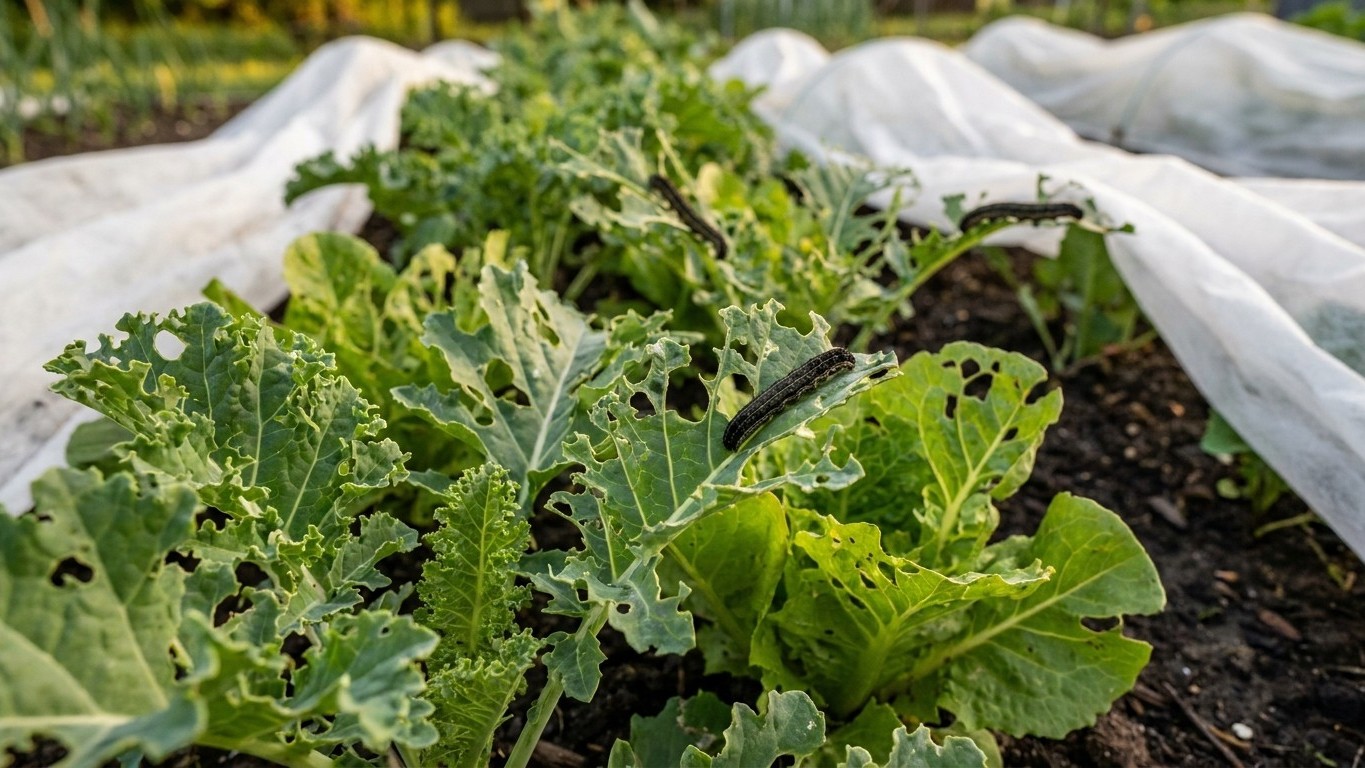

Armyworms show up in Washington later than in most of the country, arriving as migrating moths rather than overwintering locals, typically once summer heat builds. Nothing stops an established infestation overnight, but crop rotation, prompt tilling, and row covers timed to your transplant date cut damage more than any single treatment applied after the fact.
The weeks to watch

Washington State University Extension does not publish a specific flight-date window for armyworms the way some Midwest and Southern extension services do, so there’s no local calendar entry to quote here. What’s documented instead is the general biology of the pest, and that pattern still tells you what to expect.
Why there’s no fixed date
Armyworms, whether the true armyworm or the fall armyworm, don’t survive freezing winters. Populations that damage Washington gardens each year arrive as moths migrating north from milder regions, riding weather systems rather than punching a clock. That means the “start date” shifts with how warm and how early the season runs, not with a fixed spot on the calendar.
What that means for monitoring
Because the moths have to fly in fresh each season, damage tends to build gradually through the warm months rather than exploding all at once in spring the way an overwintering pest might. The practical takeaway: start checking leaves and stems once your garden hits its stride in active summer growth, and keep checking through late summer. A single early-season scan won’t catch a pest that’s still migrating in.
Reading the calendar from your last frost

Western Washington’s last spring freeze falls somewhere between February 27 and March 18, based on 30-year NOAA climate normals for the Seattle-area station. That’s a mild window by national standards, but it’s a probability band, not a promise, and it doesn’t mean your soil is ready to plant that early. Cold, wet ground and short daylight routinely hold spring transplants back for weeks after the air itself has warmed past freezing.
Since armyworms are a migratory, Warm-Season pest rather than a frost-triggered one, the frost date matters less for when they show up and more for when your vulnerable seedlings are in the ground and exposed. Here’s how a gardener works the timeline:
- Start from your local last-frost window (late February to mid-March for western Washington), then add the extra weeks growers here typically wait for soil to actually warm before setting out transplants.
- Count forward from that transplant date: young, tender growth is what draws armyworm feeding first, so the first sign of chewed leaves or thinned stands tends to appear once plants have several weeks of active growth behind them, not the week they go in the ground.
Run that math with your own frost date, not a copied one. Someone gardening east of the Cascades, where spring arrives later and the season is shorter, will land on a different transplant window entirely.
What it attacks, and what the damage looks like

Most gardeners notice the damage before they ever spot the caterpillar responsible. Leaves show ragged, lace-like holes, sometimes stripped down to the veins overnight, and grass or grain plots can develop patchy, thinned areas that look almost mowed. On corn, the damage often concentrates in the whorl, leaving a shredded, tattered look at the center of the plant. The feeding is done entirely by the larval stage, the caterpillar itself; the adult moth doesn’t chew foliage, it only lays the eggs that become the problem. That distinction matters for treatment timing, because once larvae have tunneled into a stalk or grown large, most home remedies stop being effective and only younger, smaller larvae respond well to intervention.
Crops and plants commonly targeted include:
- Corn, especially the whorl and ear areas
- Lawn and pasture grasses
- Wheat and other small grains
- Leafy vegetables such as lettuce and spinach
- Alfalfa and other forage crops
Damage that appears in patches spreading outward across a lawn or field, rather than isolated single-plant chewing, is a classic sign of armyworms feeding as a group, which is how the pest earned its name.
How Washington sits in this pest’s range

Armyworms are found across nearly the entire continental United States, which makes this a widespread species rather than a regional rarity. The real variable between states isn’t whether the pest shows up, it’s when and how bad the pressure gets in a given year. Washington’s split climate makes that timing question more complicated than in most single-climate states.
Western Washington, mild and maritime, gives armyworm moths a longer stretch of workable warm-season weather to migrate into and establish feeding populations. Eastern Washington, on the other side of the Cascades, is high desert with a shorter growing season and harsher summer extremes, which generally compresses the window during which migrating moths find conditions worth settling into. A gardener in Spokane and a gardener in Seattle are watching for the same pest on very different calendars, and neither should assume the other’s timing applies to their own yard.
What actually works against it

Cheapest and easiest first, then more effort as needed:
- Clear garden debris and old plant residue after harvest. Armyworm eggs and pupae can shelter in leftover plant matter and thatch, so removing it reduces the local population available to start feeding the following season. This works before infestation, not after larvae are already established.
- Rotate crops each season. Moving susceptible plants like corn or leafy greens to a different bed disrupts the easy buildup of a resident population feeding on the same spot year after year. It’s a preventive measure, useless once caterpillars are already on the plant.
- Monitor regularly during warm months. Catching small, young larvae early is the single biggest factor in whether any treatment still works, since larger larvae are both harder to kill and capable of far more damage per day.
- Hand-pick caterpillars when populations are light. This only makes sense for small gardens with a manageable number of visible larvae; it does nothing once populations climb into the dozens per plant.
- Use row covers on young transplants. A physical barrier keeps egg-laying moths off vulnerable seedlings during the weeks after transplanting when damage typically starts, but the cover has to come off before pollination on crops that need it, which reopens the window.
- Encourage natural predators such as birds and beneficial insects that feed on armyworm eggs and small larvae, though this works as a background suppression tool over a season, not a fix for an active outbreak already stripping leaves.
None of these measures reach larvae once they’ve bored into a stalk or dropped to the soil to pupate; at that point, the feeding damage for that generation is already done, and the practical goal shifts to limiting the next one.
Common questions
Do armyworms survive winter in Washington?
No. The moths that produce Washington’s armyworm populations migrate in from milder regions each year rather than overwintering locally, which is why the timing of arrival shifts with the season instead of following a fixed date.
Can armyworms damage a lawn as badly as a garden bed?
Yes. Grass and pasture areas are among their preferred targets, and heavy feeding can leave patchy, thinned sections that look almost mowed, spreading outward as the group of larvae moves across the turf.
Is copper tape or another home remedy effective against armyworms?
Copper tape and similar barrier products are widely marketed for crawling pests, but they’re built around slugs and snails, not caterpillars, and trials specifically testing them against armyworms don’t show a clear result either way. Row covers and debris removal have a more established track record for this particular pest.