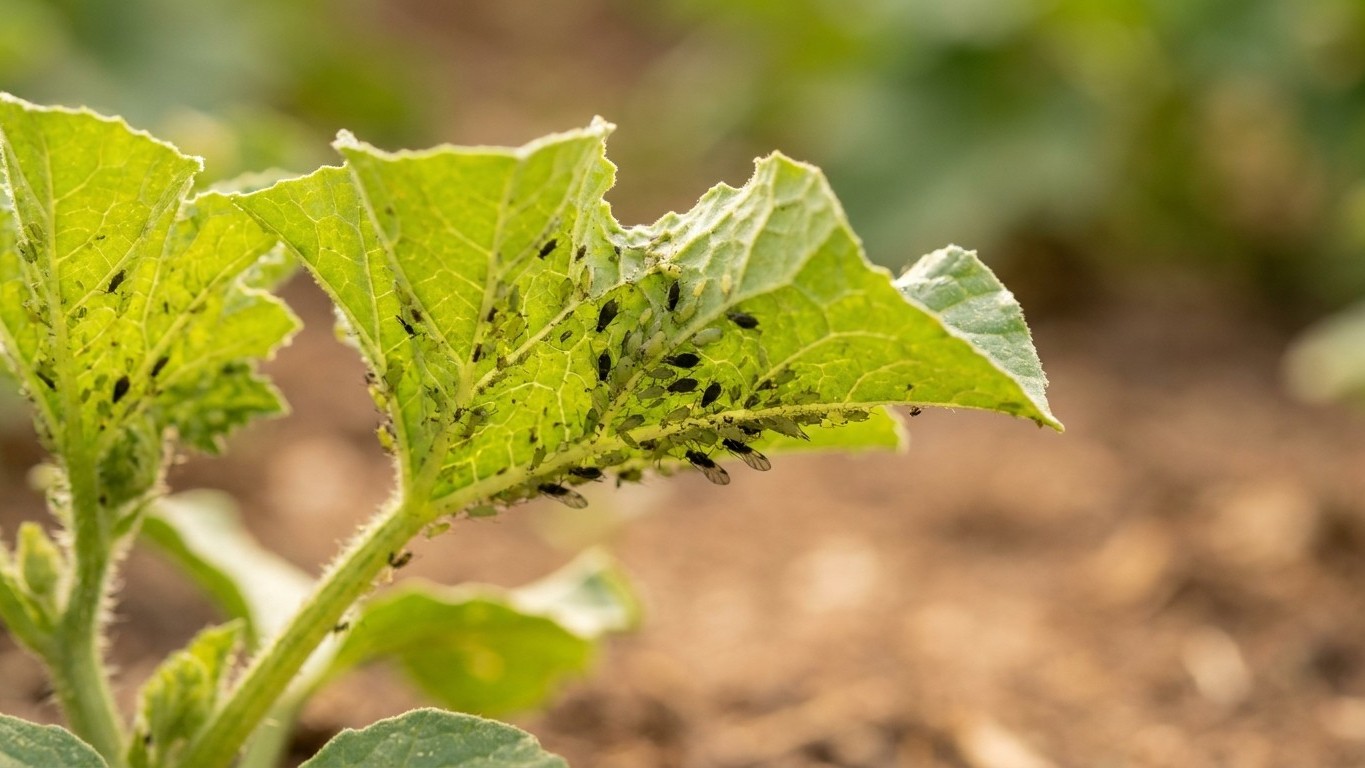

Melon aphid becomes active in Texas whenever daytime temperatures climb into the 65-80°F range, which in most of the state means late winter through fall, with populations peaking as soil warms in spring and again in early autumn. There is no single arrival date because Texas spans four USDA zones, but row covers, timely planting, and quick removal of infested foliage remain the most reliable stops.
The weeks to watch

The Texas AgriLife Extension Service publishes seasonal pest calendars for a long list of crops, but melon aphid rarely gets a named window the way corn earworm or squash vine borer do. That absence is itself useful information: it means this insect doesn’t follow a tight, predictable flight schedule tied to one moon phase or one week of the calendar. It follows temperature, plain and simple, and it can complete a generation in as little as a week when conditions are warm and dry.
First wave: spring buildup
As soon as cucurbit seedlings and cotton emerge, winged adults move in from overwintering hosts and start colonies on the undersides of young leaves. In much of Texas that overlaps with the weeks right after the last frost, though the exact date shifts by region.
Second wave: summer stress period
Populations often dip during the hottest, driest weeks of July and August, then rebound once late-summer rain or irrigation softens new growth. Because females can reproduce without mating, a handful of survivors on one wilting vine can rebuild a colony in under two weeks.
Third wave: fall planting
Gardeners who put in a fall cucurbit crop often see a fresh flush of aphids as winged forms migrate again looking for tender leaves before the season’s final freeze. This is frequently the heaviest infestation of the year in home gardens, since predator populations have often crashed along with the summer heat.
Reading the calendar from your last frost

Melon aphid answers to soil warmth and leaf tenderness, not to a printed date on a seed packet. But since most Texas gardeners plan cucurbits and cotton around their last spring frost, that date is still the most useful anchor available. For the Houston area, NOAA’s 30-year Climate Normals put the last spring freeze between February 4 and March 1, based on station data at Bush Intercontinental Airport. That’s a normal, not a promise, and it applies to the mild Gulf end of the state. The Panhandle freezes weeks to months later, and Hill Country and North Texas fall somewhere in between.
Here’s the arithmetic a gardener can redo with their own local frost date:
- Take your area’s last spring frost window (for Houston, February 4 to March 1) and add roughly two to three weeks for transplants to establish true leaves.
- Expect the first visible aphid colonies, small clusters on the underside of new leaves, within that same stretch, meaning row covers should already be in place by transplant day and can typically come off once plants begin flowering and need pollinator access.
Counting back from a range only produces another range. Nobody should treat “mid-March” as a guaranteed pest-free cutoff; treat it as the middle of a normal, with real years landing earlier or later on either side.
What it attacks, and what the damage looks like

Leaves curl downward and turn yellow or bronze before most gardeners ever spot the insect responsible. New growth looks stunted and crinkled, and a sticky film, honeydew excreted by feeding aphids, often coats the leaf surface and attracts black sooty mold that further blocks sunlight. On melons, cucumbers, and squash, vines can wilt suddenly even when soil moisture looks fine, because the colony has been draining sap from the growing tip for days before symptoms become obvious. Both nymphs and adults feed the same way, piercing plant tissue and sucking sap, so damage continues at every life stage as long as the colony persists on the plant.
The crops most commonly affected in Texas gardens and fields include:
- Cantaloupe, watermelon, cucumber, and squash
- Cotton, a major host in Texas row-crop agriculture
- Okra
- Eggplant and pepper, less often but still documented
- Citrus, particularly on young flush growth
Because nymphs and adults feed identically, a treatment that only targets adult-stage insects will miss the nymphs already established in the same colony. Anyone identifying this pest by symptom alone should check the underside of curled leaves for small, soft-bodied insects ranging from pale yellow to dark green before assuming a fungal or watering problem is to blame.
How Texas sits in this pest’s range

Melon aphid is one of the most widely distributed aphid species in North America, present from South Texas cotton fields to backyard gardens well north of Dallas. For a species this widespread, the meaningful difference between Texas regions isn’t whether the insect shows up. It’s when. A gardener in the Rio Grande Valley may see spring colonies in February, while someone in the northern Panhandle might not see comparable pressure until April or later, simply because soil and air temperatures reach the aphid’s preferred range at different calendar points.
The frost data available for this page comes from the Houston area specifically, drawn from the Bush Intercontinental Airport weather station. That’s useful for Gulf Coast timing, but it should not be read as a statewide planting calendar. Even locally, Houston’s Hobby Airport station runs about two weeks milder than IAH, which shows how much variation exists within a single metro area, let alone across a state that spans four separate USDA hardiness zones. No single published ranking places Texas at a particular severity level relative to neighboring states, so none should be assumed here.
What actually works against it

The cheapest and most effective measures come first, and they lose their value once the colony is well established, so timing matters as much as the method itself.
- Plant slightly later than the earliest possible date after frost. Delaying transplant by even a week or two, within the local frost window, can help seedlings develop true leaves and thicker cuticles before winged aphids arrive in force, since tender new growth is what the insect prefers.
- Use floating row covers from transplant until flowering. A physical barrier keeps winged adults from ever landing on the plant. It has to come off once flowers appear, since cucurbits need pollinator access, which is also roughly when the first frost-date arithmetic above says colonies typically appear.
- Inspect leaf undersides weekly and hand-remove or hose off small colonies. A strong jet of water dislodges soft-bodied aphids and many won’t climb back onto the plant. This works only while colonies are small and localized; once populations spread across multiple leaves, hosing down becomes a losing chase.
- Rotate cucurbit and cotton plantings to a different bed each season. This reduces the odds that overwintering aphids or their eggs are sitting in the same soil where next year’s susceptible crop goes in.
- Clear old vines and crop debris promptly after harvest. Aphids and the plants they overwinter on both disappear faster when dead foliage doesn’t linger in the garden through winter.
Home remedies like copper tape or ultrasonic repellents show up often in gardening forums for aphid control. Copper tape is typically marketed for slugs and snails rather than aphids, and no controlled trial establishes that it affects soft-bodied insects feeding on leaf tissue above the soil line. Ultrasonic devices are sold with pest-repellent claims broadly, but independent trials on aphid populations don’t show a consistent effect. Once nymphs are established deep inside curled leaf folds, none of these measures, mechanical or otherwise, reach them, and that’s the point at which physical removal of the affected leaf becomes the only remaining option.
Common questions
Does melon aphid survive a Texas winter?
In the milder Gulf Coast and South Texas regions, some populations persist on winter hosts or in protected microclimates. Farther north, hard freezes typically knock populations back, and spring colonies rebuild from surviving pockets or migrate in from warmer areas.
Can melon aphid spread plant viruses?
Yes. Melon aphid is a known vector for several cucurbit and cotton viruses, transmitting them while feeding even in small numbers, which is one reason early detection matters more than waiting for a large, visible colony.
Is a small aphid colony worth treating, or should I wait?
Small colonies are the easiest to remove by hand or with a water spray, and waiting typically only allows the population to expand across more leaves. Checking weekly during the weeks after transplant, per the frost-date arithmetic above, catches most infestations while they’re still manageable.