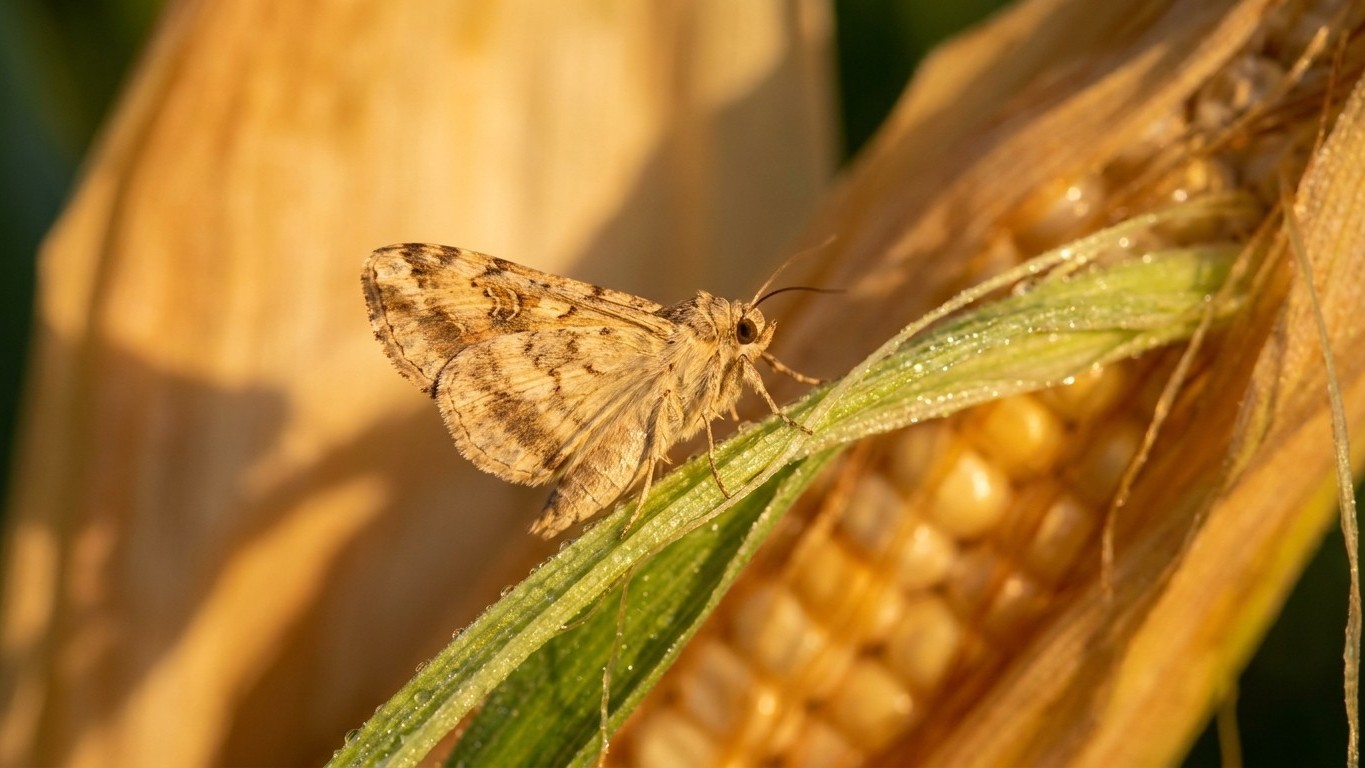

Corn earworm moths start showing up in South Texas as early as February in warm years, and the pest keeps working its way north through the state’s corn, cotton, and sorghum fields clear into October. The insect never really leaves Texas. It overwinters as pupae in the soil across the southern half of the state, then produces three to five generations before winter shuts things down again. That’s the short version. The longer version explains why Texas farmers deal with this pest differently depending on which part of the state they’re in.
Corn earworm timing across Texas regions

Texas stretches over 800 miles from the Rio Grande Valley to the Panhandle, and corn earworm timing shifts by weeks depending on where you’re standing. In the Valley and along the coastal bend, overwintering pupae survive mild winters just fine, so moths can emerge by late February or early March. By the time corn planted in Central Texas reaches the silking stage in April and May, moths from those southern generations are already flying north on prevailing winds, laying eggs directly on fresh silk.
The High Plains and Panhandle see corn earworm later, usually starting in June, because winters there are cold enough to kill most overwintering pupae. Populations that show up in that region are largely migrants riding storm fronts up from Central Texas and even from Mexico, not locally overwintered insects. This matters for scouting: growers in Lubbock or Amarillo can’t rely on local emergence data from South Texas fields hundreds of miles away, but they can watch southern trap counts as an early warning signal for what’s coming their way.
East Texas and the Blacklands tend to fall somewhere in between, with earworm pressure building through late spring and peaking during summer corn and sorghum stages. Cotton growers across the state deal with the same insect under a different name. Corn earworm and cotton bollworm are the identical species, Helicoverpa zea, just causing damage to different crops depending on what’s available and attractive when the moths are laying eggs.
Why South Texas acts as a source population
Entomologists at Texas A&M AgriLife Extension have long treated the Rio Grande Valley and Winter Garden region as a source area for corn earworm populations that eventually reach the Midwest Corn Belt. Moths are strong fliers capable of covering more than 100 miles in a single night with help from wind currents. That means insecticide resistance or a mild winter in South Texas doesn’t just affect Texas growers, it can influence pest pressure as far away as Iowa and Illinois later in the season.
How to identify corn earworm damage
The larvae are the damaging stage, and they look different depending on age and diet, ranging from pale green or yellow to brown or nearly black, always with lengthwise stripes running down the body. In corn, the giveaway is chewed kernels at the ear tip, often packed with dark, wet frass that the caterpillar leaves behind as it feeds. A single larva usually does the damage in one ear because they’re aggressively cannibalistic. Two caterpillars, one ear, one survivor.
In cotton, the same insect chews into squares and bolls, and in tomatoes it burrows straight into the fruit, leaving an entry hole that’s easy to miss until you slice the tomato open. Sorghum fields see feeding on developing grain heads. Because the moth isn’t picky about host plants, a Texas grower rotating between corn, cotton, and sorghum on the same operation doesn’t get a break from corn earworm by switching crops. It just moves with them.
Ear-tip damage on corn also opens the door to secondary problems. Chewed kernels create entry points for fungal pathogens like Aspergillus flavus, which produces aflatoxin, a genuine grain-quality and marketability concern in Texas corn, particularly in hot, drought-stressed years when the fungus thrives alongside insect damage.
What actually stops corn earworm in Texas
No single tool handles this pest on its own, largely because corn earworm has built up resistance to several insecticide classes and even to some Bt traits over the past two decades. Texas A&M AgriLife entomologists have documented reduced efficacy of certain Bt corn and cotton hybrids against local bollworm populations, which is why extension recommendations lean toward combining tactics rather than relying on one silver bullet.
Monitoring and timing
Pheromone traps and blacklight traps remain the backbone of corn earworm management across Texas. County extension offices and AgriLife entomologists track moth flights weekly during the growing season, and that data helps growers time insecticide applications to when eggs are hatching rather than spraying on a fixed calendar. Corn is most vulnerable during silking, so scouting intensifies right as tassels emerge. Missing that window by even a few days can mean the difference between a clean ear and a chewed one, since larvae burrow inward quickly and become harder to reach with contact insecticides.
Resistant hybrids and Bt traits
Bt corn hybrids expressing multiple toxin proteins still provide meaningful protection, though single-trait Bt corn has lost ground against Texas bollworm populations in several documented cases. Stacking multiple Bt proteins, or pairing a Bt hybrid with a well-timed insecticide application at silking, has become the more reliable approach for growers who want consistent ear protection. Sweet corn growers, who can’t tolerate any kernel damage the way field corn growers can, often need the most intensive combination of tools.
Biological control
Natural enemies do real work against corn earworm in Texas fields, even when growers aren’t actively managing for them. Parasitic wasps in the genus Trichogramma attack eggs before larvae even hatch, and predatory insects like lacewings and minute pirate bugs feed on young larvae before they burrow into ears or bolls. Broad-spectrum insecticide applications timed poorly can wipe out these predators along with the target pest, which is part of why extension guidance pushes growers toward selective products and threshold-based spraying instead of routine calendar sprays.
Encouraging beneficial insect habitat along field borders, and avoiding unnecessary insecticide applications early in the season, helps keep these natural predator populations intact for when earworm pressure builds later. It’s a slower, less dramatic form of control, but it reduces how hard growers have to lean on chemical options during peak flight periods.
Practical steps for home gardeners and small growers
Backyard gardeners growing sweet corn or tomatoes in Texas face the same insect, just at a smaller scale. A few tactics work well without commercial equipment:
- Apply a few drops of mineral oil or Bt spray directly into the silk channel of each ear a few days after silks appear, which blocks larvae from reaching the kernels.
- Plant early-maturing sweet corn varieties timed to silk before peak regional moth flights, based on local extension trap reports.
- Check tomatoes weekly for small entry holes near the stem end, and remove affected fruit promptly to reduce the local caterpillar population.
- Avoid planting corn in small, isolated patches next to cotton or sorghum, since adjacent host crops can concentrate moth activity in a small garden.
None of these steps eliminates corn earworm entirely. Given how far the moths travel and how many crops they’ll accept, complete elimination isn’t a realistic goal anywhere in Texas. Reducing damage to a tolerable level, timed around when local moth activity peaks, is the standard that actual growers and extension programs work toward every season.
For identification photos and detailed biology on the insect, the University of Florida’s Featured Creatures database maintains a corn earworm profile that’s used as a reference across extension programs in multiple states, including Texas: Featured Creatures: Corn Earworm.
Related guides
- Corn earworm in New Mexico: When It Shows Up and What Stops It
- Corn earworm in Oklahoma: When It Shows Up and What Stops It
- Corn earworm in Utah: When It Shows Up and What Stops It
- Corn earworm in West Virginia: When It Shows Up and What Stops It
- Corn earworm in South Carolina: When It Shows Up and What Stops It
- Corn earworm in Manitoba: When It Shows Up and What Stops It