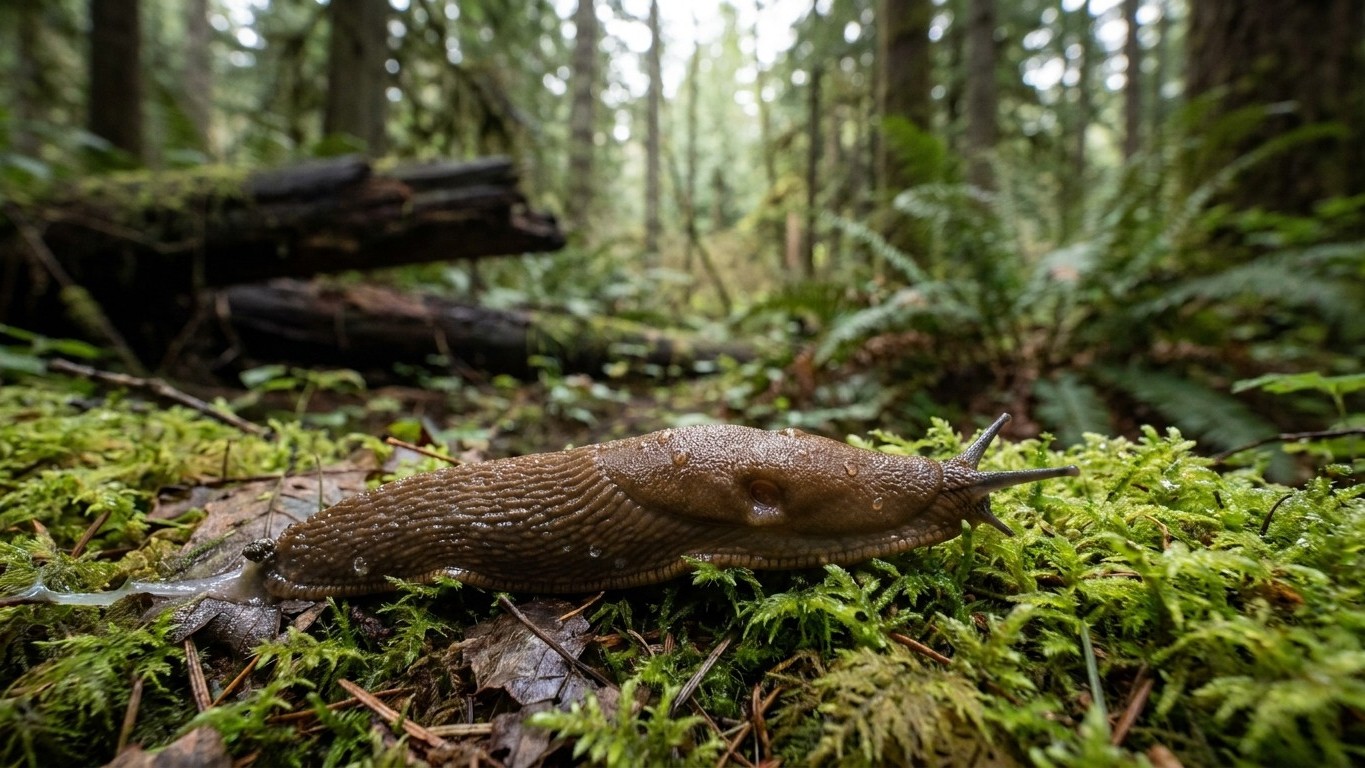

California slugs and snails don’t follow a fixed season the way many insects do. They track moisture and cool temperatures, which means a coastal garden in Santa Barbara can see slug damage in July while a Central Valley garden goes quiet for months in the dry heat. The trigger is dampness, not the calendar.
The weeks to watch
In the mildest parts of the state, slugs and snails can stay active year round. The UC Master Gardener Program notes that these mollusks feed at night and on foggy days, and that populations in mild southern coastal areas never really shut down the way they do in colder regions. That’s the direct answer for anyone gardening within a few miles of the Pacific from San Diego up through the Central Coast: there is no closed season to plan around.
Away from the coast, the local extension guidance doesn’t publish a separate window specifically for slugs the way it does for some insect pests. What it does confirm is the behavior pattern that sets the timing everywhere in the state: nighttime and fog trigger feeding, and dry heat suppresses it. That general rule fills the gap where a precise date range isn’t published.
Coastal and southern gardens
Here the season is really no season at all. Morning fog through spring and summer, combined with mild winters, keeps soil surfaces damp enough for slugs to keep moving most of the year.
Inland and Central Valley gardens
Activity concentrates around the rainy months, typically fall through spring, when soil stays moist without irrigation working against a gardener. Summer’s dry heat pushes slugs into hiding under mulch, boards, and pot rims during the day, with feeding limited to whatever moisture irrigation provides after dark.
Reading the calendar from your last frost
This is where California splits sharply by region, and the split matters more for slugs than it does for most garden pests. Coastal and southern stations show no computable freeze normal at all, meaning an average year brings zero days at or below 32°F. NOAA’s climate data for these areas lists a 365-day frost-free season. If you garden in that zone, there is no last-frost date to count from, full stop. The constraint on your garden is heat, drought, and water restrictions, not frost, and slugs simply don’t get a seasonal shutdown from cold the way they would elsewhere.
Northern California, the Central Valley, and the Sierra foothills are a different story. Those regions do freeze, and gardeners there plan transplants around a real last-frost date the way growers do across most of the country. For them, the arithmetic still works the normal way:
- Start from your local average last-frost date (available through your county’s UC Cooperative Extension office, since it varies widely by elevation).
- Expect slug damage on tender transplants within days, not weeks, of setting them out, since seedlings are vulnerable the moment soil stays damp.
Treat any frost date as a normal, not a guarantee. A cool, wet spring can push soil moisture and slug activity later regardless of what the calendar says.
What it attacks, and what the damage looks like
The giveaway is usually the leaf, not the slug itself. Ragged, irregular holes chewed between the veins, a silvery slime trail across soil or pavement nearby, and seedlings clipped clean at the base are the three signs that show up before anyone spots the culprit hiding under a leaf or a board. Damage tends to be worst low on the plant, close to the soil line, since that’s where slugs spend their daylight hours.
Both juveniles and adults feed the same way, rasping plant tissue with a mouthpart called a radula. There’s no separate larval stage the way there is with moths or beetles, so a treatment that works on a young slug generally works on a mature one too. That simplifies timing decisions but doesn’t make an infestation any easier to knock down once numbers build.
Crops most at risk in California gardens include:
- Seedlings and transplants of nearly any vegetable
- Lettuce and other leafy greens
- Strawberries, especially fruit touching the soil
- Hostas, dahlias, and other tender ornamentals
- Basil and other soft-leaved herbs
How California sits in this pest’s range
Slugs and snails aren’t a California-specific problem. They’re common across gardens in nearly every U.S. state with enough moisture to support them, which makes this a widespread pest rather than a regional one. What changes state to state, and even county to county within California, is timing and severity, not whether the pest shows up at all.
Within the state, that difference is stark enough to matter for planning:
| Region | Winter frost | Typical slug activity |
|---|---|---|
| Coastal / Southern CA | None (frost-free normal) | Year-round, peaking with fog |
| Central Valley | Occasional light frost | Fall through spring, dormant in dry summer heat |
| Northern CA / Sierra foothills | Regular winter freeze | Spring and fall, shut down by cold and by dry summer |
A gardener in Fresno and one in Eureka are dealing with the same pest, just on different clocks. Neither has it worse in an absolute sense; they just need to watch for it at different points in the year.
What actually works against it
The cheapest fixes come first, and they work by changing the environment slugs need rather than by attacking the slug directly.
- Water in the morning, not the evening. Slugs feed at night, so a dry soil surface after dark removes the moisture they need to move and feed. This stops working the moment overnight fog or rain takes over, which is often for weeks at a stretch along the coast.
- Clear boards, dense mulch, and plant debris where slugs hide during the day. Removing shelter reduces the population that survives to feed each night, though it won’t help with slugs already established in a thick, undisturbed groundcover bed.
- Hand-pick after dark with a flashlight. This is direct and effective for small gardens, but it stops being practical once populations are heavy enough that new slugs replace picked ones within a night or two.
- Use traps that lure and drown slugs, checked and emptied regularly. These reduce numbers but rarely eliminate an established population on their own.
- Copper barriers around beds or pots. Many gardeners use copper tape or mesh, and it’s sold on the idea that it disrupts slugs on contact. That mechanism hasn’t been established, and trials on its effectiveness haven’t reached a clear conclusion. What can be said is that it’s widely used, not that it’s proven to work.
- Crushed eggshells or coffee grounds as a surface barrier. Same caveat: commonly recommended, but the evidence on whether they actually deter slugs is inconsistent, and both wash away or break down quickly with irrigation.
- Iron-based baits, applied around vulnerable plants as a last step rather than a first one. These act on contact or ingestion regardless of the slug’s size or age, since there’s no larval stage to miss, but they need reapplying after heavy rain or irrigation washes them away.
Common questions
Do slugs die off in California winters?
Only where it actually freezes. In coastal and southern gardens with no measurable frost, slugs simply slow down rather than dying off, and can resume feeding on any mild, damp night. In the Central Valley and higher elevations, real winter cold does suppress activity until spring.
Why do I see more slug damage after I start watering my garden?
Because irrigation recreates the damp surface conditions slugs need, especially with overhead or evening watering. Switching to morning watering or drip irrigation at the soil line reduces the moisture available to them after dark, which is when almost all feeding happens.
Are copper strips worth buying for a small vegetable bed?
They’re inexpensive and widely used, so there’s little downside to trying one. Just don’t expect guaranteed results. Since trials on copper barriers haven’t reached a firm conclusion either way, pairing it with debris removal and hand-picking gives a more reliable outcome than relying on copper alone.