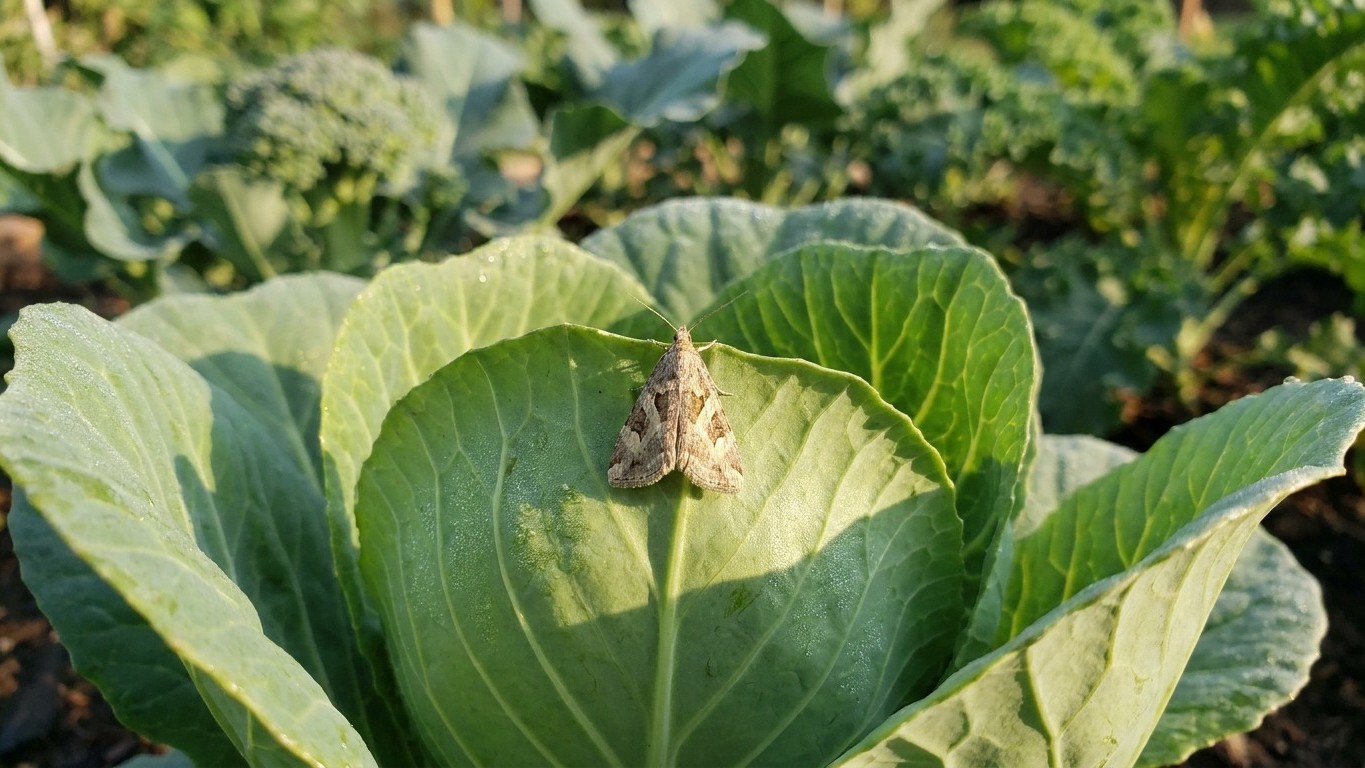

Diamondback moth turns up in Texas gardens whenever brassica crops are in the ground and temperatures stay above freezing, which in much of the state means fall through spring, and along the Gulf Coast, nearly year-round. It targets cabbage, broccoli, and kale specifically, and its small green caterpillars are what actually chew the leaves, not the adult moth.
The weeks to watch

Diamondback moth doesn’t wait for a specific calendar date in Texas: it shows up whenever cole crops are growing and the air stays mild enough for eggs to hatch. Texas A&M AgriLife’s regional pest reports don’t publish a fixed flight window for this species the way they do for some row-crop pests, so the working guide here is the general biology of the insect rather than a local calendar entry.
Multiple overlapping generations
The moth doesn’t have one clean generation and a quiet season after. In warm climates it can cycle through four to six generations in a single growing season, with each cycle from egg to adult taking as little as three weeks in hot weather. That means a garden can have eggs, larvae, pupae, and adult moths present at the same time, all season long, rather than one wave to brace for and then relax.
No hard winter shutdown on the Gulf Coast
Where winters stay mild, as they do in Houston and the Rio Grande Valley, diamondback moth doesn’t fully die off between seasons. It slows down when it’s cold, but a string of 60-degree days in January can bring larvae back onto overwintering greens like collards or kale. Further north and west, hard freezes knock populations back harder, and spring infestations tend to build from migrating moths rather than local survivors.
Reading the calendar from your last frost

The moth answers to soil and air warmth, not to a date on the wall, so the most useful anchor for a Texas gardener is the local last spring frost, not a fixed month. For the Houston area, NOAA’s 1991-2020 climate normals put the last spring freeze somewhere between February 4 and March 1, based on data from Houston Intercontinental Airport. That’s a 30-70% freeze-probability window, not a single day, and it only applies near that station. The Panhandle sees its last freeze months later, and Hill Country and North Texas fall somewhere in between.
- Start with your own last-frost window from local NOAA normals or your county extension office, not the Houston dates above unless you actually garden near IAH.
- Count forward roughly two to three weeks after transplanting brassica seedlings outdoors: that’s the typical stretch before diamondback moth larvae produce visible feeding damage, since eggs need time to hatch and young larvae start small.
That arithmetic tells you when to have a physical cover on the bed, ideally right at transplanting, before adult moths have a chance to lay eggs on the leaves. The cover needs to stay put through that two-to-three-week window at minimum, and longer if a cool snap slows the crop’s growth without slowing the moth down as much.
What it attacks, and what the damage looks like

Most gardeners spot the damage before they ever see the insect responsible. Leaves develop small, irregular holes that don’t go all the way through at first, a “windowpane” effect where the caterpillar has eaten the leaf tissue but left the thin outer layer intact. Left alone, those spots open into ragged holes, and heavily hit plants look shredded and lacy rather than chewed in clean bites. Disturb the leaf and the larva often responds by wriggling backward and dropping on a thread of silk, a habit that helps confirm the culprit even without a hand lens.
The damage is entirely the work of the larval stage. Adult diamondback moths are small, grayish, and mostly nocturnal, and they don’t feed on the plant at all beyond sipping nectar; they exist to mate and lay eggs. That distinction matters for treatment, because anything aimed at adult moths won’t touch the larvae already feeding, and once larvae have tunneled into a dense cabbage head, most surface treatments can’t reach them either.
The crop list is narrow and specific to one plant family:
- Cabbage
- Broccoli
- Cauliflower
- Brussels sprouts
- Kale and collards
- Mustard greens and turnip greens
- Bok choy and other Asian brassica greens
Anything outside the cabbage family, tomatoes, peppers, squash, beans, is not a host, which is one of the fastest ways to rule the pest in or out.
How Texas sits in this pest’s range

Diamondback moth is about as widespread as an agricultural pest gets, present across nearly every U.S. state and much of the world. In a range that broad, the difference between one Texas region and another isn’t whether the moth shows up, it’s when and how heavily. Texas spans four USDA hardiness zones, from the cold Panhandle down to the subtropical Rio Grande Valley, and that spread changes the pest’s rhythm more than its presence.
| Region | Winter pattern | What that means for the moth |
|---|---|---|
| Gulf Coast / Houston area | Mild, freeze probability window Feb 4 to March 1 at IAH | Populations can persist through winter on cold-hardy greens, feeding largely uninterrupted |
| Panhandle | Hard freezes, later last frost | Local populations die back; spring numbers rebuild from migrating adults |
| Hill Country / North Texas | Intermediate | Partial dieback, earlier resurgence than the Panhandle, later than the coast |
The published NOAA frost data used here comes specifically from the Houston station, so it describes the mild Gulf end of the state, not a statewide planting calendar. A gardener in Amarillo working from Houston’s frost window would be planting weeks too early for their own conditions.
What actually works against it

The cheapest and most reliable measures come before the moth ever lays an egg, and they lose effectiveness fast once larvae are established.
- Time transplanting to dodge peak generations. Since the moth cycles every few weeks in warm weather, getting brassicas in the ground early in a cool stretch, or timing a fall crop for after the worst late-summer heat, means fewer overlapping generations hit the plant at once.
- Cover the bed with floating row cover at transplant. A physical barrier stops adult moths from reaching leaves to lay eggs in the first place. It works only while the edges are sealed to the ground and only before eggs are already present; once larvae are feeding under the cover, it does nothing but trap them with the plant.
- Hand-pick larvae and check leaf undersides weekly. Diamondback larvae are small and pale green, easy to miss, but checking the undersides of outer leaves catches them before populations build. This stops working once larvae have moved into a tight cabbage or broccoli head, where they’re physically out of reach.
- Rotate brassica plantings away from last season’s bed. Pupae and some adults can linger in old plant debris and nearby soil, so moving cole crops to a different bed each season reduces the head start local populations get.
- Clear and destroy crop debris after harvest. Leftover brassica stalks and leaves are exactly what lets a Gulf Coast population carry over winter instead of dying back; removing them cuts that overwintering habitat.
- Encourage natural predators and parasitic wasps. Several small parasitoid wasps attack diamondback moth eggs and larvae, and leaving some flowering plants nearby supports them. Gardeners report mixed results with this approach, and its impact varies a lot by season and by what else is planted nearby.
Home remedies like reflective mulch or garlic and pepper sprays show up often in gardening forums, but trials on their effectiveness against diamondback moth specifically are limited and don’t offer a consistent conclusion either way.
Common questions
Does diamondback moth survive a Texas winter? Along the mild Gulf Coast, populations can persist through winter on cold-tolerant greens like collards and kale. In colder parts of the state, hard freezes knock local populations back, and spring infestations tend to rebuild from moths that migrated in.
Can diamondback moth damage a whole cabbage crop? Heavy, unchecked infestations can skeletonize outer leaves and let larvae bore into developing heads, which ruins market-quality crops. Home gardens that catch it early with row covers and hand-picking usually keep damage to cosmetic leaf holes rather than crop loss.
Is diamondback moth the same as cabbage looper or imported cabbageworm? No. All three feed on brassicas and get confused for each other, but diamondback moth larvae are smaller, taper at both ends, and drop on a silk thread when disturbed, a behavior the other two don’t share.