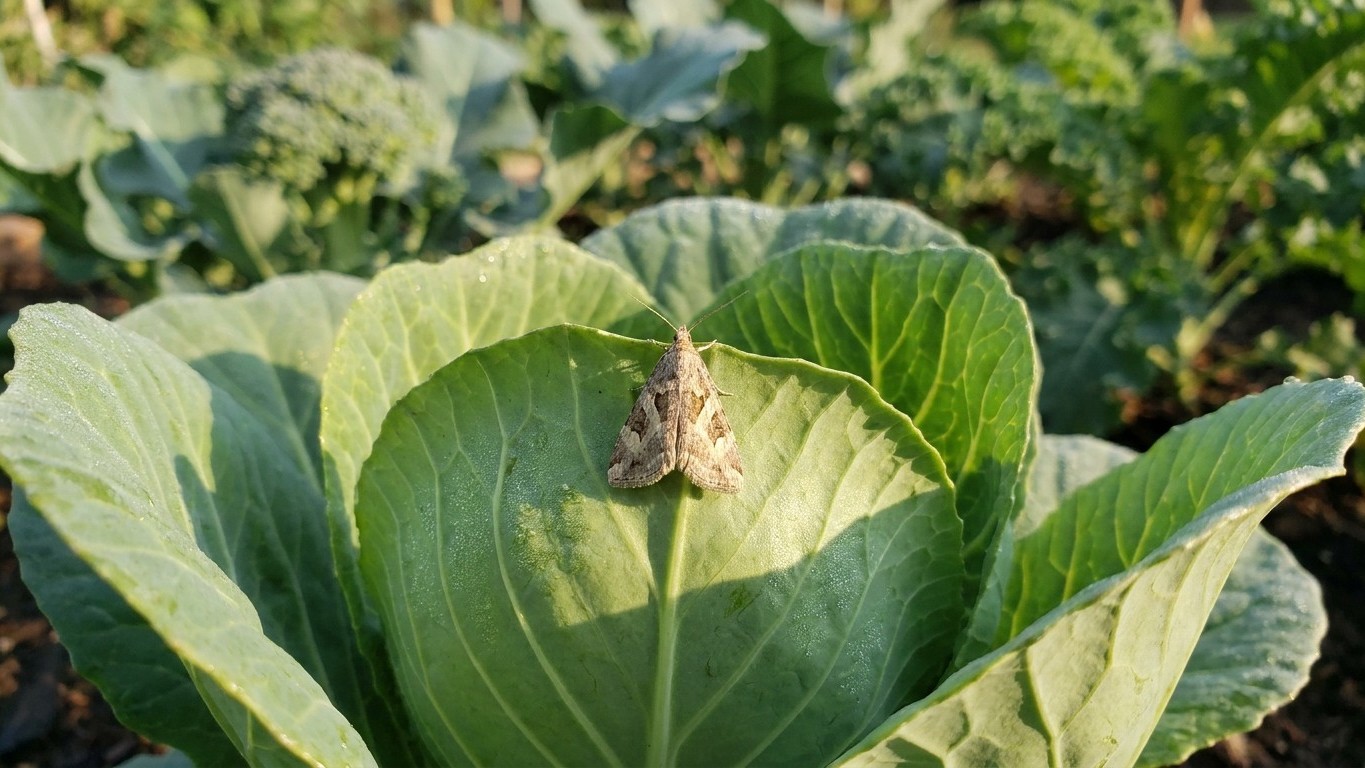

Diamondback moth doesn’t survive South Dakota winters. It rides wind currents up from warmer regions each spring, usually turning up on cabbage-family crops once the weather settles into consistent warmth, then builds through several generations before frost wipes the population out again each fall.
The weeks to watch
South Dakota’s extension service does not publish a specific arrival window for diamondback moth the way it does for some other insects, so the timing here follows the general pattern seen across the northern Plains: this moth migrates in on storm fronts and jet-stream winds rather than emerging from local overwintering sites, since the larvae and pupae can’t survive a Dakota winter in the open field. That means the “start date” each year depends less on a calendar and more on when southern populations get swept north on weather systems.
First arrivals
Growers who run pheromone traps typically start catching moths once nighttime Temperatures stop dropping below the mid-40s consistently, which in most South Dakota counties lines up with late spring transplanting. A cold, late spring can delay this by weeks; a mild one can bring moths in earlier and in larger numbers, since the wind patterns that carry them shift with the broader weather.
Later generations
Once established, diamondback moth cycles through several overlapping generations in a single growing season, often three or more in South Dakota’s frost-free window. Each generation takes roughly three to four weeks from egg to adult in warm weather, faster in a hot July, slower in a cool spell. Pressure tends to build through midsummer and can peak again in early fall before frost ends the cycle.
Reading the calendar from your last frost
The one date most South Dakota gardeners actually track is the last spring frost, and at the reference station used for this region that falls between April 29 and May 9 (NOAA’s 30-70% freeze probability band). Diamondback moth doesn’t answer to that date directly, but transplant timing does, and transplant timing is what decides how much exposure your brassicas get before the first wave of moths shows up.
- Start from your local frost date. Use April 29-May 9 as the reference-city window, then check your own county extension office or a nearby weather station, since rural and elevated gardens often see frost one to two weeks later in spring than an airport station does.
- Count forward two to three weeks from transplant. That’s the general window in which the first feeding damage tends to show up on young cabbage, broccoli, or kale, once larvae have hatched and started mining the leaf tissue. A cover put on at transplanting and left sealed through that stretch blocks the first and often heaviest wave.
This is arithmetic on a range, not a fixed date. An early frost year moves the whole sequence earlier; a late one pushes it back. Treat the frost date as a normal to plan around, not a guarantee for any single spring.
What it attacks, and what the damage looks like
Most gardeners notice diamondback moth damage before they ever see the insect. Young leaves develop small, irregular holes that don’t quite punch all the way through, giving the leaf a papery, windowpane look when held up to light. As larvae grow, those thin spots tear open into ragged, lace-like holes, and on young Transplants the growing point can get chewed enough to stunt the whole plant. The larvae do essentially all the damage; adults just mate and lay eggs. That matters for treatment, because anything aimed at adult moths won’t touch the caterpillars already feeding on your leaves.
The crops at risk in South Dakota gardens are almost entirely in one plant family:
- Cabbage
- Broccoli
- Cauliflower
- Brussels sprouts
- Kale and collards
- Canola, where it’s grown as a field crop
Larvae are small, pale green, and taper at both ends; disturbed ones wriggle violently and often drop off the leaf on a thread of silk, which is one of the easier ways to confirm you’re looking at diamondback moth rather than a cabbage looper or imported cabbageworm.
How South Dakota sits in this pest’s range
Diamondback moth is one of the most widely distributed insect pests on the planet, found across nearly every region where cabbage-family crops are grown. In a range that broad, the real difference between one state and another isn’t whether the moth shows up, it’s when and how heavily. South Dakota sits well within that range every growing season, but because the insect can’t overwinter here, local populations start from zero each spring and depend entirely on migration.
That’s a meaningful contrast with southern states, where diamondback moth can persist year-round in field crops and greenhouse operations, giving populations a running start each season. South Dakota gardeners are instead watching for an insect that has to arrive fresh every year on the wind, which is part of why pressure varies so much from one spring to the next and why a single bad year doesn’t necessarily predict the next one.
What actually works against it
The cheapest and most effective tools work before the larvae ever get established, and most lose their usefulness once caterpillars have tunneled into the folded heart leaves of a cabbage or broccoli head, where sprays and hand-picking both struggle to reach them.
- Time the transplant. Getting brassicas in early, or using sturdy transplants rather than direct-seeding, gives plants a head start before the first wave of moths typically arrives.
- Cover the bed right after transplanting. A lightweight row cover sealed at the soil edges physically blocks moths from laying eggs on the leaves. It has to go on before moths arrive and come off before flowering crops need pollinators or before summer heat builds up underneath it, and it does nothing once larvae are already inside the plant.
- Scout the undersides of leaves weekly. Hand-crushing eggs and small larvae works well while numbers are still low, since a single generation can produce dozens of eggs per female.
- Clear crop debris after harvest and rotate brassica beds. This removes pupae and reduces the local buildup that lets a second or third generation take hold faster in the same spot.
- Encourage natural predators. Parasitic wasps attack diamondback moth larvae in the wild, and many gardeners report fewer problems in beds with diverse flowering plants nearby. Research on deliberately attracting these predators in home gardens is mixed, so treat this as a supporting habit rather than a standalone fix.
Common questions
Does diamondback moth survive South Dakota winters? No. The insect can’t tolerate the state’s winter temperatures in any life stage, which is why every spring’s population arrives fresh via wind-borne migration rather than emerging locally.
Can row covers alone control diamondback moth? They’re highly effective if sealed at the edges and installed before moths arrive, but they only prevent new egg-laying. They won’t remove larvae already feeding on a plant when the cover goes on.
Is diamondback moth the same as cabbage looper? No. Both attack the same crops and both leave chewed leaves, but diamondback moth larvae are smaller, taper at both ends, and drop on a silk thread when disturbed, while cabbage looper larvae move with a distinctive looping crawl and don’t drop the same way.