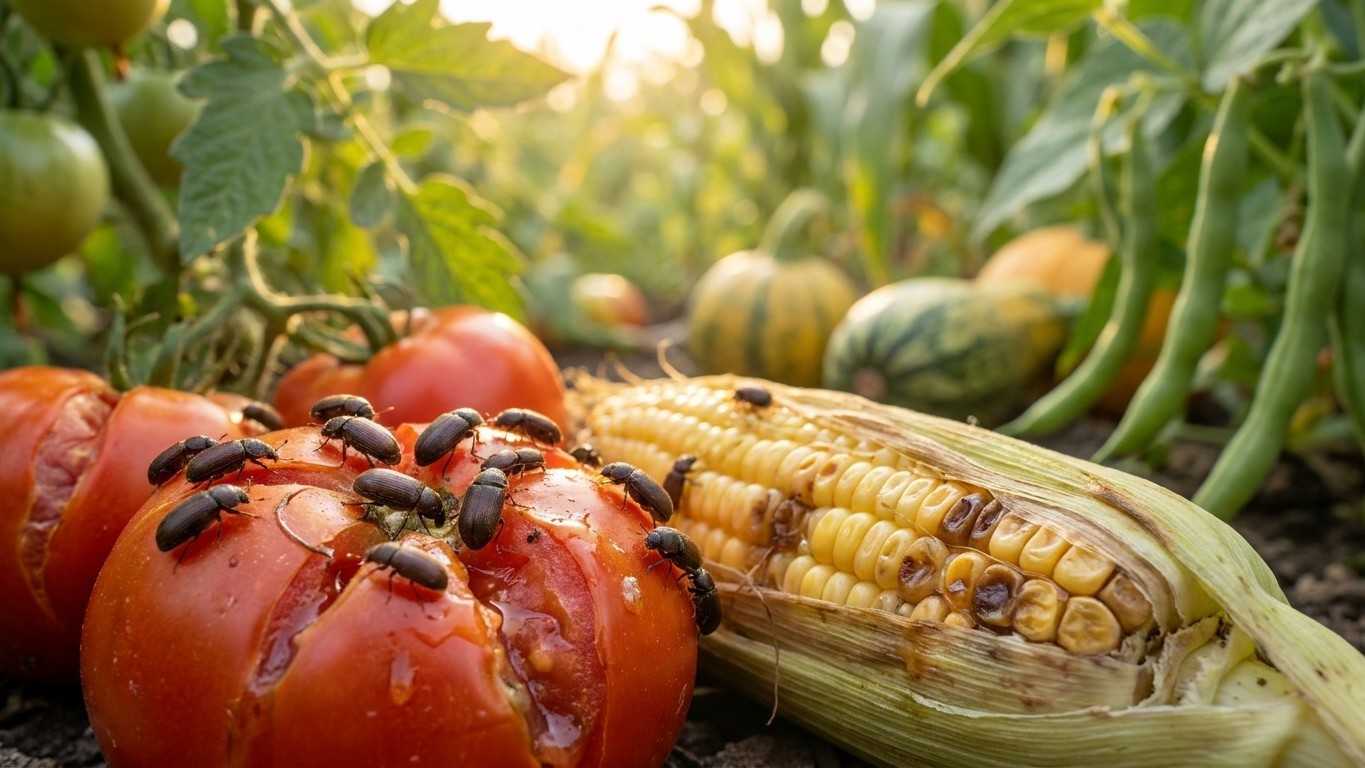

Sap beetles show up in Wisconsin gardens from spring through fall, but they don’t follow a tidy calendar the way some pests do. They track ripening and damaged fruit, not a fixed date, which means the real question isn’t “when” so much as “what stage is my crop in right now.”
The weeks to watch

Wisconsin’s extension service does not publish a dedicated flight window for sap beetles the way it does for some other garden pests. The broader vegetable-pest calendar from University of Wisconsin-Madison Division of Extension runs April through September, and it notes that most corn pests don’t build up in numbers until mid-August. That general pattern is the best guide available for sap beetles, since they’re opportunists that follow fruit ripening rather than a strict biological clock.
Early season presence
Adults overwinter in plant debris and soil, then become active as temperatures climb in spring. Early in the season, before much fruit has ripened or cracked, sap beetles are around but not doing much visible damage. They’re feeding on whatever decaying plant material they can find.
The late-summer surge
Numbers climb as sweet corn ears fill out, tomatoes soften, and melons and berries start to split from rain or overripening. That’s consistent with the extension’s mid-August note for corn pests generally, and it lines up with when most Wisconsin gardeners start noticing beetles clustered in damaged produce rather than earlier in the summer.
Reading the calendar from your last frost

Sap beetles respond to soil and air warmth, not a printed date, so an early or cold spring shifts Everything that follows. In Wisconsin, the NOAA 1991-2020 climate normals put the last spring frost between April 16 and April 29, depending on the year. That range, not a single day, is what a gardener actually has to work with when planning.
- Start with the frost window. April 16 to April 29 is when the 32°F freeze risk drops enough for most gardeners to transplant warm-season crops like tomatoes, melons, and sweet corn.
- Add the weeks to fruit set. Sweet corn typically silks roughly two to two and a half months after planting, and tomatoes and melons ripen on a similar general timeline. Since sap beetles arrive with ripening and damaged fruit rather than with the plant itself, that later window, not the transplant date, is when protection actually matters.
That math means row covers or fruit checks matter less in May and more once fruit is forming and softening, usually well into summer. A frost date that lands on April 16 versus April 29 shifts the whole season by close to two weeks, so treat any date you calculate from it as an estimate, not a fixed appointment.
What it attacks, and what the damage looks like

Most gardeners notice the fruit before they notice the beetle. Sweet corn ears show small clusters of dark, shiny beetles working at the tip where the husk has loosened, often near earlier damage from earworms or birds. Tomatoes and melons develop soft, weeping spots where the beetles have chewed through skin that’s already cracked or split from rain. Strawberries and raspberries can show similar feeding on overripe or damaged berries left too long on the plant.
The adults do almost all the visible feeding, working their way into fruit that’s already compromised rather than starting fresh damage on healthy skin. That matters for treatment: sap beetles are drawn in by sugar and fermentation, so once fruit is cracked, overripe, or otherwise damaged, the beetles are a secondary problem layered on top of something else.
- Sweet corn (ear tips, especially where husks are loose)
- Tomatoes (cracked or overripe fruit)
- Melons and cantaloupe (split rinds)
- Strawberries and raspberries (overripe or bird-damaged berries)
- Cucumbers (occasionally, where fruit has split)
How Wisconsin sits in this pest’s range

Sap beetles are widespread across the eastern and midwestern United States, and Wisconsin doesn’t sit at any unusual edge of that range. The difference between Wisconsin and a state like Illinois or Iowa isn’t whether the beetles show up, it’s when. Wisconsin’s shorter growing season and generally cooler spring push the summer surge in beetle activity a bit later than in states to the south, tracking the later ripening of corn, tomatoes, and melons here.
Within Wisconsin itself, timing varies again. The Lake Michigan shoreline holds warmth into fall longer than inland areas, delaying the first fall freeze there while inland southern Wisconsin typically freezes by early October and the north considerably earlier. That means the window when ripening fruit is vulnerable to sap beetles can run a few weeks longer near the lake than it does up north, even though the insect itself is the same across the state.
What actually works against it

Sanitation and timing do more here than any spray, mainly because sap beetles are drawn to damage and decay that’s already happened. Once beetles or their eggs are inside a piece of fruit, nothing you do on the outside reaches them.
- Harvest ripe fruit promptly. Tomatoes, melons, and berries left on the plant past peak ripeness are exactly what attracts beetles in the first place. Picking on schedule removes the invitation.
- Remove damaged and overripe fruit from the garden. Cracked tomatoes, split melons, and fallen berries left on the ground keep drawing beetles in and give them a place to breed. Getting this material out of the garden, rather than composting it nearby, cuts down the local population.
- Reduce other damage sources. Since sap beetles often move in after birds, earworms, or rain cracks have already opened up fruit, controlling those earlier problems indirectly limits sap beetle buildup.
- Use traps to monitor and reduce numbers. Simple baited traps are a common tool for detecting and thinning out adult populations; results vary by garden and season, and traps work better as an early-warning tool than as a standalone fix.
- Clear garden debris at season’s end. Removing old plant material and rotting fruit in fall takes away overwintering sites, which is about the only step that affects the following year’s population rather than just this season’s.
Row covers help mainly in the earlier part of the season before fruit ripens, since they have to come off for pollination on crops like corn, melons, and squash. Crop rotation offers limited benefit against sap beetles specifically, since the adults fly in from wherever ripening or damaged fruit already exists rather than emerging from the same soil each year.
Common questions
Do sap beetles bite or sting people?
No. Sap beetles feed on plant material and don’t bite or sting humans; the concern is entirely about fruit and vegetable damage.
Can sap beetles survive a Wisconsin winter?
Yes, adults overwinter in leaf litter, garden debris, and soil, which is why clearing that material in fall reduces the population that emerges the following spring.
Are sap beetles the same as fruit flies?
No. Fruit flies are much smaller and typically appear around fermenting produce indoors, while sap beetles are larger, hard-shelled insects that feed directly on damaged fruit in the garden.