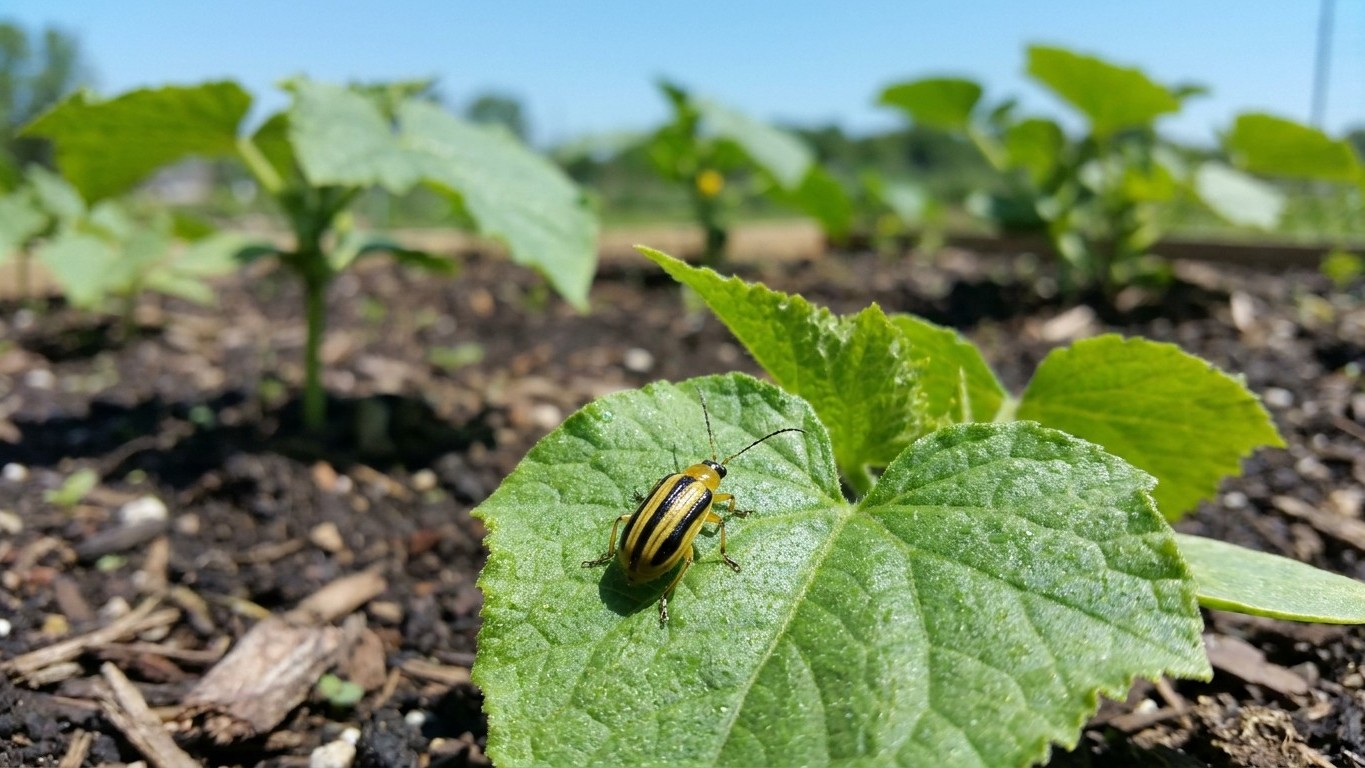

Striped cucumber beetles show up in Connecticut gardens right around the time soil temperatures climb past 50°F, usually in the last two weeks of April through mid-May, and they stick around through the first fall frost. The most reliable defenses are floating row covers installed at planting, delayed transplant dates that dodge the first wave of adults, and targeted use of kaolin clay or spinosad once beetles appear on seedlings. Timing matters more than any single product.
Connecticut’s Beetle Calendar: When to Watch Your Garden

Adult striped cucumber beetles (Acalymma vittatum) overwinter in leaf litter, hedgerows, and the edges of wooded lots across the state. They don’t die off in winter the way some pests do. They just wait. Once daytime temperatures hold steady in the 60s for several days in a row, typically the last week of April in southern Connecticut and a bit later in the Litchfield Hills, those adults crawl out and start hunting for the first cucurbit seedlings breaking ground.
Connecticut usually sees two generations per season. The first wave of adults feeds through May and June, mates, and lays eggs at the base of cucumber, squash, and melon plants. Larvae hatch within a week or two and tunnel into roots and stems, feeding underground for three to four weeks before pupating in the soil. A second generation of adults emerges in late July and August, right when winter squash and pumpkins are sizing up fruit. This second wave often does less visible leaf damage but poses a real threat to fruit rinds and stems late in the season.
Coastal towns from Greenwich to New London tend to see beetle activity a week or so earlier than inland farming areas like Litchfield County, simply because the ground warms faster near the shore. Gardeners in the Connecticut River Valley, where cucurbit production is heaviest, report the sharpest spikes in beetle counts during the first two weeks of June.
Spotting the Damage Before Bacterial Wilt Takes Hold
The beetle itself is easy to identify: about a quarter-inch long, yellow to olive-green, with three bold black stripes running down its wing covers. It moves fast when disturbed, which is often the first clue you’re dealing with this species rather than the slower, spotted cucumber beetle that also turns up in Connecticut gardens.
Feeding damage on young seedlings looks like ragged holes in the leaves and scarred, chewed stems near the soil line. On a two-leaf cucumber seedling, a handful of beetles can strip enough tissue to kill the plant outright within a couple of days. That’s the stage where damage matters most, because mature plants can usually outgrow moderate feeding.
The bigger threat isn’t the chewing. It’s what the beetle carries in its gut: a bacterium called Erwinia tracheiphila, which causes bacterial wilt in cucumbers and muskmelons. As the beetle feeds, bacteria-laden frass gets into the wounds, and within one to three weeks the vascular system of the plant clogs up. Leaves wilt during the heat of the day, look fine again overnight, then wilt permanently within a week. There’s no cure once a plant is infected. Squash and pumpkins are more resistant to the wilt itself but still lose yield to root and stem feeding from beetle larvae.
Squash mosaic virus is a secondary concern the beetle can spread, though it’s less common in home gardens than commercial operations. Either way, once you see the telltale stripes on a seedling, the clock is running on both direct feeding damage and disease transmission.
What Actually Stops Striped Cucumber Beetles
No single tactic handles this pest on its own. Growers who keep damage low in Connecticut tend to stack two or three methods together, starting before the beetles even show up.
Cultural and Physical Barriers
Floating row covers are the single most effective tool for young plants. Laid over hoops or directly on top of seedlings at transplant or seeding time, they physically block adult beetles from reaching the plants during the vulnerable first three to four weeks. The covers need to come off once flowers open, since cucurbits rely on bees for pollination and a sealed cover keeps pollinators out along with beetles. Growers who forget to pull covers in time often end up with healthy vines and no fruit.
Delaying planting by even one to two weeks past the typical late-May window can help some crops slip past the first beetle wave, though it’s a tradeoff against a shorter growing season. Straw or heavy mulch around the base of plants makes the immediate area less hospitable to egg-laying females, and cleaning up cucurbit debris at the end of the season removes overwintering habitat right on your own property.
Trap cropping works well in larger garden plots. Blue Hubbard squash is highly attractive to striped cucumber beetles, more so than cucumbers or zucchini. Planting a border row of Blue Hubbard a week or two before the main crop draws beetles away from the plants you actually want to harvest, and that trap row can then be treated more aggressively without worrying about residue on food you’ll eat soon.
Biological and Least-Toxic Options
Kaolin clay, sold under trade names as a particle film barrier, coats leaves in a fine white powder that beetles find irritating to walk and feed on. It needs reapplication after rain but causes no harm to bees or other beneficial insects, making it a solid option once flowers open and row covers have to come off.
Spinosad, derived from a naturally occurring soil bacterium, is approved for organic production and gives decent knockdown on adult beetles when sprayed directly on foliage. It breaks down within a few days under sunlight, so timing applications for early morning or evening reduces harm to visiting bees.
Beneficial nematodes applied to the soil around the base of plants target the larval stage underground, before it ever becomes an adult beetle chewing on leaves. This approach takes more planning since nematodes need moist soil and specific temperature ranges to survive, but it addresses the part of the life cycle that row covers and sprays can’t reach.
Yellow sticky traps placed at plant height give a low-cost way to monitor beetle numbers and decide whether intervention is even needed, rather than spraying on a fixed schedule regardless of actual pressure.
When Chemical Control Makes Sense
For gardeners dealing with heavy pressure, pyrethrin-based sprays offer faster knockdown than spinosad but carry more risk to pollinators if applied during bloom. Evening applications, after bees have returned to their hives, cut that risk substantially. Rotating between different modes of action, rather than relying on one product all season, slows the development of resistance in local beetle populations, something already documented in several cucurbit pest species across the Northeast.
Matching Control to Connecticut’s Growing Season
The practical calendar looks like this: row covers go on at seeding or transplant in early to mid-May, come off the moment flowers appear (usually three to four weeks later), and from that point forward monitoring with sticky traps or a quick visual check every few days tells you whether kaolin clay or a spray is warranted. Watch fruit and stems again in late July and August when the second generation emerges, particularly on winter squash and pumpkins headed toward a fall harvest.
Rotating cucurbit plantings to a different part of the yard each year, even a modest 20 or 30 feet away from the previous season’s bed, reduces the odds that overwintering adults find your new seedlings the moment they wake up. Combined with fall cleanup of vines and mulch, that single habit cuts down the local population your garden has to deal with each spring, regardless of what other tools you add on top.
Related guides
- Striped cucumber beetle in New York: When It Shows Up and What Stops It
- Striped cucumber beetle in Massachusetts: When It Shows Up and What Stops It
- Striped cucumber beetle in Indiana: When It Shows Up and What Stops It
- Striped cucumber beetle in Iowa: When It Shows Up and What Stops It
- Striped cucumber beetle in Newfoundland and Labrador: When It Shows Up and What Stops It