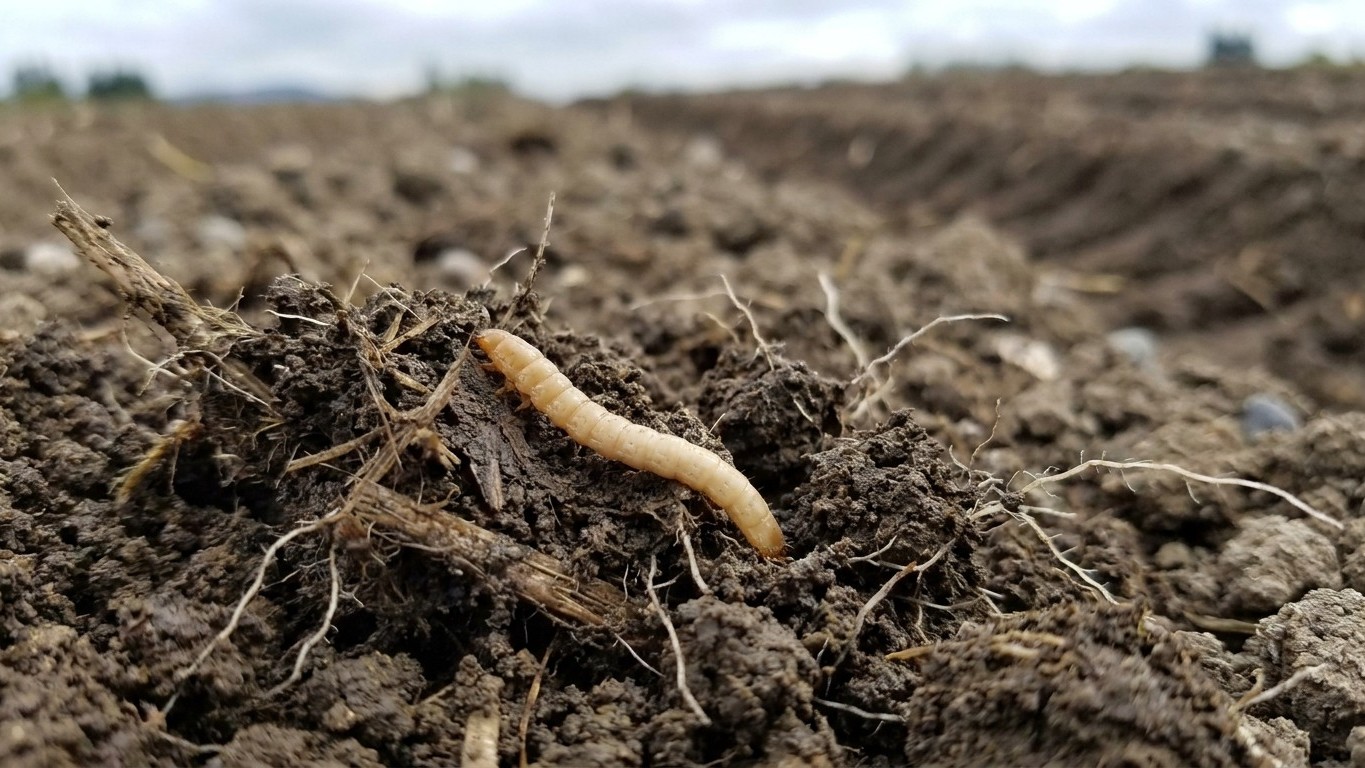

Wireworms show up in British Columbia mostly in spring and again in early fall, when soil temperatures sit between roughly 50°F and the mid-70s. That’s when the larvae move up toward the root zone to feed. In summer heat and winter cold, they burrow deeper and go dormant, which is why damage tends to cluster at planting time and again before harvest. Stopping them means combining soil monitoring, crop rotation, and targeted seed treatments rather than reaching for a single fix.
Where Wireworms Are a Problem in British Columbia

The Fraser Valley, the Okanagan, Vancouver Island, and the Peace River region carry the heaviest wireworm pressure in the province. These are also the areas with the most potato, corn, cereal, and vegetable production, which is no coincidence. Wireworms thrive in soils that were previously grass, pasture, or hay, and BC’s mixed farming landscape, where field crops rotate with forage, creates exactly the conditions these larvae need to build up over time.
Vancouver Island and the Fraser Valley carry an added complication: invasive European click beetle species, mainly Agriotes lineatus and Agriotes obscurus, were first confirmed in the region in the early 2000s. Unlike some native wireworm species that stick to specific hosts, these European species feed on a wide range of crops and have since spread into parts of the Fraser Valley and toward the Okanagan. That expansion is one reason BC growers have seen wireworm complaints increase in fields that had no history of the pest a generation ago.
Adult Click Beetles and Egg-Laying Season
Wireworms are the larval stage of click beetles, so-named because the adults snap their bodies with an audible click to right themselves or startle predators. In BC, adults typically emerge in April and May, mate, and lay eggs in grassy field margins, sod, and pasture. Females favor moist, undisturbed grass cover, laying eggs a few inches deep. This is a key detail for anyone managing land near a field: a strip of unmowed grass along a fence line can quietly seed the next several years of wireworm pressure in the adjacent crop.
A Life Cycle Measured in Years, Not Weeks
Most home gardeners assume an insect problem will run its course in a season. Wireworms don’t work that way. Depending on species and local conditions, the larval stage in British Columbia can last anywhere from two to five years underground before the insect finally pupates and emerges as an adult beetle. That long larval window is the single biggest reason wireworm damage feels unpredictable, a field can go two or three seasons with minimal feeding damage, then show a sudden spike as a cohort of larvae reaches its most destructive size.
During those years underground, wireworms feed on planted seeds, root hairs, and, most visibly, on tubers and taproots. Potatoes take the classic hit: narrow, clean-edged tunnels bored straight through the flesh of the tuber, sometimes with a larva still inside when it’s dug up. Corn and wheat growers see it differently, as poor stand establishment, since wireworms will hollow out a germinating kernel before the seedling even breaks the surface. Carrots, onions, and other root vegetables show scarring and tunneling similar to potato damage, just on a smaller scale.
What Actually Stops Wireworms
No single method eliminates wireworms outright once they’re established in a field or garden bed. Effective control in British Columbia relies on stacking several tactics, timed around the pest’s temperature-driven activity.
Soil Temperature Monitoring and Bait Stations
Because wireworms only feed actively when soil temperatures climb above roughly 50°F, checking soil temperature before planting tells growers whether larvae are likely to be near the surface. Bait stations, small amounts of untreated wheat or corn seed buried a few inches deep and covered with plastic to hold in warmth, are a standard scouting method. Left in place for one to two weeks, then dug up and checked, they give a direct read on wireworm density in a specific field or bed before a cash crop goes in the ground. This step matters more in BC’s variable spring weather than in more consistent climates, since a cold snap can delay wireworm activity by weeks and throw off planting decisions based on the calendar alone.
Crop Rotation Away From Grass and Sod
Since wireworm populations build up fastest under grass, pasture, and sod, breaking that rotation is one of the more reliable long-term fixes. Following a grass ley directly with potatoes or other susceptible crops all but guarantees a wireworm problem in BC soils that already carry any population. Growers who insert a year or two of a less attractive rotation crop, such as certain legumes or brassicas, before returning to potatoes or cereals tend to see lower larval pressure by the time the susceptible crop goes in.
Seed Treatments and Tillage Timing
Insecticide seed treatments registered for wireworm control in field crops remain the most direct chemical option, and they’re widely used in commercial potato and cereal production across the province. For growers avoiding conventional insecticides, tillage timed to expose larvae during hot, dry stretches or ahead of a hard freeze can reduce populations by increasing their exposure to predators and desiccation, though it won’t clear a field on its own. Delaying planting by even a week or two, until soil warms past the point where wireworms are still feeding heavily near the surface, also cuts down on seedling losses in cooler BC microclimates like parts of the Peace region.
Practical Steps for Home Gardens vs. Farm Fields
Backyard gardeners in British Columbia usually meet wireworms in a very specific scenario: a new vegetable bed dug into what used to be lawn. Turning sod into a garden plot exposes exactly the kind of soil where click beetles laid eggs for years. A few adjustments help:
- Skip planting potatoes or root vegetables in a former lawn area for at least one season, and use it for a less attractive crop first.
- Bury a few pieces of raw potato or carrot a few inches deep as an improvised bait station, then check and remove them after a week to gauge how many larvae are present.
- Turn the soil repeatedly in late summer or early fall when it’s hot and dry, exposing larvae to birds and drying conditions.
- Raised beds filled with fresh, weed-free soil sidestep the problem almost entirely, since wireworms don’t travel far or fast on their own.
Commercial growers, by contrast, are managing wireworms across multiple fields and multiple years, which is why rotation planning and seed treatments carry more weight than any single-season fix. The BC Ministry of Agriculture and Food, along with regional extension programs, has tracked the spread of invasive European wireworm species and continues to update recommendations as resistance and distribution shift. Growers dealing with heavy infestations in the Fraser Valley or Okanagan are generally better served checking current provincial extension guidance than relying on older regional advice, since the pest’s range and the registered treatment options have both changed over the past two decades.
One detail that surprises a lot of growers: wireworms can survive brief flooding and even short exposure to standing water, which rules out simple over-irrigation as a control tactic. Where drainage allows it, though, extended saturation over several weeks during a fallow period has been observed to reduce larval survival, since it’s the prolonged oxygen deprivation, not the water itself, that eventually kills them.