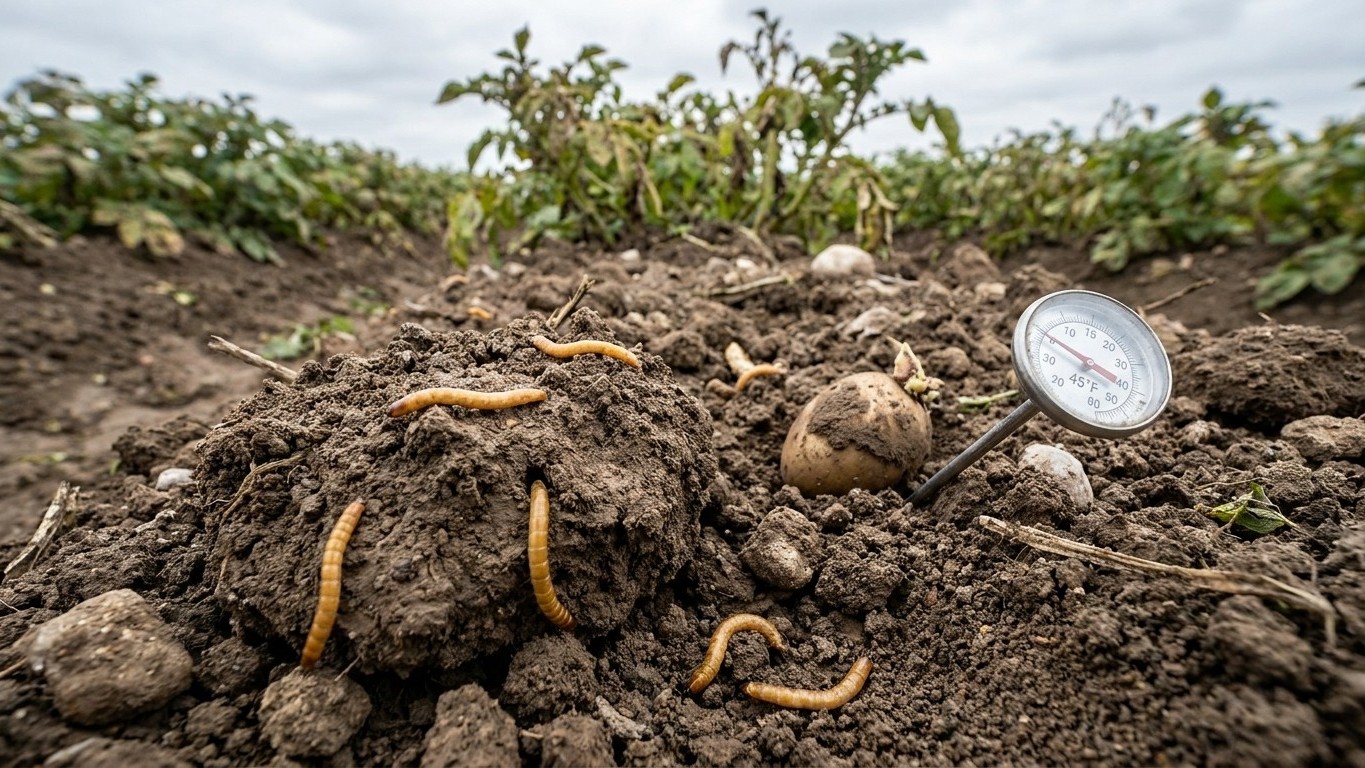

Wireworms turn up in Idaho soil every spring as soon as ground temperatures climb past the mid-40s, but the infestation itself started years earlier. These larvae can live underground for two to six years before becoming adult click beetles, which means the wireworms chewing through a row of seed potatoes this June may have hatched during the Obama administration. Stopping them means working on that timeline, not just reacting to the damage you see at planting.
What Wireworms Are and Why Idaho Grows So Many

Wireworms are the larval stage of click beetles, a group in the family Elateridae named for the audible snap the adults make when flipping themselves upright. The larvae are thin, hard-shelled, and yellowish to brown, and they spend nearly their entire life below the soil surface feeding on roots, tubers, and germinating seed.
Idaho grows more potatoes than any other state, and most of that crop comes out of irrigated ground on the Snake River Plain, exactly the kind of soil wireworms favor. The most common species reported by growers here is the sugarbeet wireworm (Limonius californicus), with Limonius infuscatus also present in irrigated potato and grain country. In pockets of the state, especially where ground has come out of long-term pasture or Conservation Reserve Program (CRP) land, invasive Agriotes click beetles have also become established, adding another layer to the problem for growers already managing native species.
When Wireworms Show Up in Idaho
Soil Temperature Drives Everything
Wireworms are active in the top several inches of soil once temperatures sit between roughly 50°F and 70°F. That window lines up almost exactly with Idaho’s main planting season for potatoes, spring wheat, barley, and corn, which is why feeding damage is worst from late April through June. As summer heat pushes soil temperatures higher and moisture drops, wireworms retreat several inches deeper, where they’re harder to reach with insecticides and less likely to be noticed even though they’re still alive and feeding on deeper roots.
Adult click beetles emerge in spring and lay eggs in grassy field margins, alfalfa stands, and weedy fallow ground through May and June. Those eggs hatch into tiny larvae by midsummer, and this newest generation adds to a population that already includes larvae one, two, or three years into their underground development. That overlap of generations is exactly why one bad wireworm year in Idaho rarely stays a one-year problem.
Where the Damage Actually Shows Up
For commercial growers, the economic hit lands hardest on potatoes, since wireworm tunneling creates cosmetic and structural damage that can knock tubers out of the fresh market grade entirely. Cereal grains, corn, and sugar beets take losses too, mostly through thinned stands when larvae feed on the seed piece or emerging root before the plant can establish.
Home gardeners in Idaho see a smaller-scale version of the same problem: carrots, lettuce transplants, onions, and seed corn are all vulnerable, especially in beds that were lawn or sod within the past two years. Fields and garden plots that came directly out of grass, pasture, or CRP acreage carry the highest risk in the state, because those settings are exactly where adult click beetles prefer to lay eggs. A field that’s been in continuous row crops for a decade generally carries a lighter wireworm load than one just converted from hay ground.
Signs to watch for include patchy or missing seedling emergence, seed pieces hollowed out below the surface, and small round or slit-shaped holes bored into harvested potatoes. Because the damage happens underground, growers often don’t confirm a wireworm problem until they dig a few plants or pull tubers at harvest and find the tunneling firsthand.
What Actually Stops Wireworms
Control works best when it starts before planting, not after damage appears, since there’s no rescue treatment that reaches larvae once they’ve moved several inches deep into dry soil.
Pre-Plant Testing
University extension programs in the Pacific Northwest recommend bait trapping four to six weeks before planting: bury a mix of untreated wheat and corn seed a few inches deep, mark the spot, and dig it up after two to three weeks to count larvae drawn to the germinating grain. Fields that test high can be shifted to a less susceptible crop or scheduled for treatment before the seed ever goes in the ground.
Seed Treatments and Soil Insecticides
Idaho seed potato and cereal growers commonly apply neonicotinoid-based seed treatments, active ingredients such as thiamethoxam, imidacloprid, or clothianidin, to protect seed pieces during the vulnerable germination window. At-plant soil insecticides are also standard practice on higher-risk potato ground. These products don’t eliminate the underground population, but they buy the seedling enough time to establish roots before larvae can do lasting damage.
Rotation and Timing
The simplest lever growers and gardeners have is avoiding a direct jump from grass, pasture, or sod into a wireworm-susceptible crop. Rotating through a less attractive crop first, or leaving at least one growing season between grass and potatoes or corn, cuts down the population significantly. For home gardens, waiting to plant until soil has warmed past 60°F speeds up germination, which shortens the window during which seeds and young roots sit exposed to feeding.
Fall tillage that exposes larvae to cold temperatures, dry air, and birds can knock back numbers somewhat, though extension research generally rates its effect as modest compared to rotation and seed treatment. It’s a supplement, not a solution on its own.
A Multi-Year Problem Needs a Multi-Year Plan
Because Limonius species can spend up to six years as larvae, a single season of control doesn’t clear a field. Growers who skip pre-plant bait testing after a clean year often find themselves facing the same damage two or three seasons later, once the next overlapping generation reaches feeding size. Tracking wireworm risk field by field, year by year, matters more in Idaho’s rotation-heavy cropping systems than almost anywhere else, simply because so much of the state’s best ground cycles between pasture, hay, and row crops on a schedule that keeps producing fresh egg-laying habitat right next to the fields growers most need to protect.