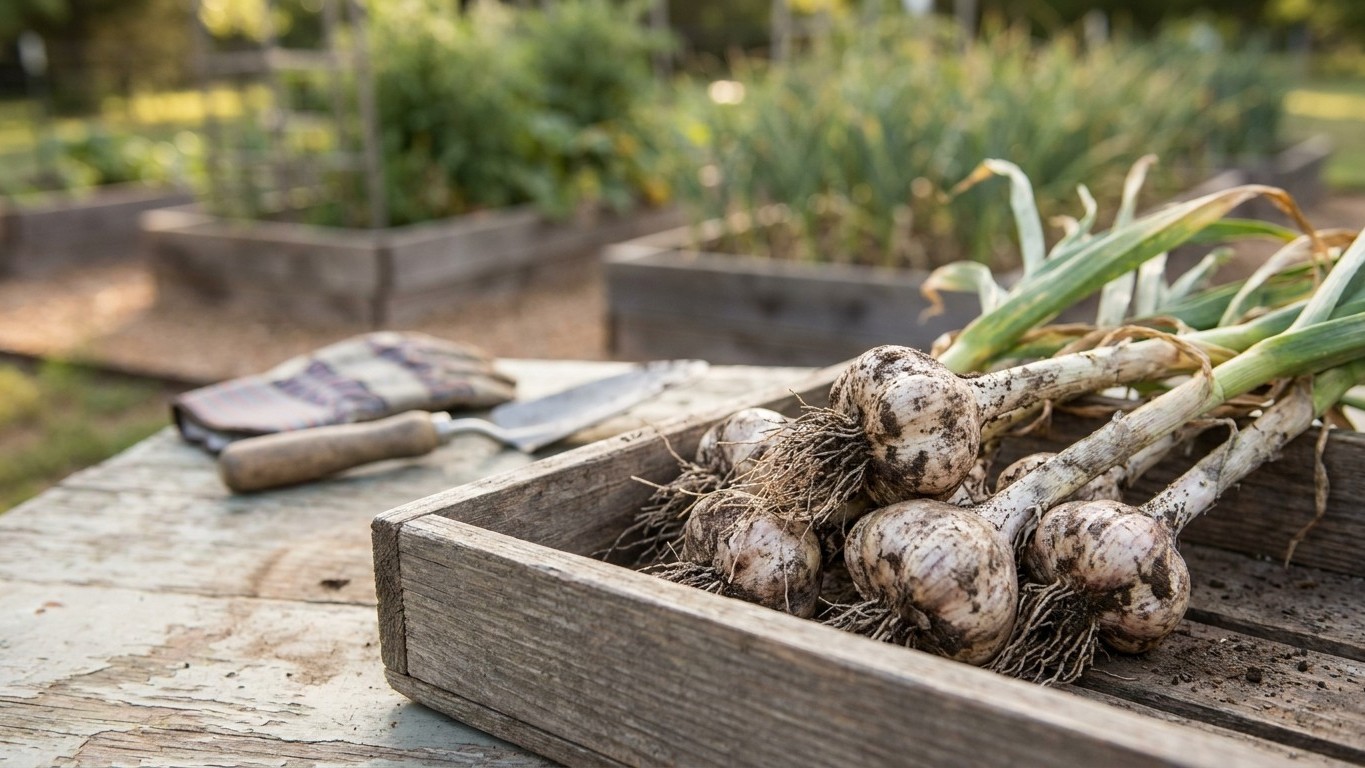

Delaware gardeners typically lift garlic between mid-June and mid-July, once the lower third to half of the leaves have turned brown while the upper leaves stay green. Pull one test bulb first to check the wrapper. After that, cure the bulbs whole, with tops and roots left on, in a warm, shaded, well-ventilated spot for three to four weeks before trimming and storing them somewhere cool and dry for winter.
When garlic is ready to lift in Delaware
The leaf color is the signal, not the calendar. Garlic planted the previous fall spends winter dormant underground, then pushes growth through spring and fattens its bulb through early summer heat. That fall planting window in Delaware typically falls around the region’s first fall frost, which averages between October 26 and November 7 at the reference weather station used for this area (NOAA NCEI 1991-2020 Climate Normals, station USW00013781). That date is a midpoint, not a guarantee. In roughly one year out of two, the first freeze arrives later than the range suggests, and gardens away from the airport site, especially in low-lying or rural spots, often see frost arrive earlier than the station data shows. None of that changes the harvest timing directly, but it explains why the bulb you’re lifting in July had all winter to build root mass before it ever pushed a leaf above the soil.
Come summer, watch the plant rather than the forecast. Garlic tells you it’s close to done when the lowest leaves, the ones nearest the soil, begin browning and dying back while the leaves above them are still upright and green. Waiting for every leaf to go brown is the most common overcorrection: by then the wrapper layers around each clove have often started to split or thin, and the bulb loses the wrapping that would have protected it in storage.
The test-dig
Before pulling an entire row, dig one bulb by hand, brushing soil away rather than yanking on the stalk. A bulb that’s ready shows plump, well-defined cloves with tight skins still covering them. If the cloves look small or the skins feel loose and papery already, give the bed another week and check again. If cloves have separated and the skins are cracking, that bulb has gone past ready and should come out that day, along with its neighbors.
Soil moisture at lifting matters more than most gardeners expect. Bulbs pulled from wet ground after a rain carry mud into the curing space and take longer to dry properly, which raises the risk of soft spots forming before the wrapper seals. Where possible, hold off watering for several days before the planned harvest and lift on a dry day, using a garden fork to loosen soil beside the row rather than pulling straight up on the stalk, which tends to snap the neck away from the bulb.
Curing it, and where to hang it here
Curing is the step that turns a freshly dug bulb into something that survives past January. It’s simply controlled drying: the outer wrapper layers harden and seal around the cloves, the neck tightens, and moisture inside the bulb drops to a level where rot organisms can’t easily take hold. Skip curing, or rush it, and garlic that looked perfect at harvest will go soft or moldy within weeks of being boxed up.
The process itself is low-effort but location-dependent. Leave the stalks and roots attached, brush off loose soil without washing the bulbs, and bundle or lay them out somewhere shaded, dry, and breezy. Direct sun scalds the wrapper and can cook the outer cloves, so a garage, an open shed, a covered porch with cross-ventilation, or a barn bay all work better than anywhere the sun hits for more than an hour or two a day.
Why Delaware’s summer air complicates this
Delaware summers run humid, and that humidity is the main obstacle to a clean cure here. Garlic wants airflow and moderate temperatures during curing, and thick, sticky air slows evaporation from the bulbs no matter how shaded the space is. A box fan running on low, angled across hanging bundles or a mesh drying rack rather than directly at any single bunch, makes a real difference during muggy stretches. Spacing bulbs so air moves between them matters as much as the fan itself; bulbs piled or bundled too tightly stay damp in the center of the pile even when the outer layers feel dry.
Plan on three to four weeks before garlic is fully cured, checking periodically by feel. The neck should go from green and pliable to dry and papery, and the outer wrapper should rustle rather than feel cool or damp to the touch. Bulbs that still feel firm and slightly cool at the base after four weeks need more time, particularly during a wet, humid stretch, rather than being trimmed and boxed on schedule.
Storing it through a Delaware winter
Once cured, trim the roots close to the base and cut the stalk down to an inch or two above the bulb, unless you’re braiding softneck varieties, in which case the stalks stay on. Brush off any remaining loose soil, but don’t wash the bulbs at this stage; water reintroduced now undoes weeks of curing.
Storage garlic wants cool, dry, dark conditions with steady airflow, not the crisper drawer of a refrigerator and not a sealed plastic tub. Both trap moisture against the bulbs and encourage sprouting or rot. A closet shelf away from heat sources, a dry basement corner, or a pantry that doesn’t swing wildly in temperature all work, provided the bulbs sit in mesh bags, open baskets, or loosely woven crates rather than anything airtight.
How long it actually keeps
Not all garlic keeps the same length of time, and this is where a lot of home growers get caught off guard partway through winter. Softneck types, the kind that braid well and tend to form tighter, more numerous cloves, generally hold up longer in storage than hardneck types, which often carry fewer, larger cloves and a stiffer central stalk. Hardneck garlic stored under good conditions still tends to soften or start sprouting well before softneck garlic does, so it makes sense to eat through hardneck bulbs first and save softneck for later in the season.
Check stored bulbs every few weeks regardless of variety. Any bulb that’s gone soft, moldy, or has started sprouting should come out of the group entirely rather than staying near the rest, since a single failing bulb releases moisture that speeds up decline in whatever’s stored nearby.
What goes wrong here
Most storage failures trace back to one of two things: garlic that wasn’t fully cured before it went into storage, or garlic stored somewhere too humid or too warm. Delaware’s damp summers make the first mistake especially common, since bulbs can look and feel dry on the outside while still holding moisture at the core. Trimming and boxing garlic a week early, to beat a work schedule or a forecasted rain, is the single most avoidable cause of soft, moldy bulbs turning up in storage in October.
Garlic itself has relatively few dedicated pest problems in home gardens compared to many vegetables planted in the same beds. The University of Delaware Cooperative Extension documents a range of pests for regional vegetable gardens, including Colorado potato beetle, cucumber beetles (spotted and striped), harlequin bug, imported cabbageworm, Mexican bean beetle, squash beetle, squash bug, and squash vine borer, but these are pests of other garden crops, not garlic specifically. The practical takeaway for garlic growers is less about direct pest pressure on the bulbs and more about bed rotation: garlic planted where squash, beans, or brassicas grew the previous season inherits soil that may still host some of these pests’ overwintering stages, so rotating garlic away from those beds each year is a reasonable precaution even without garlic-specific pest data to point to.
Gardeners with questions specific to their county, including soil test recommendations or bed rotation guidance, can reach out through the University of Delaware Cooperative Extension, which fields exactly these kinds of local growing questions.
Common questions
Can I harvest garlic early if I need the bed for another crop?
Pulling garlic before the lower leaves have browned usually means smaller cloves and thinner wrappers that won’t cure or store as well. If the bed is needed urgently, it’s better to accept a smaller harvest for immediate eating than to expect long-term storage from underdeveloped bulbs.
Do I need to wash garlic before curing it?
No. Brushing off loose, dry soil is enough. Washing introduces moisture right before the bulb needs to dry out, which slows curing and raises the risk of rot starting at the root end.
Is it normal for some bulbs to cure faster than others in the same batch?
Yes. Bulb size, how much soil moisture each one held at harvest, and its position in the curing space (closer to airflow versus buried in the middle of a bundle) all affect drying speed. Check bulbs individually rather than assuming the whole batch is ready at once.
Should I store garlic in the refrigerator over winter?
Refrigerators run more humid than most storage garlic wants, and the cold can trigger early sprouting in some bulbs. A cool, dry, dark spot with airflow, like a pantry shelf or a basement corner away from a furnace, works better than the crisper drawer for whole cured bulbs.