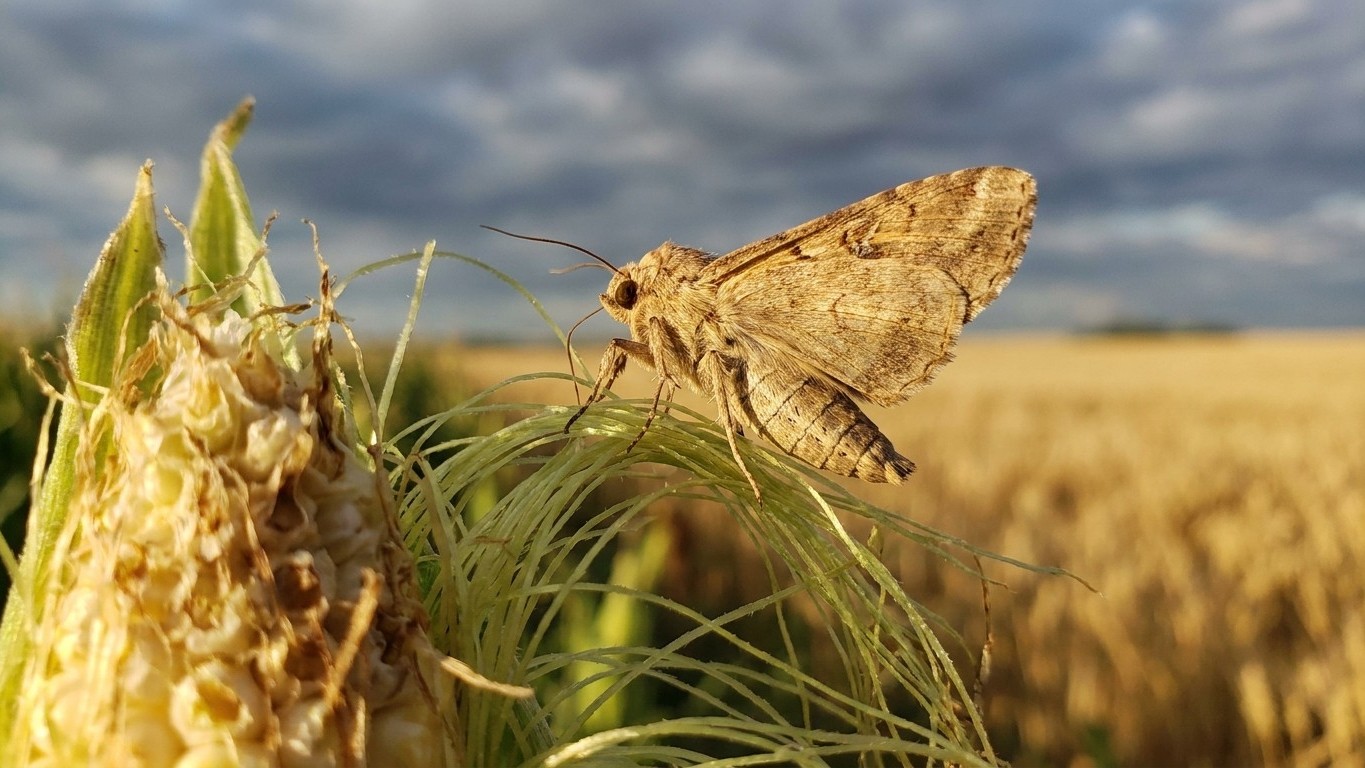

Corn earworm doesn’t survive a Saskatchewan winter. Every moth that shows up in the province flew in on a weather system from somewhere much farther south, usually the central or southern United States, and that single fact shapes everything about when this pest appears and how growers deal with it. Expect the first moths on pheromone traps sometime in July, with feeding damage on sweet corn silks and ear tips building through August until frost ends the season for good.
A Pest That Can’t Overwinter Here

Corn earworm, known to entomologists as Helicoverpa zea, spends its winter as a pupa buried a few inches into the soil. That works fine in Texas or Georgia, where the ground rarely freezes hard enough to kill it. It doesn’t work in Saskatchewan. Frost depth on the Prairies regularly reaches well below the level where a dormant pupa could stay alive, so the local population gets wiped out completely every single winter, no exceptions.
That means Saskatchewan doesn’t have a resident corn earworm problem the way Iowa or Nebraska does. Every generation that causes damage here is an immigrant. Adult moths ride warm, southerly air currents ahead of storm fronts, sometimes covering hundreds of miles in a single flight, and they can arrive in surprising numbers if the wind pattern lines up right. Some years bring almost nothing. Other years, a string of favorable southerly flows can dump a noticeable wave of moths across the southern grain belt of the province.
This migratory habit is also why control strategies that work in the U.S. Corn Belt, like fall tillage to destroy overwintering pupae, do nothing in Saskatchewan. There’s no local population to disrupt. The fight here is entirely about intercepting moths that just flew in and stopping their eggs from turning into feeding larvae before harvest.
When Moths Typically Show Up in Saskatchewan
Field entomologists across the Prairies run pheromone trap networks through the growing season specifically to catch this kind of long-distance arrival early. Traps baited with the female moth’s sex pheromone are checked weekly, and a sudden jump in captures after a warm front moving up from the Dakotas or Montana is the classic sign that a fresh wave has landed. In most seasons, the earliest catches show up in July, with activity typically building toward a peak sometime in late July through August.
Timing matters because corn earworm females look for one thing above all else when laying eggs: fresh, green corn silk. That means the pest’s arrival window lines up almost exactly with the silking stage of sweet corn across the southern half of Saskatchewan, which is where nearly all the province’s corn earworm damage actually happens. Field corn grown for grain or silage exists in Saskatchewan, but the acreage is modest compared to Manitoba or Ontario, and it’s sweet corn patches, market gardens, and backyard plots that see the worst of it.
A moth flight that arrives before silks appear, or after they’ve already dried down and turned brown, largely misses its window. That’s part of why damage varies so much from one year to the next and even one field to the next. A planting that silks two weeks earlier than a neighbor’s can dodge a wave that hits right after it goes past prime egg-laying stage.
What Corn Earworm Actually Damages
The female moth lays single eggs directly on fresh silk. Within days, the tiny larva hatches and crawls down the silk channel toward the ear tip, feeding as it goes. By the time most gardeners notice a problem, the caterpillar is already tucked inside the husk, chewing through kernels at the top few inches of the cob.
Signs to look for include:
- Chewed, discolored silk at the tip of the husk, sometimes with visible frass (caterpillar droppings) caught in the strands
- Damaged or missing kernels concentrated at the very top of the ear, rarely spreading past the first two or three inches
- A single fat, striped caterpillar, usually greenish, yellowish, or brown depending on its last few meals, wedged near the ear tip
- Secondary mold or rot developing in the damaged kernels, especially after rain
Sweet corn takes the brunt of it in Saskatchewan gardens, but corn earworm isn’t a one-crop pest. The same caterpillar will feed on tomato fruit, pepper pods, and green bean pods when corn silk isn’t available, so a garden with mixed plantings can see spotty damage across several crops in a bad year.
What Actually Stops Corn Earworm
Because this pest flies in fresh every year rather than building up locally, the most effective response is timing rather than long-term habitat management. A few approaches consistently make a difference for both commercial growers and home gardeners.
Watching Trap Counts and Silk Timing
Commercial sweet corn growers who track regional pheromone trap reports get a real advantage: a spike in moth captures gives a two-to-three-week warning before eggs turn into feeding larvae, which is exactly the window needed to time an insecticide application to when silks are fresh and vulnerable. Spraying too early wastes product on a crop that isn’t at risk yet. Spraying after larvae have already tunneled into the ear is largely pointless since the caterpillar is protected by husk tissue by then.
Insecticide and Biological Options
Once eggs are detected or trap counts justify it, insecticides applied directly to the silk zone at three-to-five-day intervals during active silking give the best results, since each new flush of silk is a fresh target for egg-laying females. Products based on Bacillus thuringiensis (Bt) and spinosad are common choices for growers who want to limit impact on pollinators and beneficial insects, and both work best when applied before larvae have burrowed past the first inch of silk.
Home Garden Tricks That Hold Up
For backyard sweet corn patches, a low-tech method still gets recommended by extension programs across the northern grain belt: a few drops of mineral oil applied to the silk tip right after pollination is well underway smothers newly hatched larvae before they can tunnel deeper, without harming the developing ear. It needs to go on after pollination, not before, since silks are still needed to catch pollen in the earlier stage.
Choosing corn varieties with tighter, longer husks that fully enclose the ear tip also helps, since it gives young larvae less exposed silk to target and makes it physically harder for them to reach the kernels. Harvesting sweet corn as soon as it’s ready, rather than letting ears sit in the field, shrinks the window a late-arriving moth wave has to cause damage too.
Rotating where corn goes in the garden year to year, a strategy that helps against many soil-dwelling pests, doesn’t do much against corn earworm specifically, since the moths aren’t coming from last year’s soil in the first place. They’re coming from a storm front that started its journey a thousand miles south, and no amount of local rotation changes that math.