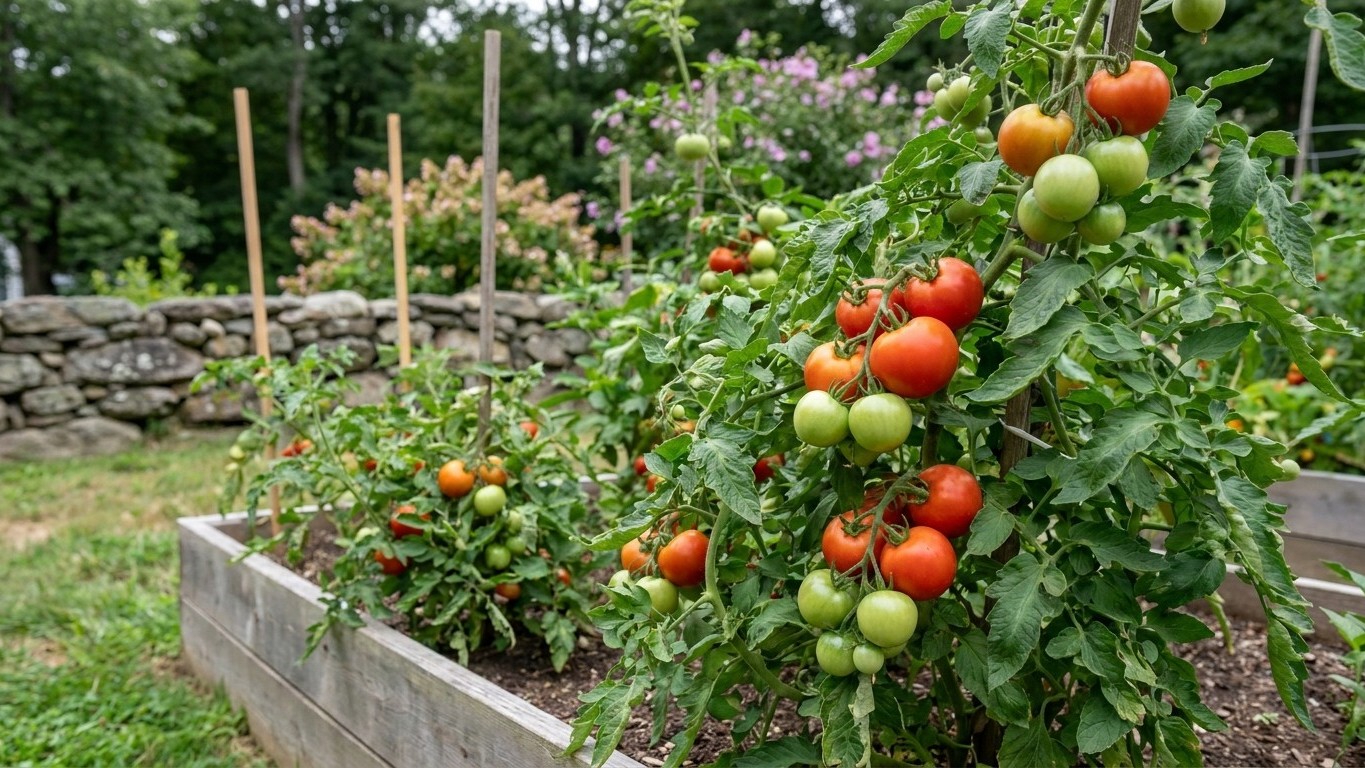

The mean first fall frost at Saskatoon lands around September 18, but that number is a midpoint, not a guarantee. The safest approach is to start picking mature green and blushing tomatoes in the two weeks before that date, then strip the plant entirely once a hard frost is forecast. Everything green and full-sized can still ripen indoors.
When to pick tomatoes in Saskatchewan
The number everyone quotes, September 18, comes from Environment and Climate Change Canada’s Canadian Climate Normals for the Saskatoon SRC station, based on the 1981-2010 period. It’s an average across three decades of records, which means in roughly half of those years the actual first frost fell later than that date, sometimes considerably later. Treat it as the center of a window rather than a line you can plan around with confidence.
That matters more in Saskatchewan than in most places, because the province sits mostly in Canadian hardiness zone 3a at the Saskatoon reference point, a rating built from seven climate variables under the Canadian system used by Natural Resources Canada. That system doesn’t translate directly to the USDA zones used south of the border, so resist the urge to compare it to a familiar American zone number. What it does tell you is that the frost-free stretch here is short, and a tomato plant that’s still loaded with green fruit in early September has very little runway left.
Reading the plant, not just the calendar
Long before frost is forecast, start walking the rows and sorting fruit by stage. Tomatoes that have reached full size and started to show a pale green-white sheen, sometimes called the mature green stage, will continue ripening once picked. Fruit that’s still hard, dark green, and small has a much lower chance of ever turning red, whether left on the vine or brought indoors.
Once a frost warning appears in the short-range forecast, the calculation changes. A light frost can damage the skin and interior tissue of a tomato even if the plant itself survives, and that damage shows up later as soft spots and faster rot in storage. The practical move is to pick everything worth saving the day before the frost is expected, not the morning of. Saskatoon SRC is one station, and it stands in for a province with a lot of geographic variation. Growers in the Rural Municipality of Corman Park or around Saskatoon itself are working close to that normal, but anyone farther north, at higher elevation, or in a low-lying frost pocket should expect the real date to arrive earlier than the average suggests, sometimes by a couple of weeks.
What to do with the green ones
A tomato plant carries fruit at wildly different stages right up until the season ends, and the temptation is to treat them all the same way. They don’t ripen the same way, and sorting them before you decide what to do next saves a lot of them from going to waste in a bucket in the garage.
Sorting before storing
Separate the harvest into three rough groups:
- Mature green or breaker fruit, firm, full-sized, showing the first hint of color change: these will ripen reliably indoors.
- Immature green fruit, still small or rock-hard with no color shift at all: these rarely ripen well and are better used green, in relishes or fried green tomato preparations, than saved for red ripening.
- Fruit already showing frost damage, soft, water-soaked patches, or a collapsed feel: use these immediately or discard them, since they’ll rot faster than they’ll ripen.
One method that works well on a home scale is pulling entire plants before a hard freeze, roots and all, and hanging them upside down in a garage, shed, or unheated porch that stays above freezing. The fruit continues to draw on the plant’s remaining sugars for a few extra days, and it’s a faster way to clear a garden than picking tomato by tomato. It also keeps fruit off the ground, which cuts down on soil contact and the rot that comes with it.
For loose fruit, individual wrapping in newspaper, one tomato per sheet, laid in a single layer in a shallow box, slows moisture loss and contains any rot that starts before it spreads to the neighboring fruit. Skip plastic bags for long-term storage. They trap humidity, and humidity is what turns a slow ripening process into a moldy one.
Ripening indoors, and how long they keep
Tomatoes ripen through their own ethylene production, and that process runs faster in warmth and slower in the cold. A spot at normal room temperature, out of direct sun, is enough to bring a mature green tomato to red over one to three weeks, depending on how far along it already was when picked. Fruit that was closer to full color at harvest turns faster than fruit that was still solidly green.
Managing the ripening shelf
Check the box every few days rather than leaving it untouched for a month. Ripening isn’t uniform: some tomatoes in the same batch will color up in days while others sit green for weeks, and a single rotting fruit left in contact with its neighbors can take down several more before you notice. Pull ripe fruit out as soon as it’s ready, and pull anything going soft or moldy out just as fast.
Refrigeration is not the ripening tool here. Cold slows the process to a crawl and, worse, it changes the texture and dulls the flavor of a tomato that hasn’t fully ripened yet. Once a tomato is fully red and you want to hold it a few extra days before eating, the refrigerator is fine. Before that point, room temperature does the actual work.
How long the whole batch keeps depends heavily on the sorting done at harvest. Mature green fruit stored in a cool, dim spot, somewhere in the 55 to 65 degree Fahrenheit range if you have a basement or root cellar that runs that cool, will ripen much more slowly and can stretch the harvest out over several weeks rather than all ripening in the same seven-day window. That’s a useful trick if the goal is a steady trickle of fresh tomatoes into late fall rather than one large batch that all needs eating or canning at once.
What goes wrong here
The most common failure is simple: fruit that was too immature to begin with never turns red no matter how long it sits. It softens, wrinkles, and eventually rots while staying green or turning a dull yellowish color instead of ripening properly. There’s no fix for this at the storage stage. The sorting has to happen at harvest, and any fruit that’s still small and hard is better used in a green-tomato recipe than left in the ripening box taking up space.
The second failure is rot spreading through a batch because fruit was stored touching, unwrapped, or in a container that trapped moisture. A single tomato with a soft spot, especially one that got even light frost exposure before picking, can seed mold across a whole tray within days. Wrapping fruit individually and checking the box frequently catches this early instead of after it’s already ruined half the batch.
Temperature swings cause the third common problem. A garage or porch that’s fine one week can drop below freezing overnight once the season turns, and tomatoes stored there without a backup plan can freeze solid, which ruins the texture even if they thaw looking intact. Keep an eye on the overnight forecast for wherever the ripening box is sitting, not just the outdoor garden bed, since an unheated space follows outdoor lows more closely than most people expect.
For guidance specific to local growing conditions, Saskatchewan’s agriculture ministry maintains resources through its agribusiness and farmers’ resources page, which is a reasonable starting point for questions this piece doesn’t cover, including planting schedules and variety selection.
Common questions
Is September 18 a safe date to plan around for Saskatchewan?
No. It’s the mean first fall frost date recorded at the Saskatoon SRC station over the 1981-2010 normals period, which means the actual frost arrived later than that in roughly half of the years measured. Use it as a rough midpoint and start harvesting ahead of it, not on it.
Does the Saskatoon frost date apply across the whole province?
No. It reflects conditions at one station. Areas farther north, at higher elevation, or in low-lying spots prone to cold air pooling typically see frost arrive earlier than the Saskatoon normal, sometimes by a couple of weeks.
Can immature green tomatoes, the small hard ones, still ripen indoors?
Not reliably. Tomatoes that hadn’t reached full size or started any color change before picking usually soften and spoil rather than ripening to red. Fruit that had already reached mature green or breaker stage is a much safer bet.
Should ripening tomatoes go in the refrigerator?
Not while they’re still green or partly colored. Cold slows the ripening process and affects texture and flavor. Room temperature does the actual ripening work; the refrigerator is only useful once a tomato is already fully red and you want to hold it a few extra days.