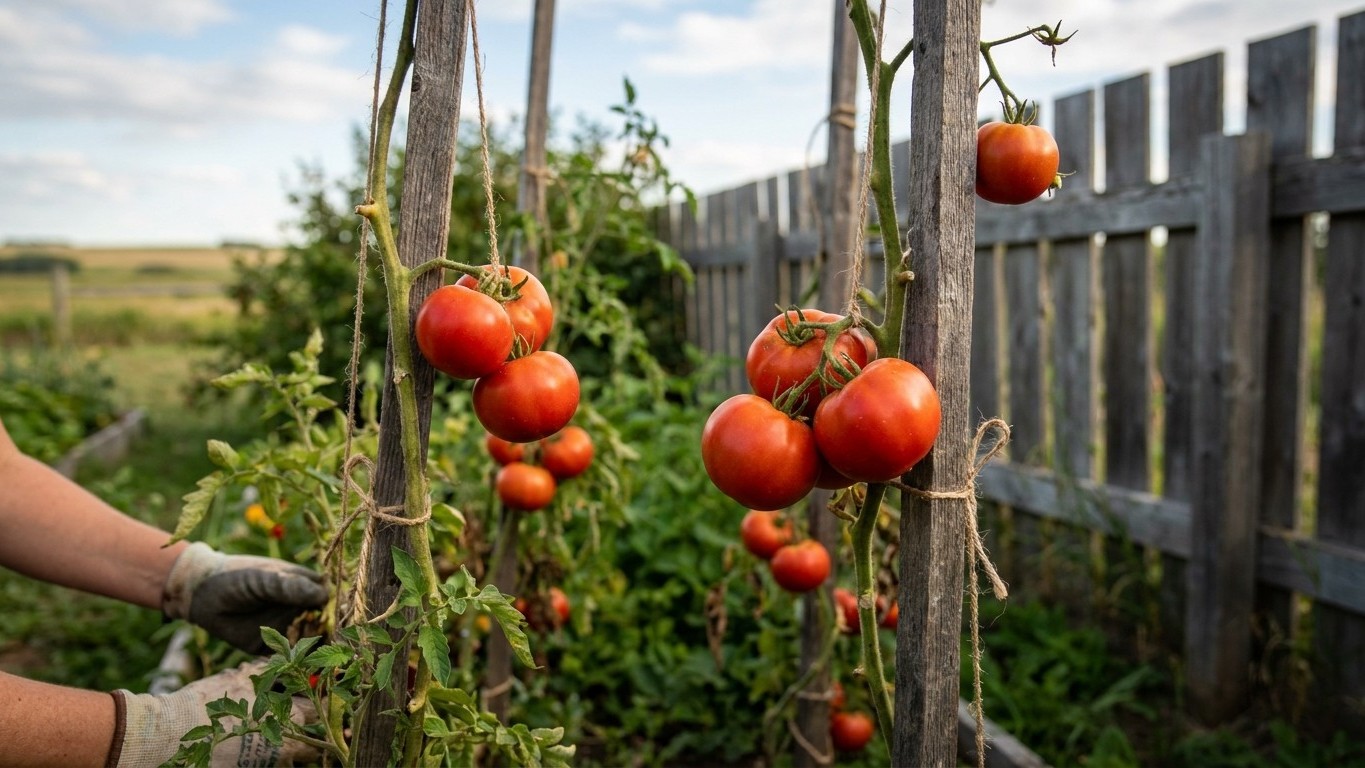

Saskatoon’s growing season runs on average about 123 days, from Environment and Climate Change Canada’s 1981-2010 mean last spring frost on May 18 to its mean first fall frost on September 18. That window rules out most tomatoes rated past roughly 78 days from transplant and puts the safest bets well under that. Pick a cultivar whose catalogue days to maturity, counted from an early-June transplant, leave several weeks of daylight before the September mean, and treat anything closer than that as a gamble worth naming before you buy the seed packet.
What this comes down to in Saskatchewan

At Saskatoon, the frost window set by Environment and Climate Change Canada’s 1981-2010 normals runs from a mean May 18 last spring frost to a mean September 18 first fall frost, a season of roughly 123 days. Both dates are averages taken over thirty years, not a promise: in about half of those years, frost arrived later than May 18 in spring or earlier than September 18 in fall. The working number for choosing a variety isn’t the full 123 days, it’s whatever’s left after you build in room for a frost that shows up ahead of schedule. The cultivars below are ordered by catalogue days to maturity, from a fast 55 days to a slower 78, so you can see exactly where your own risk tolerance sits on that line.
Sakura

Sakura needs about 55 days from transplant to first ripe fruit, the fastest on this list. It’s a small, glossy red cherry tomato for fresh eating, and it resists nematodes, tomato mosaic virus, and fusarium wilt races 1 and 2. Set out in early June, it ripens by late July, leaving roughly 54 days of margin before the September mean frost, the widest cushion of any variety here.
Sun Gold

Sun Gold matures in about 57 days from transplant and produces small, bright orange-gold cherry tomatoes known for sweetness rather than size. It resists tobacco mosaic virus and fusarium wilt race 1. From an early-June transplant it ripens late July, with about 52 days of margin before the mean fall frost, almost as safe a bet as Sakura.
Juliet

Juliet takes about 60 days from transplant and carries small, oblong red grape tomatoes in long clusters, good for fresh eating or halving for sauce. It resists both early and late blight at an intermediate level, which matters more in a cool, damp season than a dry one. Set out early June, it ripens late July with roughly 49 days of margin.
Amalfi

Amalfi runs about 68 days from transplant to first fruit, a medium round red tomato on a compact determinate plant that stays manageable without staking. It carries intermediate resistance to nematodes, late blight, and early blight, a useful combination if disease pressure is your bigger worry than the calendar. From an early-June transplant it ripens in early August, with about 41 days of margin before the September mean frost.
Cherokee Purple

Cherokee Purple needs about 72 days from transplant and produces a large, flattened beefsteak with dusky purple-pink skin and rich, sweet flavor prized by growers who want a slicing tomato worth the wait. It carries no listed disease resistance, so it depends more heavily on a clean, warm season than the hybrids on this list. Set out early June, it ripens mid August, with about 37 days of margin, tighter than anything ranked above it.
Big Beef Plus

Big Beef Plus also runs about 72 days from transplant, producing a large, smooth red beefsteak on a tall indeterminate vine. Unlike Cherokee Purple, it resists nematodes, gray leaf spot, and tomato mosaic virus, which offsets some of the risk that comes with a longer season. From an early-June transplant it ripens mid August with roughly 37 days of margin before frost.
Tiren
Tiren takes about 75 days from transplant and produces a medium, plum-shaped red tomato bred for sauce and canning. It resists verticillium wilt, tomato mosaic virus, and fusarium wilt race 1, a strong disease package for a longer-season paste tomato. Set out early June, it ripens mid August with about 34 days of margin, a workable but shrinking cushion.
San Marzano II
San Marzano II is the slowest variety on this list at about 78 days from transplant, producing the long, narrow, deep red paste tomatoes classic sauce recipes call for. It carries no listed disease resistance. From an early-June transplant it ripens mid August, leaving about 31 days of margin before the September mean frost, the tightest of any cultivar named here.
| Variety | Days to maturity | First ripe | Margin before mean frost |
|---|---|---|---|
| Sakura | 55 | late July | 54 days |
| Sun Gold | 57 | late July | 52 days |
| Juliet | 60 | late July | 49 days |
| Amalfi | 68 | early August | 41 days |
| Cherokee Purple | 72 | mid August | 37 days |
| Big Beef Plus | 72 | mid August | 37 days |
| Tiren | 75 | mid August | 34 days |
| San Marzano II | 78 | mid August | 31 days |
Working it out for your own garden
The method matters more than any single number here, because a mean frost date shifts every year and every district differs from Saskatoon. Start with the two dates Environment and Climate Change Canada publishes for the Saskatoon SRC station: a mean last spring frost of May 18 and a mean first fall frost of September 18. Subtract one from the other in your head, in weeks rather than a single day, and you get a season of roughly 123 days, give or take however early or late frost actually falls in a given year. That figure is the ceiling, not a target.
Running the numbers for two cultivars
Take Sakura, at 55 days from transplant. Set out in early June, as the catalogue window allows once soil has warmed past the mean May 18 frost, it ripens by late July. Counting forward from an early-June transplant to a late-July harvest and on to the September 18 mean frost leaves about 54 days of slack, room enough to absorb a cool July or a frost that lands two or three weeks ahead of average.
Now take San Marzano II, at 78 days from transplant. The same early-June start pushes first ripe fruit to mid August, and counting on to September 18 leaves only about 31 days. Because May 18 and September 18 are means, not guarantees, in roughly half of all years the real frost date falls earlier than the average. A 31-day cushion can shrink to nothing if the season starts a week late or a cold snap slows ripening in August, while Sakura’s 54-day cushion has room to spare. That’s the line: not whether a variety can ripen in an average year, but whether it survives a year that isn’t. For the fuller method behind picking that early-June transplant date in the first place, see Tomato Planting Dates in Saskatchewan: Counting Back From Your Frost Window.
The mistakes this state punishes

The most common one is transplanting after a warm stretch in early May, before the mean May 18 frost has actually passed. A string of 20-degree days in early May feels like summer, but the Saskatoon normal is an average of thirty years of frost dates, and a late frost after an early warm spell has killed more tomato transplants here than any pest. Wait for the window, not the weather forecast of a single week.
The second mistake is picking a long-season variety for the wrong reason, usually flavor or size, without checking the margin it leaves. Cherokee Purple and San Marzano II are both worth growing, but both carry margins under 40 days against the September mean frost, and stacking two or three long-season plants together concentrates that risk instead of spreading it. Balance the bed: a couple of 55 to 60-day cherry or paste types alongside anything running past 70 days, so a rough end to the season still leaves something to harvest.
The third is delaying the transplant date itself, whether from a late-arriving nursery order or a wet spring that kept soil too cold to work. Every week a transplant goes in late is a week subtracted directly from that season’s margin, and for a 78-day variety already sitting at roughly 31 days of cushion, a two-week delay erases more than half of it. If you haven’t worked out your own transplant window yet, that groundwork belongs on growing tomatoes in Saskatchewan rather than repeated here.
Checking this against your county
Every figure above comes from the Saskatoon SRC weather station, and Saskatoon is not the whole province. Districts to the north and at higher elevation run their frost dates later in spring and earlier in fall than Saskatoon does, which shortens the season further and pushes the line between a safe variety and a risky one closer to the shorter end of this list. Districts further south or at lower elevation may see the opposite.
Before committing a bed to a 70-plus-day variety, check your own county’s frost record against the Saskatoon figures used here, through your local extension office or Saskatchewan’s Ministry of Agriculture and Natural Resources branch, which maintains region-specific guidance beyond what any single station can tell you.
Common questions
Can I even grow big beefsteak tomatoes in Saskatchewan?
Yes, but the margin is tighter than with a cherry or early slicer. Big Beef Plus and Cherokee Purple both run about 72 days from transplant, leaving roughly 37 days before the Saskatoon mean fall frost, workable in most years but with less room for a cold or overcast August.
Do cherry tomatoes really ripen that much faster than the big ones?
Yes, and the gap is bigger than most gardeners expect. Sakura and Sun Gold both finish in 55 to 57 days with over 50 days of margin before frost, while a paste tomato like San Marzano II at 78 days leaves less than a third of that cushion.
What happens if my transplants go in later than early June?
Every week of delay comes straight off the season’s margin, since the mean fall frost date doesn’t move to accommodate you. A late transplant is exactly when switching to a shorter-season cultivar, such as Sakura or Sun Gold, matters more than usual.
Is it worth growing a paste tomato for canning here at all?
It can be, but treat it as the higher-risk part of the bed rather than the whole plan. Tiren, at 75 days with about 34 days of margin, carries stronger disease resistance than San Marzano II and is the steadier choice of the two paste tomatoes named here.