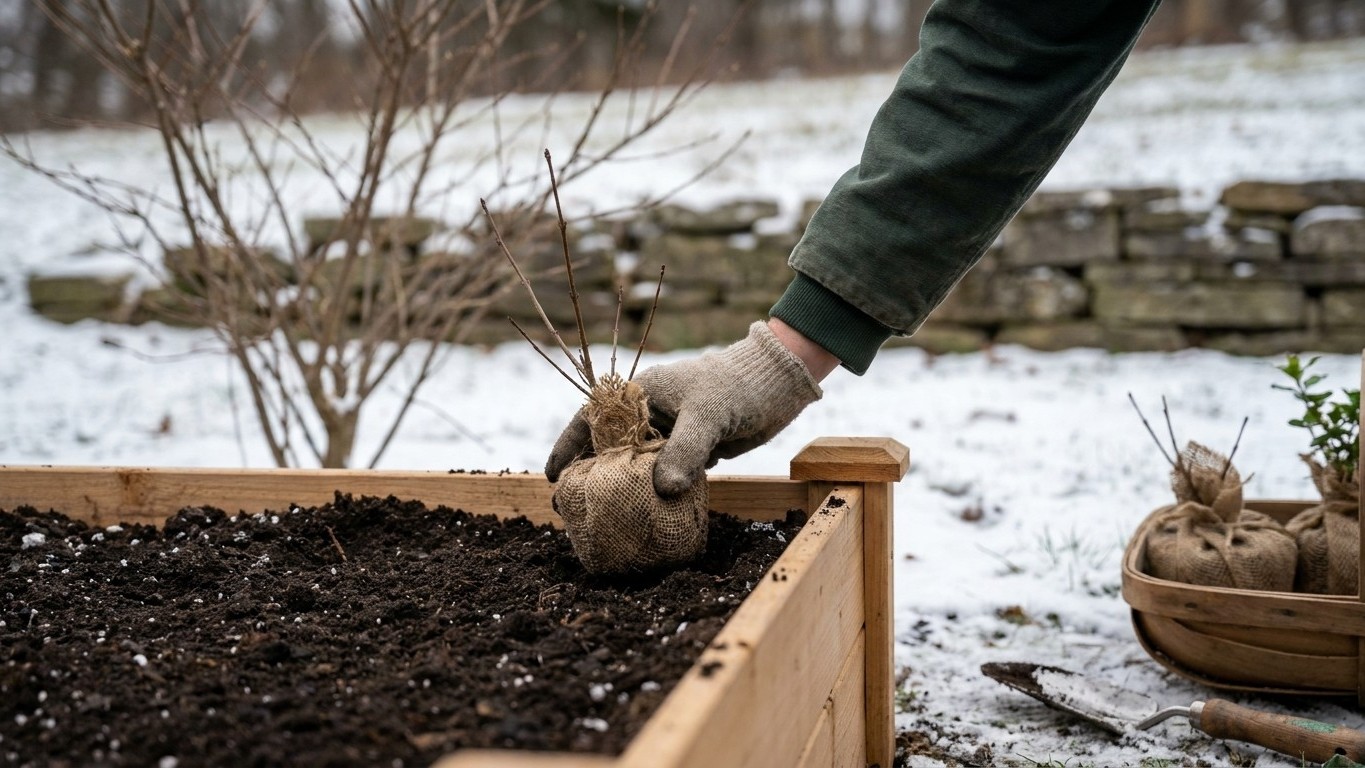

Short answer: nothing goes into open ground in Saskatchewan this month. The soil is frozen solid across the province, and the growing season here runs on average from May 18 to September 18, a window December sits nowhere near. What actually happens this month is dormant work, seed ordering, and a handful of indoor and cold-frame tricks that keep a gardener’s hands busy while the ground rests.
What goes in the ground in December

The decision about what can go outside never comes from a calendar page. It comes from soil temperature and the frost window around it. Saskatoon’s average last spring frost lands around May 18, and the average first fall frost arrives around September 18. Those are mean dates from Environment and Climate Change Canada’s 1981-2010 climate normals, not guarantees, which means in roughly half of all years frost shows up later than May 18 in spring. Either way, December sits about five months from that spring mean and roughly three months past the fall one. There is no gray zone to argue about here.
So say it plainly: no direct-sown crop and no transplant belongs in open Saskatchewan soil this month. Garlic and shallots, which are the one exception gardeners often ask about, need to go in during fall before the ground locks up, typically September or October in this climate. If that window was missed, waiting until spring is the only real option now, not pushing a clove into frozen dirt.
What still makes sense outdoors is limited but real. A cold frame or low tunnel set up earlier in fall can sometimes be coaxed to hold hardy greens a little longer if it was insulated before the deep freeze, though by this point in Saskatchewan most of those beds are done for the season. Bare-root and dormant plantings of trees or shrubs are only viable if the ground is still workable, which in a Canadian zone 3a winter it generally is not. The more productive move indoors is forcing: potted rhubarb crowns or chicory roots brought into a dark, cool space can be tricked into producing tender growth over several weeks, giving a fresh harvest when the garden itself offers nothing.
What to start under cover
Seed-starting dates work backward from the frost window, not forward from today’s date. Using the May 18 average last frost as the anchor, most transplants in this climate get started 8 to 12 weeks ahead, which lands in late February through early March, not December. Onions and leeks are the exception worth naming, since some gardeners in short-season provinces start them 16 to 18 weeks ahead of transplant to build enough root and top growth before the long summer days trigger bulbing. Counting back 18 weeks from May 18 lands in mid-January, which puts December just slightly ahead of that mark, useful mainly for setting up grow lights, testing old seed for germination, and lining up trays rather than sowing in earnest.
Slow-germinating perennials and certain hot peppers are the other category people jump the gun on. Some hot pepper varieties are started 12 to 16 weeks before the last frost specifically because germination is slow and uneven; counted back from May 18, that lands in late January to early February. Starting them in December means weeks of extra time under lights with nowhere for the plants to go, which is exactly the first failure mode: seedlings that get rootbound and leggy long before the ground or the weather is ready for them.
The second failure mode runs the other way. Gardeners who wait too long on long-season crops in a province with roughly 123 frost-free days between the May and September means can run out of summer before fruit sets. December’s real job under cover is preparation: cleaning trays, checking that grow lights still work, and mapping out sowing dates on paper so late January and February don’t turn into a scramble.
What is ready to pick
Outdoors, the honest answer is little to nothing. Ground is frozen, snow cover is established across most of the province, and any greens left in open beds are no longer worth digging for. Kale and other cold-hardy leaves that survived under a blanket of snow into early winter have typically gone past the point of usable texture by the time deep cold sets in through December.
Indoors is where the harvest actually happens this month. Cold frames that were insulated and closed up before the hardest freezes can sometimes still yield a few hardy greens on a mild day, though in a zone 3a winter that window closes fast. Sprouts and microgreens grown on a countertop are a far more reliable source of fresh food, ready in as little as a week and needing nothing more than a tray, water, and a warm spot.
The other job this month is checking what is already in storage. Squash, potatoes, and onions put up in fall need a walk-through now, not later. Any squash with a soft spot or a sweet smell should be used immediately before it spreads to the rest of the bin. Potatoes that have sprouted or gone green need sorting out, and onions that have started to soften at the neck are best used first rather than left to take down neighboring bulbs.
The jobs that matter this month

A winter month in Saskatchewan is not a blank page, it’s a page full of deadlines that just don’t involve a trowel. Dormant pruning of fruit trees and berry canes can happen now, on days when wood isn’t brittle from extreme cold; waiting until a wild swing to well below freezing to prune risks cracking branches that would cut cleanly on a milder day. Ordering seed belongs here too, and it belongs early, because the zone-appropriate, short-season varieties that actually mature within Saskatchewan’s roughly four-month growing window are the first to sell out from suppliers once late winter orders start flooding in.
Planning next season’s rotation is a desk job that pays off in June. Knowing which bed grew brassicas last year, which grew legumes, and which needs a break from nightshades saves a season of disease pressure later. Soil testing can be done now too, either by sending a sample to a lab or by pulling notes together on what each bed produced and struggled with, so amendments are ready to go the moment the ground thaws.
Compost piles slow down drastically in this kind of cold but don’t need to be abandoned; turning them when possible and insulating the outside with straw or leaves keeps some low-level activity going. Tools are worth pulling out of the shed now too, cleaning off dried soil, sharpening blades, and oiling anything metal before rust sets in over the coldest stretch. Raised bed frames, fencing, and trellises that took a beating over the growing season are far easier to repair while nothing is planted and the whole yard is accessible. And storage bins deserve a repeat check partway through the month, since one soft potato left too long can take out a dozen others around it.
What not to do in December
The most common mistake this month is starting warm-season seeds far too early because a gardener is eager and the calendar feels far along. Tomatoes, peppers, and squash started in December sit under lights for months with nowhere to go, turning into pale, stretched, rootbound plants long before the ground near Saskatoon reaches a safe planting temperature after the May 18 average frost.
A second mistake is reacting to a mild stretch of weather as if it changes the season. A few days above freezing in the middle of winter does not mean spring has arrived, and pulling mulch off perennial beds or uncovering a cold frame too early during a thaw only exposes roots and crowns to the hard freeze that follows. The May 18 figure is an average, not a promise, and a warm week in December has no bearing on it either way.
Feeding nitrogen to anything dormant is another wasted, and sometimes harmful, move. Dormant trees, shrubs, and any overwintering perennials aren’t taking up nutrients the way they would mid-growing-season, and fertilizer applied now mostly sits in the soil or leaches away, doing nothing for the plant and occasionally causing salt buildup around roots. Save the feeding schedule for when growth actually resumes.
Checking this against your own county
Everything above is built on data from a single reference station, and Saskatchewan is not one climate. Elevation, proximity to lakes, and the real gap between the province’s northern and southern regions can shift both the May 18 and September 18 averages by weeks in either direction. A garden near a large lake may see a milder, later fall frost than one in an open, elevated stretch further north.
Before treating any date here as a rule, check it against local sources. The Saskatchewan agriculture and agribusiness resources page is the starting point for provincial guidance, and pairing it with Natural Resources Canada’s plant hardiness data for a specific municipality gives a far more local read than a province-wide average ever can.
Common questions
Can you plant garlic in Saskatchewan in December?
No. Garlic needs to go into the ground in fall, before the soil freezes, typically September or October in this climate. By December the ground is locked up and any cloves not already planted should wait until spring.
What hardiness zone is Saskatchewan for gardening?
The reference city used for this province sits in Canadian hardiness zone 3a, based on Natural Resources Canada’s 1991-2020 data. This is the Canadian system, built on seven climate variables, and it does not convert directly to a USDA zone, so it shouldn’t be compared on the same scale as US zone numbers.
Is it too late to start seeds indoors in December?
For most vegetables, yes, it’s too early rather than too late. Counting back from the May 18 average last frost, most transplants are started 8 to 12 weeks ahead, landing in late February or March. Starting in December mainly risks leggy, rootbound seedlings with months to wait before the garden is ready.
What can you harvest in Saskatchewan in December?
Almost nothing from open ground. The realistic harvest comes from indoor sprouts and microgreens, occasional cold-frame greens if the frame was well insulated before the hard freezes, and whatever squash, potatoes, and onions remain in good condition in storage.
Gardeners who plant by the Moon can check the December 2026 moon planting calendar, a tradition rather than a proven method.