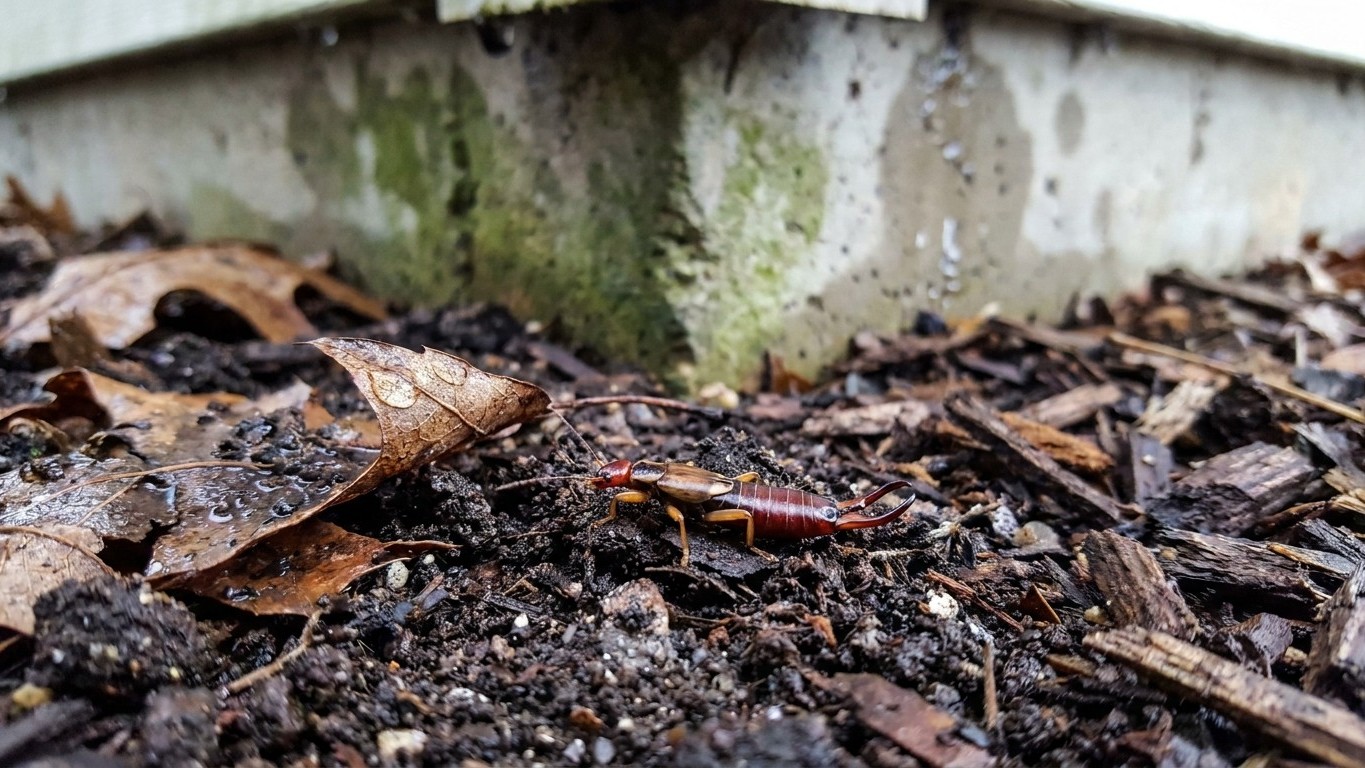

European earwigs turn up in Ontario homes in two predictable waves each year: a smaller one in late April through May when overwintering adults leave the soil, and a bigger one in July and August when the summer’s new generation reaches adult size and starts wandering. They show up because of moisture, not because of dirt or clutter, which means the fix has almost nothing to do with deep cleaning and everything to do with drainage, sealing, and cutting off the damp hiding spots along your foundation.
Identifying the European Earwig in Ontario

The species you’re dealing with almost anywhere in southern and eastern Ontario is Forficula auricularia, the European earwig. It’s been established in the province for close to a century, first reported in Ontario in the 1930s, and it has since become the most common earwig species reported in backyards from Windsor to Ottawa.
Adults run about five-eighths of an inch long, reddish-brown, with short wings and a pair of curved pincers (cerci) at the tail end. Males have thicker, more curved pincers than females, which are straighter and closer together. Despite the menacing look, they don’t sting, they rarely bite, and they don’t spread disease. The pincers are mostly used to grab prey and to fend off other earwigs during territorial squabbles under mulch.
What surprises a lot of homeowners is that earwigs are decent garden allies. They eat aphids, mites, and dead plant material along with living seedlings, so the damage they cause in a vegetable patch is a mixed bag. The real complaint in Ontario isn’t garden damage, it’s the sheer number that pile up on porches, window wells, and basement floors during warm, humid stretches.
The Ontario Earwig Calendar: When They Show Up
Earwig activity in Ontario follows the province’s freeze-thaw cycle closely, and knowing the calendar helps you time prevention instead of reacting after they’re already inside.
Late Fall Through Winter: Underground and Dormant
Adult earwigs mate in the fall, then the females burrow two to three inches into the soil, often right against house foundations, under patio stones, or beneath compost piles, and wait out the cold as a pair or in small groups. Ontario’s frost line typically runs deeper than that, but earwigs tuck in close enough to structures that the ambient heat from a heated basement wall keeps their burrow from freezing solid. This is why the ground within a foot of your foundation is prime earwig real estate all winter.
April and May: Egg-Laying and First Emergence
Once soil temperatures climb into the 45 to 50°F range, usually mid to late April in southern Ontario and a couple weeks later in the north, females lay 30 to 50 eggs in an underground chamber and guard them, which is unusual behavior for an insect. Eggs hatch in about a week, and the mother stays with the nymphs through their first molt. This is the smaller of the two annual “sightings,” mostly adults moving around outside as they finish overwintering business.
June and July: Nymphs Everywhere
Nymphs go through four to five molts before reaching adult size, a process that takes roughly two months. By late June, Ontario yards are full of small, pale, wingless earwigs feeding on decaying leaves, mulch, and soft plant tissue. They’re not indoors much at this stage; they’re too small and too tied to moist ground cover.
August: Peak Adult Activity and Indoor Invasions
This is the month most Ontario pest calls happen. The new generation reaches adult size right as Ontario summers hit their driest, warmest stretch, and dry conditions push earwigs toward whatever moisture is left, which is often the foundation of a house with a leaky downspout or an over-watered flower bed. They squeeze through gaps as thin as a business card and end up in window wells, bathrooms, and basement corners overnight.
September Onward: Natural Decline
By mid to late September, cooler nights slow earwig activity noticeably. Numbers drop on their own without any intervention, and by the time the first hard frost hits, usually mid-October in southern Ontario, most surface activity stops as the population heads underground again.
Ontario’s climate zones matter here too. Coastal areas near Lake Erie and Lake Ontario stay milder and more humid longer into fall, which stretches the invasion window by a few extra weeks compared to inland or northern regions where frost arrives earlier.
Why They End Up Inside Ontario Homes
Earwigs don’t come inside looking for food. They come inside looking for moisture and shelter, usually because conditions outside just got too dry, too hot, or too disturbed.
Mulch beds pressed right up against siding are one of the biggest drivers. A two-inch layer of shredded bark holds moisture like a sponge and gives earwigs a cool, damp daytime hiding spot within a few feet of a foundation crack. Firewood stacks and patio stones do the same job, creating dark, humid pockets that earwigs treat as home base.
Gutters that overflow or downspouts that dump water right next to the foundation keep the soil saturated in exactly the spot earwigs want to burrow. Ontario’s summer thunderstorm pattern, dry spells punctuated by sudden heavy rain, actually makes this worse: earwigs surge toward foundations during the dry stretch, then get flushed toward the house even more aggressively once a storm soaks the yard.
Once they’re at the foundation, entry is easy. Weep holes in brick veneer, gaps around basement window frames, unsealed utility penetrations, even the tiny space under a poorly fitted door sweep are all wide enough for an adult earwig to slip through.
What Actually Stops European Earwigs
Because the whole problem is driven by moisture and access, the most effective control in Ontario has almost nothing to do with pesticides and everything to do with changing conditions around the house.
Outside the House
Pull mulch and dense ground cover back six to twelve inches from the foundation, and switch to a thin layer of gravel or crushed stone right against the wall if you can. That single change removes the daytime shelter earwigs rely on most.
Fix drainage before anything else. Clean gutters every spring and fall, extend downspouts so they discharge at least three feet from the foundation, and grade soil so it slopes away from the house rather than pooling against it.
Trim back shrubs and tree branches that touch siding, since they act as bridges, and clear leaf litter and grass clippings that pile up against the base of the house.
A short list of quick outdoor fixes that make a real difference:
- Move firewood piles at least 20 feet from the house and off the ground on a rack
- Repair or replace worn weatherstripping and door sweeps
- Seal foundation cracks and utility penetrations with exterior-grade caulk
- Reduce nighttime porch and yard lighting, which draws earwigs and their prey insects toward entry points
- Empty and clean gutters twice a year to stop overflow near the foundation
Inside the House
A dehumidifier in the basement is often the single most useful tool, since it takes away the moisture that would otherwise attract earwigs that do make it inside. Ontario basements, especially older ones with stone or block foundations, tend to run humid through summer, and knocking relative humidity down below 50% makes the space far less appealing.
Vacuuming up any earwigs you find, rather than crushing them, avoids the faint odor some people notice and is just as effective. Simple trap options, like a rolled damp newspaper left overnight near a suspected entry point or a shallow container of vegetable oil with a bit of soy sauce, catch earwigs that are drawn to moisture and dark crevices, and both can be checked and dumped in the morning.
Diatomaceous earth applied in a thin line along baseboards, window wells, and foundation cracks works mechanically, damaging the earwig’s exoskeleton on contact, and it stays effective as long as it stays dry. It loses effectiveness fast if it gets wet, which is worth remembering given how much this whole problem revolves around moisture.
Most Ontario homeowners never need a chemical treatment at all. Sealing entry points and drying out the perimeter handles the vast majority of cases, and the population that does get inside during an August surge tends to thin out on its own within a couple weeks as cooler, drier weather sets in and the new generation disperses back into the yard for winter.