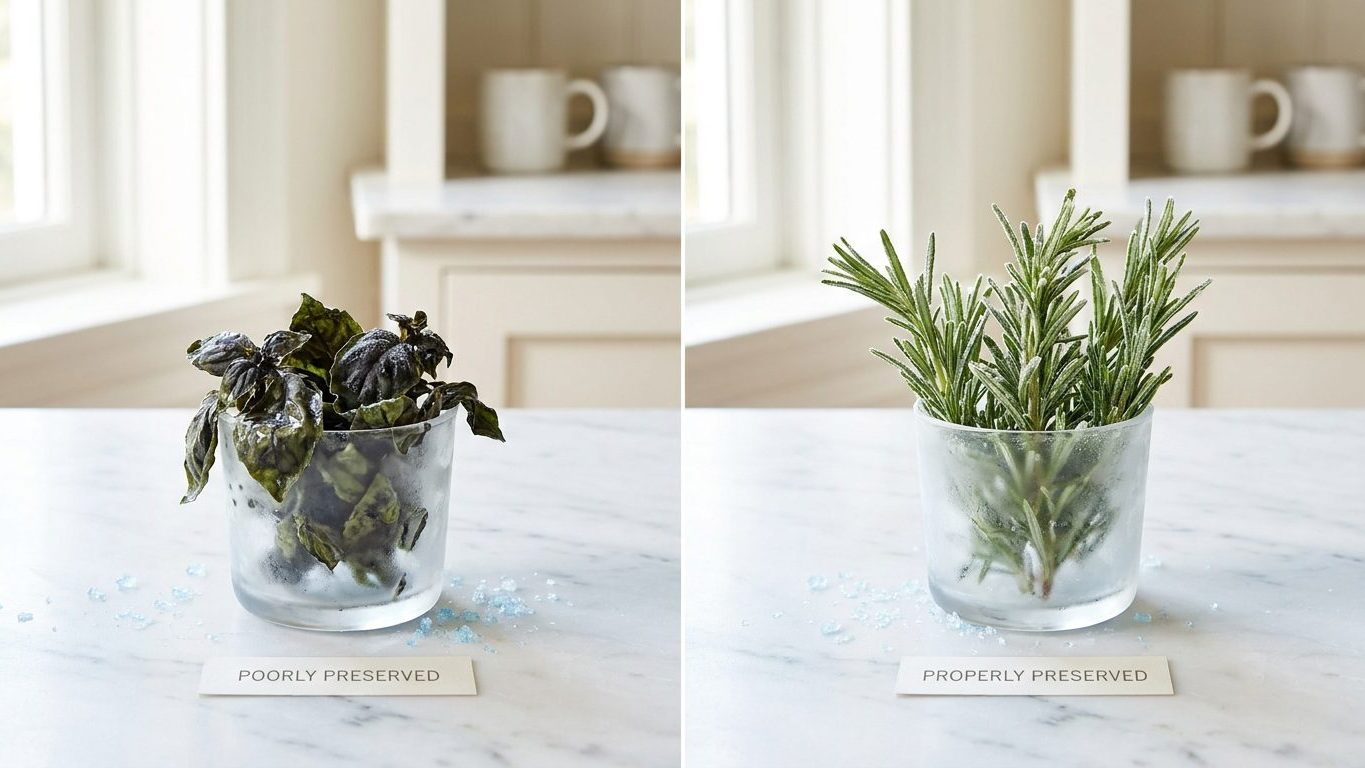

Basil turns black and slimy in the freezer. Rosemary comes out looking almost the same as it went in. That’s not bad luck or a wrong technique, it’s chemistry: soft, water-heavy leaves collapse when ice crystals form inside their cells, while tougher, oil-rich leaves shrug it off. Match the herb to the right method and freezing works well for months.
What is actually going on

Every leaf is mostly water held inside a lattice of cells. Drop the temperature below freezing and that water expands as it turns to ice, and the sharp edges of those ice crystals puncture the thin walls holding each cell together. When the herb thaws, the structure that gave the leaf its shape and crunch is gone. Water leaks out, pigments and enzymes that used to stay separated inside different parts of the cell suddenly mix, and the leaf collapses into something dark, wet, and limp.
This is the same reason a head of lettuce goes to mush after a stint in the freezer while a bag of frozen broccoli holds its shape. Cell wall thickness and water content decide the outcome, not the flavor of the plant. Herbs with soft, thin, high-moisture leaves such as basil, cilantro, parsley, dill, and tarragon have delicate cell walls and a lot of water to expand. Herbs with tougher, narrower, more fibrous leaves such as rosemary, thyme, sage, oregano, and bay have less water per leaf and a denser structure that resists collapse.
Basil is the clearest example of a second problem layered on top of the ice-crystal damage: browning. Once cell walls rupture, an enzyme called polyphenol oxidase comes into contact with oxygen and with compounds it was previously kept away from, and the leaf oxidizes the way a cut apple does, just faster and darker. That’s why frozen basil often looks bruised or blackened even when it hasn’t technically spoiled. Briefly blanching leaves in hot water before freezing deactivates that enzyme and slows the browning, though it does nothing to stop the ice-crystal texture loss underneath.
The useful part of all this is that texture loss barely matters for a herb you were only ever going to cook with. A basil leaf that’s going into a simmered sauce doesn’t need to look pretty going in. Its cell walls were always going to break down from heat anyway, so freezing just gets there first. A herb you rely on for a crisp bite in a salad or as a raw garnish, on the other hand, loses the exact quality that made it worth adding fresh. That’s the whole logic behind which herbs are worth freezing and which ones aren’t: the ones that survive contact with heat in the kitchen tend to survive contact with cold in the freezer too, and the ones that only work raw don’t survive either one.
In the garden
Once you sort herbs by leaf structure rather than by name, the right method for each becomes obvious, and so does the failure mode when someone skips a step. The table below groups common garden herbs by type rather than variety, since the freezing behavior comes down to leaf structure more than which specific plant is in the ground.
| Herb type | Method that works | Best use after thawing | What goes wrong |
|---|---|---|---|
| Soft-leaf herbs (basil, cilantro, parsley, dill, tarragon) | Chop finely, pack into ice cube trays with water or oil, freeze solid, then transfer cubes to a sealed bag | Soups, sauces, stews, anything cooked | Frozen loose on a tray with no liquid or bag, the leaves blacken from oxidation and pick up freezer odors within weeks |
| Woody herbs (rosemary, thyme, sage, oregano, marjoram, bay) | Freeze whole sprigs or leaves directly in a sealed bag, no blanching needed | Roasts, braises, stews, removed as a whole sprig or crumbled in near the end of cooking | Chopped fine before freezing, the extra surface area exposed to air causes rapid freezer burn and a flat, dusty flavor within a month or two |
| Mint | Chop and freeze in water-filled ice cube trays like other soft herbs | Cooked syrups, hot or cold beverages, sauces | Frozen as whole leaves with no protective liquid, they darken and stick together in an unusable clump |
| Chives | Chop raw, freeze loose on a tray for an hour, then bag | Stirred into dishes straight from frozen, no thawing needed | Bagged before the initial flash-freeze, the pieces fuse into one solid brick that’s nearly impossible to portion |
A few herbs carry a well-known reputation for traditional or medicinal use beyond the kitchen. This page only covers growing and cooking, so that reputation isn’t something addressed or evaluated here.
Portioning matters as much as the method itself. Ice cube trays exist for a reason: a single cube gives you roughly a tablespoon of prepped herb, which is close to what most recipes call for, and you’re not thawing out an entire bag to get a pinch. Oil-based cubes work well for herbs headed into a sauté or a marinade, while water-based cubes suit soups and braises where a little extra liquid doesn’t matter. Whichever you choose, press out as much air as possible before sealing, since trapped air is what drives freezer burn regardless of leaf type.
What it depends on where you are
The freezing mechanism itself doesn’t change from state to state. Ice crystals rupture cell walls the same way whether the basil was grown in a raised bed or a container on a balcony. What does change is when herbs are at their peak and worth freezing in the first place.
Season length decides how much of a surplus you’re dealing with. In regions with a long, hot growing season, soft herbs like basil bolt and need cutting back repeatedly, which means more trimmed material headed for the freezer over a longer stretch of the year. In shorter, cooler seasons, the harvest window for the same herb is tighter, and freezing becomes more of a one-time end-of-season task than an ongoing habit. Woody perennials like rosemary and thyme behave differently depending on whether they survive winter outdoors where you live or need to come inside, which affects whether you’re freezing a big fall harvest or snipping small amounts year-round from a plant that never really stops growing.
Humidity and summer rainfall shift moisture content in the leaves themselves. Herbs grown in a humid, high-rainfall climate tend to carry more water in their tissue, which can mean slightly more ice damage and a wetter thaw. Herbs grown in a hot, dry climate often develop tougher, more concentrated leaves, particularly among the woody types, which can hold up a little better in the freezer. None of this changes the basic sorting logic from the previous section, but it does mean two gardeners freezing the same herb in different parts of the country may notice slightly different results.
For the specifics that actually apply to your yard, your state’s herb-growing guide on this site is a better starting point than a national average, and your local cooperative extension office can speak to your exact climate and soil. The USDA’s network of extension offices exists specifically to answer these kinds of regional growing questions for free.
The mistake that costs the most
The single most expensive mistake isn’t a technique error, it’s a mismatch of expectations. Someone freezes a batch of basil or cilantro expecting to pull it out later and toss it into a salad or use it as a fresh garnish the way they would the fresh leaf. What they get instead is a dark, wilted, watery mess that looks nothing like what went in, and the natural conclusion is that freezing herbs “doesn’t work.” So they stop doing it, and the next surplus of basil goes into the compost pile instead of the freezer.
The herb didn’t fail. The plan for using it did. Frozen soft-leaf herbs were never going to hold their raw texture, because the ice crystals that formed inside the leaf during freezing already broke down the cell structure that gave it crunch and brightness in the first place. That leaf is now, functionally, a cooked-in ingredient whether it ever sees a stove or not. Used that way, in a simmered sauce, a soup base, or stirred into something hot, it performs exactly as well as fresh basil would after ten minutes in the same pot.
The fix costs nothing and takes no extra equipment. Before you freeze a batch of any soft herb, decide right then what dish it’s headed for later. Label the bag or the tray with that in mind, oil cubes for sautés and marinades, water cubes for soups and braises, so that six months from now you’re not standing at the freezer disappointed that a thawed cube of cilantro doesn’t look like a fresh sprig. It was never going to. Set the expectation at the moment of freezing, and the same batch that felt like a failure becomes one of the more reliable shortcuts in the kitchen.