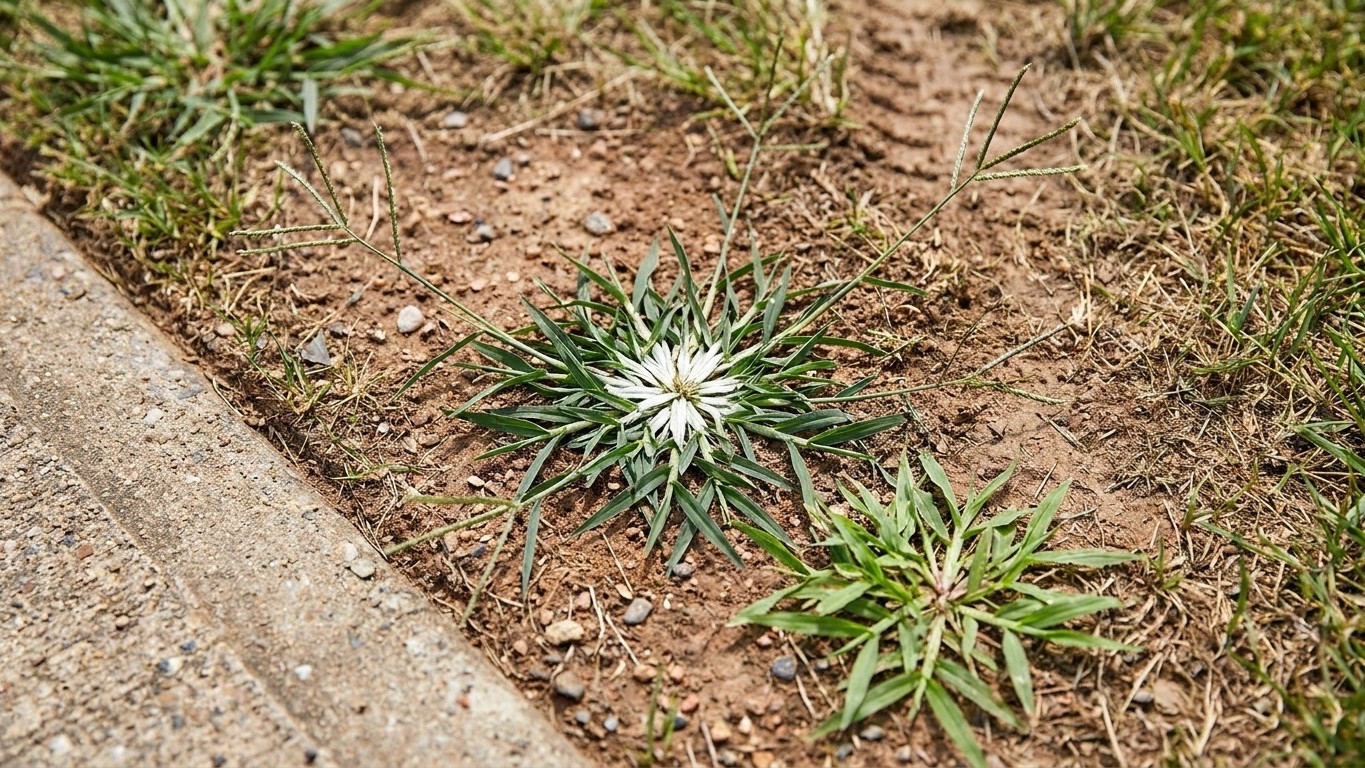

The safest overseeding window in North Dakota runs from mid-August through the first week of September, timed to give cool-season grass roughly 45 days of growing weather before the ground freezes. Push it later than that and you’re gambling seed money on a race the calendar usually wins.
The overseeding window in North Dakota
That 45-day cushion isn’t a rule of thumb pulled from nowhere. It’s the amount of time turfgrass extension research says cool-season seed needs to germinate, root, and toughen up enough to survive its first winter. Sow later, and the seedlings that do sprout get caught mid-growth when the ground locks up, and they don’t come back in spring.
To find your own deadline, you work backward from your local first fall freeze. NOAA’s climate normals for the Fargo airport station (USW00014914) put the 32°F freeze date somewhere between September 25 and October 5, based on the 1991-2020 record. Subtract 45 days from that range and the last safe sowing date lands between roughly August 11 and August 21 for that specific station.
Here’s the catch, and it matters more in North Dakota than in most states: that frost date belongs to one weather station at one airport. Suburban yards and rural properties routinely see their first fall freeze arrive one to two weeks earlier than an airport reading, sometimes more if you’re at higher elevation or in a low-lying frost pocket. An airport runway holds heat differently than a lawn surrounded by open fields. If you garden outside the Fargo area, or even in a cooler pocket within it, treat that window as a starting point and check your own county’s frost history before you buy seed.
Why fall beats spring here
Cool-season grasses (the only kind that survive North Dakota winters) germinate and establish best when soil is warming and daylight is shortening, not the reverse. Fall seeding also means less competition from weeds, which is fierce in spring, and cooler air that keeps young seedlings from drying out between waterings. Spring overseeding is possible, but you’re fighting weed pressure and a shorter reliable window before summer heat stress sets in.
Practically, that means most North Dakota lawns should aim to get seed down by mid-August, watch the extended forecast for their area, and treat early September as the hard outer edge rather than the target date.
The soil temperature that actually decides it
Calendar dates get you in the right neighborhood, but the seed itself responds to one thing: soil temperature. Cool-season grass seed germinates when soil sits between 50°F and 65°F, measured about two inches down, checked mid-morning before the sun has had all day to skew the reading.
Below 50°F, germination slows to a crawl or stalls out completely. Above 65°F, you’re often still in late-summer heat that stresses new seedlings even if they do sprout, and it also favors crabgrass and other warm-season weeds competing for the same bare soil. The sweet spot sits in between, which is exactly why the August-to-early-September window lines up with what the ground is actually doing in a cool climate state.
A soil thermometer costs less than a bag of seed and takes the guessing out of this entirely. Push it two inches into the lawn in a few different spots, an hour or two after sunrise, and average the readings. Don’t rely on air temperature as a stand-in. Soil warms and cools slower than air, so a warm afternoon doesn’t mean the root zone has caught up, and a cool morning doesn’t mean it’s dropped as far as you’d think either.
If your soil reads above 65°F in mid-August, wait a week or two and test again rather than sowing into conditions that favor weeds over grass. If it’s already below 50°F by early September, you’ve likely missed the window for that year, and pushing seed into cold soil just wastes it.
How much seed, and what it costs to guess
North Dakota lawns are almost always seeded with cool-season species. Any warm-season grass simply won’t survive the winter here, so the choice comes down to which cool-season type fits your yard, not whether cool-season is right. The species backed by turf extension guidance for this climate are Fine Fescues, Kentucky Bluegrass, Perennial Ryegrass, Rough Bluegrass, and Tall Fescue.
Seeding rates are published as pounds per 1,000 square feet for a brand-new lawn started from bare soil. Overseeding an existing lawn, where you’re thickening turf that’s already established rather than starting from scratch, uses half those rates.
| Grass species | New lawn rate (per 1,000 sq ft) | Overseeding rate (per 1,000 sq ft) |
|---|---|---|
| Tall Fescue | 6 to 8 lb | 3 to 4 lb |
| Perennial Ryegrass | 6 to 8 lb | 3 to 4 lb |
| Fine Fescues | 4 to 5 lb | 2 to 2.5 lb |
| Kentucky Bluegrass | 1.5 to 2 lb | 0.75 to 1 lb |
| Rough Bluegrass | 1.5 to 2 lb | 0.75 to 1 lb |
Overdoing the rate is a common mistake, and it’s not a harmless one. More seed doesn’t mean thicker turf. It means more seedlings crowding the same square foot of soil, competing for the same water and nutrients, and thinning each other out before they mature. You end up paying for seed that never gets a fair shot at rooting.
Guessing on rate also costs you twice: once on wasted seed, and again if a too-thin or too-thick stand forces a repeat pass next fall because this year’s didn’t take. Measuring your lawn’s actual square footage before you buy, rather than eyeballing it, is the cheapest insurance in the whole project.
The three weeks after you sow
Getting seed down is the easy part. The three weeks that follow decide whether it turns into lawn or washes away.
Keep the top half-inch of soil consistently moist, which usually means light watering once or even twice a day rather than one deep soak. Deep watering makes sense for established turf; it drowns or displaces new seed. Cut back to normal watering only once you see uniform green growth across the seeded area, not just a few sprouts here and there.
Hold off on mowing until the new grass has reached about three inches, then mow it down to around two and a half inches. Cutting too early stresses roots that haven’t anchored yet, and cutting too short scalps seedlings that don’t have the reserves to bounce back the way mature turf does.
Keep foot traffic off the area entirely if you can manage it. That includes the dog, foot-traffic shortcuts across the yard, and anything heavier than a light rake. Young roots in the first three weeks are shallow and easily torn loose, and a single afternoon of kids playing catch can undo two weeks of careful watering.
Remember the 45-day clock is still running underneath all of this. Seed sown in mid-August needs every one of those days of decent growing weather to build roots deep enough to survive North Dakota’s winter. A late, cold snap that arrives before that window closes is the single biggest risk to a fall overseeding project here, which is one more reason to sow on the earlier side of the window rather than the later one when you have the choice.
Common questions
Can I overseed a North Dakota lawn in spring instead of fall?
It’s possible, but fall is the better bet in this climate. Spring seeding runs into heavier weed competition and a shorter reliable window before summer heat sets in, while fall seeding gets cooler air, less weed pressure, and a soil temperature range that lines up naturally with late-summer conditions.
What happens if I overseed too close to the first frost?
Seed that germinates without reaching the roughly 45 days of growing weather it needs typically dies over winter rather than coming back in spring. That’s why the sowing deadline is worked backward from your area’s first fall freeze, not just picked from a generic fall date.
Do I need a soil thermometer, or can I just guess based on the weather?
A thermometer is worth it. Soil temperature lags behind air temperature, so a stretch of warm days doesn’t mean the top two inches of soil have caught up, and a cool morning doesn’t mean it’s dropped as far as the air has. Testing directly removes the guesswork.
Should I use the same seeding rate as a new lawn if my existing turf is thin?
No. Even a thin, patchy lawn is still an existing lawn, not bare soil, so it calls for the overseeding rate (half the new-lawn rate), not the full rate. Overseeding thin turf at new-lawn rates just crowds seedlings into competition with each other and with the grass that’s already there.
For county-level guidance and current-season updates, North Dakota State University’s Extension service tracks regional growing conditions at ndsu.edu/agriculture/extension.