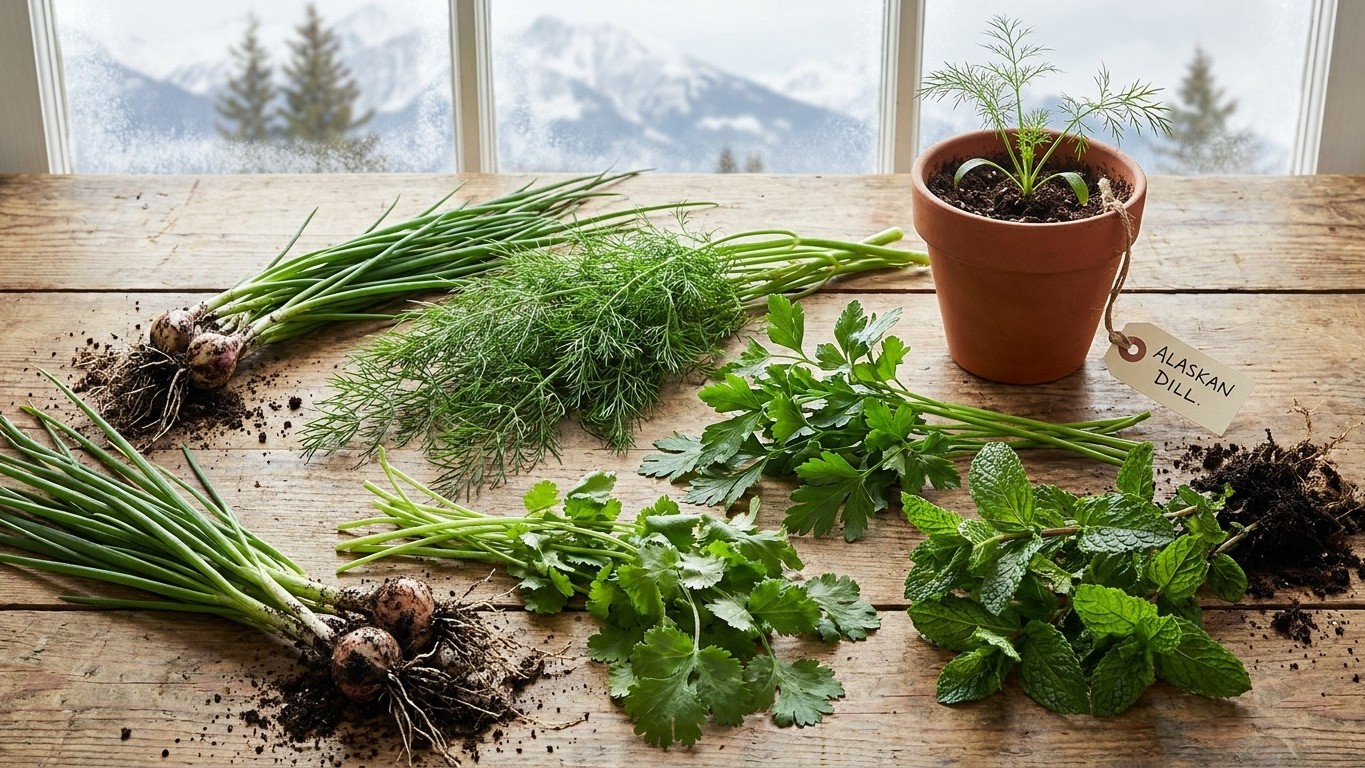

Texas herb gardening comes down to matching plant type to season length and heat, not chasing a single “best” list. Mediterranean perennials like rosemary, thyme, and oregano handle the state’s long, hot stretches with ease. Basil thrives once summer heat settles in. Cool-season herbs such as cilantro, dill, and parsley need to go in during fall, winter, or early spring, before the heat forces them to bolt.
The short answer for Texas
Texas doesn’t have one climate, it has four USDA hardiness zones stacked from the Panhandle down to the Rio Grande Valley, ranging 6a-10a. That spread changes which herbs even survive winter, let alone thrive. But the decision by type holds up statewide, because it’s driven by heat and season length rather than by a single frost date.
Start with the woody Mediterranean perennials: rosemary, thyme, oregano, sage, and bay (in the milder zones). These evolved in dry, rocky, hot terrain, which describes most of Texas summer better than it describes most other states. Reference the Gulf Coast station at Houston, where the coldest month averages a daily minimum of just 43.7°F. That’s mild enough that rosemary and thyme often behave as true perennials there, never fully going dormant. Further north and inland, where winter lows run harder, these same herbs need more shelter or get grown as annuals.
Basil is the other Texas workhorse, but it plays by different rules. It has zero frost tolerance and actually sulks in cool soil even above freezing, so it needs to go in well after the last spring frost risk has passed. At the Houston reference station, that 32°F freeze probability window runs February 4 to March 1, meaning early February plantings still carry real frost risk there. Once soil and air warm past that window, basil grows fast through the long Texas summer and keeps going until the first fall frost, which at Houston falls December 1 to December 19. That’s close to ten months of usable growing season in the mildest part of the state, one of the longest windows for a heat-loving annual anywhere in the country.
Cool-season herbs are the third category, and they’re the ones most likely to disappoint a gardener who treats Texas like one long growing season. Cilantro, dill, chervil, and parsley want mild temperatures and don’t tolerate the fast ramp into summer heat that much of Texas delivers. These do best sown in fall for a winter and early-spring harvest, then again in very early spring for a quick run before heat arrives. Trying to grow them through a Texas summer is fighting biology, not gardening.
What will not work here

The herbs that fail hardest in Texas are the ones bred for cool, humid, temperate summers with mild nights. Chervil is a good example: it wants shade, moisture, and cool air, and a Texas July gives it none of those. Mint can survive, but only with consistent moisture and afternoon shade, since Texas’s combination of heat and often low humidity inland dries out shallow-rooted, moisture-hungry herbs faster than a weekly watering schedule can keep up with. If a care sheet says “water once a week,” treat that as a starting point for spring, not a summer plan, because evaporation demand in Texas heat outpaces that kind of schedule fast.
Timing mistakes cause just as much failure as species mistakes. Basil and other tender annuals planted before the last frost risk has cleared, using the Houston reference window of February 4 to March 1 as an example, run a real chance of a late freeze killing young seedlings. On the other end of the calendar, cool-season herbs sown too late in fall run into the first freeze, which arrives at Houston as early as December 1 in a typical year. Miss either window and the plant either freezes before it establishes or bolts before it produces much of a harvest.
Humidity along the Gulf Coast creates its own failure mode: close spacing. Basil, oregano, and other bushy herbs planted shoulder-to-shoulder trap moisture around their leaves in the humid air common to Houston and the coastal counties. That still air feeds fungal issues like powdery mildew and root rot faster than in drier inland zones, where the same spacing might be fine. Herbs that would tolerate tight rows in a dry West Texas garden need more breathing room near the coast.
And then there’s the mismatch between hardiness zone and reference station. A gardener in the Panhandle, sitting closer to zone 6a, cannot use Houston’s mild coldest-month minimum of 43.7°F as a guide. Perennial herbs that shrug off winter in Houston can die outright in a Panhandle cold snap, because the actual winter minimum there is nowhere near that Gulf Coast figure.
What changes across Texas
A hardiness spread of 6a to 10a is not a rounding error, it’s the difference between a garden that loses rosemary to winter cold most years and one where rosemary never even slows down. There is no single Texas answer to “will this herb survive winter,” because the state stretches across four separate zones with genuinely different winter minimums.
The 10a end, found in the Rio Grande Valley and parts of the coastal south, rarely sees a hard freeze at all. Woody Mediterranean herbs there behave almost like they would in a Mediterranean climate itself, staying evergreen and productive year-round. The 6a end, up in the Texas Panhandle, sees winters closer to the Southern Plains than to the Gulf Coast, and perennial herbs that survive fine in Houston can be killed to the ground or outright lost there without protection or container growing.
Elevation and distance from the coast matter almost as much as latitude here. Hill Country sits inland and higher than the Gulf Coast, which means both colder winter nights and a drier summer than Houston’s humid heat. That combination favors the Mediterranean herbs even more than the coast does, since they get the heat they want without the fungal pressure that humidity brings. North Texas, meanwhile, gets both colder winters than the coast and hot, sometimes drier summers, so timing windows for both tender annuals and cool-season herbs shift earlier or later depending on which side of that swing a garden sits.
None of the frost dates or zone figures cited here should be read as a personal answer. They describe the Houston reference station and the general zone range for the whole state. A reader further north, further west, or at meaningfully higher elevation needs their own zone and frost window, not this one, and the USDA Plant Hardiness Zone Map is where that starts.
Where to check this for your own county
Everything above describes Texas in general terms, built from a single reference station and a statewide zone range. A county-level recommendation will always beat a state-level one, because it accounts for the specific microclimate, soil, and local pest pressure that a statewide page like this one can’t capture.
Texas A&M AgriLife Extension is the state’s land-grant extension service, and it’s the right next stop: agrilifeextension.tamu.edu. Look specifically for two things once there. First, the county-level planting calendar, which will give actual sowing windows tied to the local extension office nearest a reader’s address rather than to Houston’s airport station. Second, the varieties that have actually been trialled in that county, since local extension offices track which basil, cilantro, or rosemary varieties held up to local pest pressure and soil conditions, information a statewide overview simply doesn’t have.
County agents also track local disease pressure specific to a county’s soil and humidity, water restrictions that affect how often herbs can realistically be watered in a dry summer, and microclimates created by urban heat islands or nearby water bodies. A gardener in a Dallas suburb and one in a rural county two hours away can get meaningfully different advice from their respective county offices, even though both fall inside the same broad hardiness zone.
Treat this article as the starting framework, the “why,” and the county extension office as the specific answer for a particular yard.
Checking this against your own garden
Every date and figure here is a state or regional average. A reader’s own garden will tell them more than any calendar can, and it’s worth checking against three simple things before trusting a planting date.
First, soil warmth by feel. Reach a hand a couple inches into the planting bed. If the soil still feels cool and slightly damp like early spring, even if the calendar says the frost window has passed, tender herbs like basil will sit and sulk rather than grow. Warm, slightly dry soil at that depth is the better signal for putting in heat-loving annuals.
Second, watch how cool-season herbs respond as spring turns to summer. Cilantro and dill will start sending up a tall central stalk topped with small flower clusters once heat arrives, a sign the plant has decided to go to seed rather than keep producing leaves. That bolting moment is a more honest local signal that summer heat has arrived than any date on a calendar, and it happens earlier in some yards than others depending on sun exposure and soil.
Third, look at the first true leaves on any seedling started from seed. The first pair to emerge are seed leaves, not the plant’s actual leaf shape. Once the second set appears, looking like a miniature version of the mature plant, that’s the signal the seedling has enough root and leaf structure to handle a bit more sun and less coddling. Waiting for that stage, rather than a fixed number of days after planting, adjusts naturally for a garden’s own particular mix of shade, soil, and microclimate.