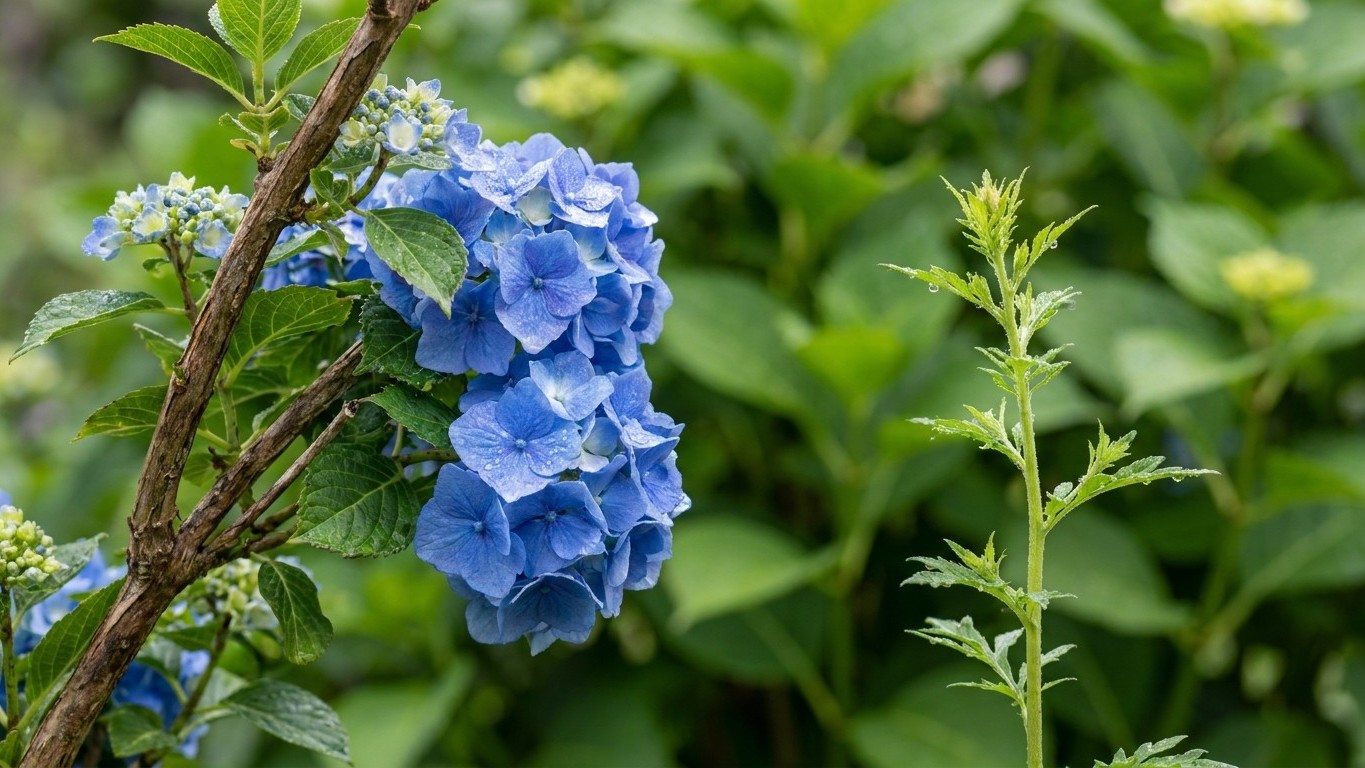

Growing hydrangeas in Colorado works best when you match the species to the state’s short, intense season: plant nursery stock after the last spring frost or in early fall, choose panicle or smooth types over bigleaf varieties, fight alkaline clay soil with compost and sulfur, and protect roots with a heavy mulch before the first fall freeze. The rest comes down to timing and soil chemistry, both of which behave differently at 5,000 feet than they do in a Midwest backyard.
When to plant Hydrangeas in Colorado
Here’s a detail that trips people up: hydrangeas sold at garden centers are almost never grown from seed. Named cultivars like Limelight or Annabelle don’t come true from seed, so nurseries propagate them from cuttings and sell them as potted shrubs, sometimes gallon-size, sometimes larger. The “when to plant” question for hydrangeas in Colorado is really a question about when to move that potted shrub into the ground, not when to sow anything indoors.
The answer hinges on frost. In Denver, based on NOAA NCEI 1991-2020 climate normals from station USW00003017, the last spring frost falls somewhere between May 1 and May 11. That’s a wide enough window that gardeners along the Front Range treat mid-May as the safe cutoff for putting a woody shrub’s root ball into open ground, especially since a late cold snap can still nip new growth even if it doesn’t kill an established plant.
That Denver window is not a statewide truth. Higher elevations and mountain towns run on a completely different clock, and can see frost well into June or even July in a hard year. The western slope has its own pattern again, shaped by valley cold-air drainage and elevation rather than by the plains climate that governs the Denver metro figure. If you garden above 7,000 feet, treat the Denver dates as a starting reference point, not a calendar you can copy directly. Your county extension office has records specific to your area.
The count-back logic for a fall planting
Fall planting is often the better move for hydrangeas, because it gives roots a full season to establish before summer heat stresses the plant. Working backward from Denver’s first fall frost window of September 30 to October 12, the shrub needs roughly six to eight weeks of root growth before the ground freezes hard. That puts the ideal fall planting date in the first half of August for Denver-area gardens: late enough to avoid peak summer heat stress on a newly disturbed root ball, early enough that roots have real time to spread before dormancy.
Skip planting in the deep heat of July regardless of which season you choose, since a hydrangea moved into ground with air temperatures consistently above 90°F will lose moisture through its leaves faster than the disturbed roots can replace it. Early morning planting, a thorough soak at transplant, and a few days of afternoon shade cloth over a new shrub all reduce that transplant shock.
Soil and site preparation
Colorado’s Front Range soil tends toward heavy clay with an alkaline pH, and that combination fights hydrangeas on two fronts. Clay drains slowly, which can rot roots on a plant that actually wants consistent moisture but not standing water. Alkaline pH locks up iron and aluminum, which matters directly for bloom color on bigleaf types and can cause the yellowing between leaf veins known as iron chlorosis on almost any hydrangea species.
Site selection should aim for morning sun with afternoon shade. Colorado’s altitude means more intense UV exposure than the same air temperature would produce at sea level, and hydrangea leaves scorch fast under full afternoon sun here, especially on the bigleaf types. A spot on the east or northeast side of a house or fence line, sheltered from the harshest afternoon rays, tends to outperform a south-facing bed.
Amend the planting bed weeks before you put the shrub in, not the day of. Work several inches of compost into the top foot of soil to improve drainage and add organic matter that clay soil lacks on its own. If a soil test (available through your county extension office) shows a high pH, elemental sulfur worked in ahead of planting will start shifting acidity, though that change happens gradually over a season or more, not overnight.
Dig the planting hole wide rather than deep, roughly twice the diameter of the root ball, and no deeper than the root ball’s height so the crown sits at or slightly above grade once the soil settles. Space shrubs based on their mature spread, which for many panicle and smooth varieties runs three to eight feet wide; crowding them tight against a foundation or fence cuts off the air circulation that helps prevent fungal leaf disease later in the season.
Varieties that suit Colorado
The trait that matters most here isn’t bloom color, it’s whether a variety flowers on old wood or new wood. Old-wood bloomers set their flower buds the previous fall, and a late spring frost, hitting anywhere in that May 1-11 Denver window or later at elevation, can kill those buds before they ever open. New-wood bloomers set buds on the current season’s growth, which sidesteps the problem entirely since a spring frost simply gets outrun by a full summer of growth.
Bigleaf hydrangea (Hydrangea macrophylla), the classic mophead or lacecap type, blooms on old wood and struggles in Colorado for exactly that reason. Gardeners who love the look can still grow it, but should expect some years with sparse or absent blooms after a hard late frost, and should plant it in the most sheltered spot available.
Panicle hydrangea (Hydrangea paniculata) blooms on new wood and tolerates more direct sun than other types, which makes it a better match for Colorado’s intense light and unpredictable spring. Widely available cultivars in this group, often sold under names like Limelight or Little Lime, also handle cold winters without the dieback issues that plague bigleaf types.
Smooth hydrangea (Hydrangea arborescens), sold widely as Annabelle and its relatives, also blooms on new wood and shows strong cold hardiness. It tends to want more consistent moisture than panicle types and benefits from that morning-sun, afternoon-shade placement described above.
Oakleaf hydrangea (Hydrangea quercifolia) is marginal at best in much of Colorado. It’s worth trying in a protected microclimate if you want the distinctive foliage, but treat it as an experiment rather than a reliable choice.
| Type | Blooms on | Colorado fit |
|---|---|---|
| Panicle (paniculata) | New wood | Strong; sun and cold tolerant |
| Smooth (arborescens) | New wood | Strong; wants steady moisture |
| Bigleaf (macrophylla) | Old wood | Risky; frost can kill buds |
| Oakleaf (quercifolia) | Old wood | Marginal; sheltered spots only |
What to plant alongside
Shade-casting neighbors do real work for a hydrangea in Colorado’s climate. A small ornamental tree or tall shrub planted to the west or south creates the afternoon shade that keeps leaf edges from scorching in the state’s thin, intense sunlight. This is less about the plant chemistry that companion-planting lore often claims and more about basic physical shading.
Shallow-rooted ground covers that share the hydrangea’s preference for moist soil, such as hosta or astilbe, fill the bed without competing hard for water at depth, since hydrangea roots spread wide but also go reasonably deep once established. These pairings also keep soil covered and cooler, which reduces evaporation from the clay beds common along the Front Range.
Pollinator-drawing perennials nearby benefit the garden generally, though it’s worth being honest that hydrangea flowers themselves, especially the showy mophead types, offer relatively little nectar compared to their lacecap cousins or to true pollinator plants like coneflower or bee balm. Don’t count on a hydrangea bed to anchor a pollinator garden on its own.
Keep hydrangeas well away from black walnut trees, which release juglone from their roots and can stunt or kill sensitive shrubs planted within the root zone. Also avoid crowding them against shallow, aggressive-rooted trees like silver maple, which will out-compete a young hydrangea for water in clay soil faster than most gardeners expect. Claims that certain flowers “confuse” pests away from hydrangeas specifically don’t have solid evidence behind them; treat that kind of companion-planting advice as folklore rather than a control method.
Watering, feeding and support
Hydrangeas want consistent moisture more than they want a lot of water at once. A deep soak that reaches six to eight inches down, once or twice a week depending on heat, encourages roots to grow deep rather than staying shallow and heat-vulnerable, which matters in a state where summer afternoons routinely swing dry and hot even after a wet spring. Drip irrigation or a soaker hose at the base beats overhead sprinklers, since wet foliage sitting overnight invites the fungal leaf spot that shows up later in this guide.
A three-to-four-inch mulch layer, pulled back slightly from the stem base, does double duty: it holds moisture in clay soil that would otherwise crust and shed water, and it moderates soil temperature swings that are sharper at altitude than at sea level.
Feed in early spring as new growth starts, using a balanced or slightly phosphorus-heavy fertilizer, and hold off on heavy nitrogen feeding for bigleaf types since excess nitrogen pushes leafy growth at the expense of the flower buds the plant is trying to set. For gardeners chasing blue blooms on bigleaf hydrangea in Colorado’s alkaline soil, aluminum sulfate worked into the soil around the root zone in early spring shifts flowers toward blue over a season or two; garden lime pushes the same flowers toward pink. This chemistry only affects macrophylla types; panicle and smooth hydrangeas don’t respond to it the same way.
Panicle varieties with large flower heads, especially Limelight and similar cultivars, can flop under the weight of their own blooms after a rain. A simple stake-and-tie or a peony ring set early in the season, before the plant fills in, saves you from propping up a soggy, leaning shrub in July. Prune new-wood bloomers in late winter or very early spring, before growth starts, and prune old-wood types right after they finish flowering so you don’t cut off next year’s buds.
Common problems
Iron chlorosis shows up as yellowing between the leaf veins while the veins themselves stay green, and it’s a near-inevitability at some point for hydrangeas grown in Colorado’s alkaline clay. It isn’t a disease; it’s a nutrient lockout caused by high soil pH preventing the plant from taking up iron it needs. A chelated iron soil drench brings quick green-up, while sulfur worked into the soil addresses the underlying pH over a longer timeline.
Leaf scorch, dry brown edges on otherwise healthy-looking leaves, points to too much direct afternoon sun combined with inconsistent watering. It’s more a placement problem than a disease, and the fix is either moving the shrub (best done in fall) or adding shade with a nearby planting.
Bud blast, meaning a shrub that leafs out fine but produces few or no flowers, almost always traces back to a late spring frost killing buds on an old-wood bloomer, or to pruning at the wrong time of year and accidentally removing the wood that would have flowered. This is the single most common disappointment reported with bigleaf hydrangea in Colorado gardens, and it’s a strong argument for leaning toward new-wood panicle and smooth types instead.
Powdery mildew, a gray-white dusty coating on leaves, tends to show up when plants are crowded with poor air circulation, particularly in a wet spring followed by humid stretches. Thinning nearby growth and switching from overhead watering to soil-level watering does more to prevent it than any fungicide applied after the fact.
Wilting on a hot afternoon, even with adequate soil moisture, is fairly normal for hydrangeas since their large leaves lose water fast in direct sun and altitude-intensified light; a plant that perks back up by evening is not in trouble. A plant that stays wilted the next morning after a good soak, though, points to root rot from soil that drains too slowly, usually traceable back to the clay-and-compost balance discussed in the soil prep section above.
Pests that actually show up in Colorado
Colorado State University Extension’s home-garden pest list for the state, drawn from PlantTalk Colorado and CSU fact sheets, centers heavily on vegetable-garden insects like squash bugs, corn earworm, and harlequin bug that target tomatoes, squash, and other food crops rather than woody ornamentals. Of the pests CSU highlights statewide, four show up on hydrangea foliage often enough to matter, and it’s worth being direct that the others on that broader list are not typically a hydrangea problem.
Spider mites (Tetranychus urticae) are the pest most likely to actually damage a hydrangea in Colorado. They show up first as fine stippling or a faint bronze cast on leaf surfaces, and a hand lens often reveals tiny moving specks and thin webbing on the leaf undersides. CSU Extension notes mites peak during the warmer months and are favored by dry conditions, which describes most Colorado summers well. A strong jet of water on the leaf undersides every few days, along with keeping the plant from drying out at the roots, does more to control an early infestation than most sprays.
Grasshoppers (Melanoplus spp.) chew ragged holes straight through leaves and can strip a young shrub fast in a bad year, particularly on properties bordering open grassland or undeveloped lots where populations build up over summer. Row cover over young plants during peak grasshopper activity is the most practical control for a home gardener; broad insecticide use tends to knock back beneficial insects along with the grasshoppers without solving the underlying population pressure.
Slugs target the softest new growth, leaving irregular holes and a telltale slime trail, and are worst in the cooler, damp stretches of spring and after rain rather than in the dry heat of midsummer. Shallow dishes of beer set at soil level, or simply reducing mulch thickness right against the stem to cut down on daytime hiding spots, handle most home-garden slug pressure without chemical bait.
Flea beetles (Phyllotreta and Epitrix spp.) leave small round shot-holes across leaves and are most damaging in June, according to CSU Extension. On hydrangea they’re usually a cosmetic nuisance rather than a serious threat, but a floating row cover over young shrubs during their peak activity window keeps the damage minimal.
Harvest and end of season
“Harvest” for a hydrangea means cutting blooms rather than picking a crop. For fresh arrangements, cut stems in the morning once the flower head has fully opened and feels papery rather than soft, and place them in water immediately. For dried arrangements, wait until the blooms start to feel slightly stiff and papery on the shrub itself, usually in late summer, before cutting; flowers cut too early tend to wilt rather than dry cleanly, while ones left to fully mature on the plant dry with better color retention.
As the season winds down, watch for the first fall frost window rather than a fixed date. In Denver, that falls between September 30 and October 12 based on the same NOAA NCEI normals cited earlier, and again, higher elevations and mountain valleys will see it considerably earlier. Stop fertilizing hydrangeas by mid to late summer, since a late feeding pushes tender new growth that won’t harden off before frost hits.
Once frost has blackened the leaves, resist the urge to prune old-wood bigleaf types back hard; leave the stems standing over winter, since next year’s flower buds are already set along that wood. New-wood panicle and smooth types can be cut back to a manageable framework in late fall or left standing until late winter, whichever suits your garden’s look. Either way, a heavy four-to-six-inch mulch layer over the root zone before the ground freezes hard protects roots through Colorado’s wide winter temperature swings, which do more damage to marginal hydrangea varieties than the cold itself.
Local help
Frost dates and soil behavior shift block by block at Colorado’s range of elevations, so the Denver-based figures here are a starting point, not a local guarantee. Your county’s Colorado State University Extension office can provide local frost records, run a soil test for your specific yard, and confirm which pests are active in your area this season.
Common questions
Can I grow blue hydrangeas in Colorado’s alkaline soil?
Only on bigleaf (macrophylla) types, and only with soil amendment. Working aluminum sulfate into the root zone shifts flower color toward blue over a season or two, but the state’s naturally alkaline clay pushes back toward pink unless you keep reapplying it.
Why did my hydrangea leaf out but never bloom?
This is almost always a bigleaf variety that lost its old-wood flower buds to a late spring frost, or was pruned at the wrong time and had next year’s buds cut off. Switching to a new-wood panicle or smooth variety avoids the problem going forward.
Do hydrangeas need full sun in Colorado?
No, and full afternoon sun at altitude often causes leaf scorch rather than better blooms. Morning sun with afternoon shade suits most varieties better here than the full-sun placement recommended in milder climates.
How much water does a hydrangea need in a Colorado summer?
A deep soak reaching six to eight inches down, once or twice weekly depending on heat, works better than frequent shallow watering. Mulch helps the clay soil common along the Front Range hold that moisture longer between waterings.
Should I wrap my hydrangea for winter?
A thick mulch layer over the root zone matters more than wrapping the top growth for most Colorado gardens. If you’re growing a marginal bigleaf or oakleaf variety in an exposed spot, a burlap wrap around the stems adds extra insurance against winter wind and temperature swings.