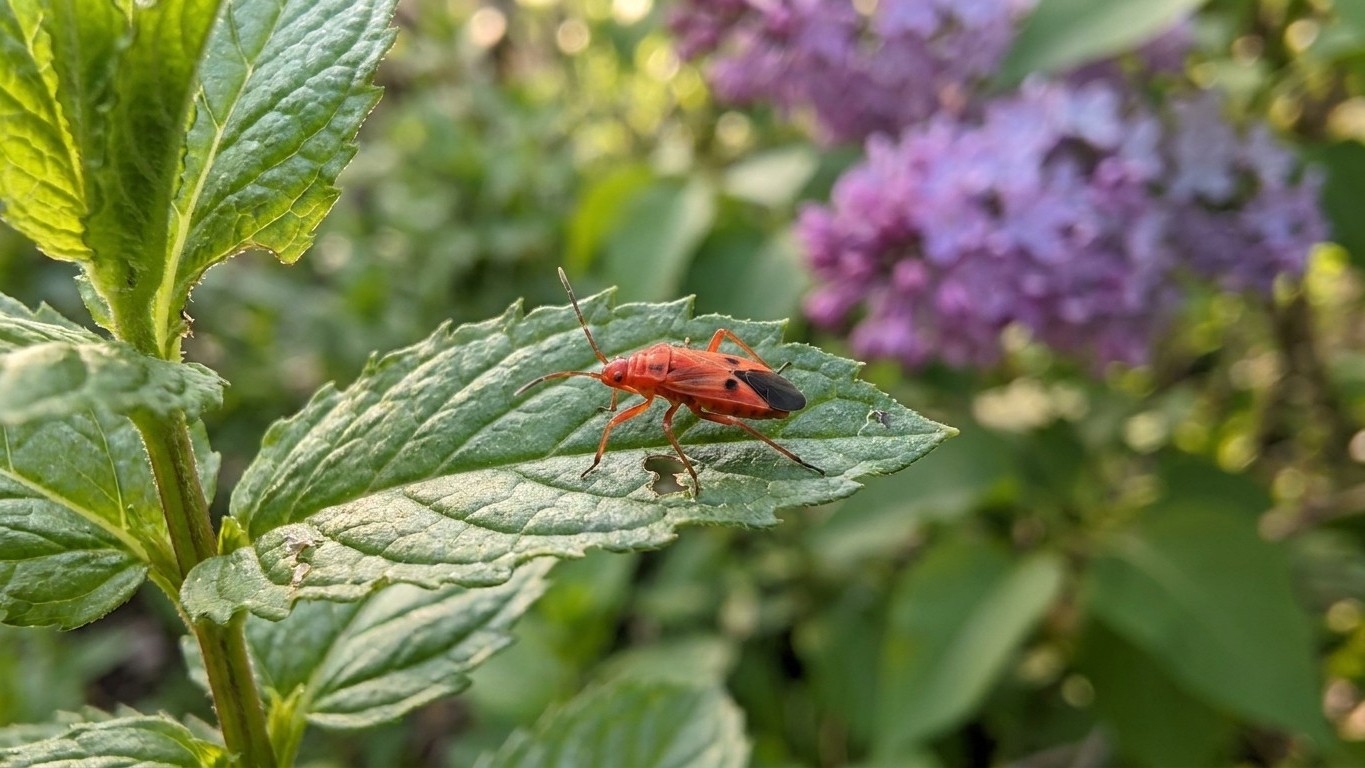

The fourlined plant bug (Poecilocapsus lineatus) makes its Quebec debut in late May to mid-June, right when lilacs fade and perennial herb gardens hit their first flush of growth. Nymphs emerge bright red-orange from overwintering eggs tucked inside pruned stems, then molt into the yellow-green, black-striped adults most gardeners recognize. One generation per year, a short six-to-eight-week feeding window, and a strong preference for mint-family plants make this insect predictable once you know what to watch for.
The weeks to watch

Timing tracks soil warm-up more than the calendar. In Montreal, the Eastern Townships, and the Outaouais, nymphs typically hatch once daytime temperatures hold steady above 60°F for a week or two, usually the last week of May. Further north toward Quebec City and Saguenay-Lac-Saint-Jean, hatching can lag ten to fourteen days behind southern regions because soil temperatures rise more slowly.
The insect overwinters exclusively as eggs, laid the previous fall in slits cut into pithy plant stems, mint, currant, and forsythia are common egg-laying sites. Nothing survives as an adult through Quebec winters, so every population you see in a given year started fresh from eggs that sat through months of subzero cold. That single-generation biology is the reason control efforts concentrated in a narrow spring window pay off disproportionately later in the season.
Nymphs feed for roughly three to four weeks before molting into winged adults by mid-to-late June. Adults then feed for another three to five weeks, mate, and the females lay next year’s eggs by late July or August. By September, the fourlined plant bug is gone from the garden entirely, its damage already done and its eggs already hidden in stems for the following spring.
Recognizing the Damage Before It Spreads
Feeding damage looks distinctive once you’ve seen it: small, sunken, dark brown or black spots scattered across leaf surfaces, often described as a “shot hole” pattern. Unlike chewing insects that leave ragged holes, fourlined plant bugs pierce leaf tissue with needle-like mouthparts and withdraw the affected cells, leaving behind dead, translucent patches that darken and sometimes fall out entirely as the leaf matures.
Mint, basil, sage, and other members of the Lamiaceae family take the heaviest hits, but the insect isn’t picky. Quebec extension reports and regional master gardener observations list more than 250 host plants, including:
- Herbs: mint, basil, sage, catnip, and oregano
- Ornamentals: dahlia, hydrangea, forsythia, and chrysanthemum
- Shrubs: currant, dogwood, and viburnum
- Vegetables: beans and squash, on occasion, when herb hosts are nearby
Damage rarely kills an established plant, but it disfigures new growth right when gardens are meant to look their best. A mint patch that gets hit hard in June can look scorched by early July, with dozens of tiny necrotic spots merging into larger dead zones along the leaf margins.
Spotting Nymphs Versus Adults
Nymphs are small, wingless, and bright red or orange with black markings, easy to mistake for a beneficial insect at first glance. They can’t fly and don’t jump far, which makes this stage the easiest to control physically. Adults grow to about a third of an inch, sport a yellow-green body with four black longitudinal stripes running down the wing covers, and fly readily when disturbed, dropping to the ground or taking off the moment you approach the plant. That flight response is why late-stage adult populations are harder to manage than early nymphs.
What Actually Stops the Fourlined Plant Bug
Because this insect completes only one generation annually in Quebec’s climate, interrupting the cycle at any single point, egg, nymph, or adult, has an outsized effect on next year’s population. That’s the core strategic advantage homeowners have over multi-generation pests like aphids or spider mites.
Fall Pruning Destroys Overwintering Eggs
The single most effective long-term control happens in autumn, not spring. Females lay eggs in slits along pithy or hollow stems of mint, currant, forsythia, and similar shrubs and perennials. Cutting these plants back hard in late fall, removing and disposing of the pruned stems rather than composting them on-site, physically removes a large share of next year’s population before it ever hatches. Gardeners who prune aggressively each October report noticeably lighter infestations the following spring, a pattern consistent with the insect’s single-generation biology.
Handpicking Nymphs Works Better Than You’d Expect
Because nymphs can’t fly and move slowly, a daily ten-minute check of mint and herb beds in late May and early June lets you knock nymphs into a jar of soapy water before they mature. This sounds tedious, but given the six-to-eight-week feeding window, catching the population early in the nymph stage prevents the far more mobile, harder-to-catch adult generation from establishing at all.
Insecticidal Soap and Neem Oil, Timed to Nymphs
Contact treatments like insecticidal soap or neem oil work reasonably well against nymphs, whose thinner cuticle absorbs these products more readily than the tougher adult exoskeleton. Applying in the early morning or evening, when nymphs are actively feeding on leaf undersides, gives better contact than a midday spray when nymphs may be sheltering deeper in foliage. These products break down quickly and pose minimal risk to pollinators visiting nearby flowers, which matters for herb gardens where bees are already working the blooms.
Broad-spectrum synthetic insecticides are generally not recommended for this pest. Fourlined plant bug damage is cosmetic rather than plant-threatening in most home garden situations, and heavier chemical intervention tends to wipe out the predatory insects, spiders and ground beetles among them, that keep other pests in check throughout the rest of the season.
Row Covers for High-Value Herb Beds
Lightweight floating row covers installed in mid-May, before nymphs hatch, physically block adults from laying eggs on protected plants the following season and prevent this year’s nymphs from reaching foliage if covers go on before hatching begins. This works best on dedicated herb beds where pollination access isn’t a concern during the few weeks covers stay on, since mint and basil don’t require insect pollination to produce usable leaves.
Regional Notes Across Quebec
Population pressure varies noticeably by region. Southern Quebec, the Monteregie, Estrie, and greater Montreal area, sees the earliest and often heaviest activity thanks to a longer warm season and dense residential herb gardening. Home gardens with established mint patches that have gone unpruned for several years tend to build up the largest egg reservoirs, since the insect favors older, woodier stem tissue for egg-laying sites.
In the Quebec City region and points north, the shorter feeding window means damage, while still visible, often has less time to compound before the generation completes its cycle and adults die off in late summer. Gardeners in these areas frequently see one clear damage flush in June with less need for repeated summer treatment compared to counterparts further south.
Currant growers along the St. Lawrence corridor should pay particular attention to fall pruning, since currant bushes rank among the preferred egg-laying hosts and commercial or backyard currant plantings can serve as a reservoir that reinfests nearby herb and flower beds each spring.
Setting Up Next Spring Now
Waiting until nymphs appear in the garden means reacting to damage that’s already underway. The more durable approach treats late summer and fall as the real control season: cutting back mint, currant, forsythia, and other favored hosts before the first hard frost, bagging or burning the trimmings instead of leaving them in a brush pile, and marking a calendar reminder for late May to start daily nymph checks on the plants that got hit hardest this year. Given the insect’s single annual generation, a thorough fall cleanup genuinely changes what next year’s infestation looks like, rather than just delaying the same problem by a few weeks.