
Winter squash needs Michigan’s full growing window to mature, and that window runs from roughly late April or early May soil warm-up through the first fall frost in October. The safest bet is a shorter-season type, planted after soil truly warms rather than by calendar date alone, with disease resistance in mind given the state’s humid summers.
When the soil is warm enough in Michigan

The last spring frost falls around April 30 in the Detroit area, and early to mid May across most of the Lower Peninsula, according to MSU Extension’s Frost-Free Dates data. That’s the number most gardeners fixate on, but it answers the wrong question. Frost dates tell you when the air stops threatening to kill a seedling. They don’t tell you when the ground is actually ready to grow one.
Winter squash germinates and roots poorly in cold soil, no matter how mild the air feels. Seeds sitting in soil below the mid-60s Fahrenheit tend to rot before they sprout, or limp along stunted for weeks. That means the real planting window opens after the frost risk has passed and the soil has had a stretch of sunny days to catch up. In practice, that’s often one to three weeks after the last frost date itself, not on it.
One more thing worth saying plainly: a frost date is a probability, not a promise. April 30 in the Detroit area is a statistical average built from decades of records, meaning some years bring a killing frost well into May, and other years none after mid-April. Treat the date as a planning anchor, not a guarantee, and keep a floating row cover on hand for a late cold snap.
Direct sowing versus starting indoors
Winter squash resents having its roots disturbed, which is one reason many Michigan gardeners direct-sow once soil has warmed rather than transplant. If you do start seedlings indoors to buy a few weeks of head start, hold off moving them outside until nighttime soil conditions have settled, and harden them off over several days rather than moving them straight from a warm windowsill into a cool garden bed.
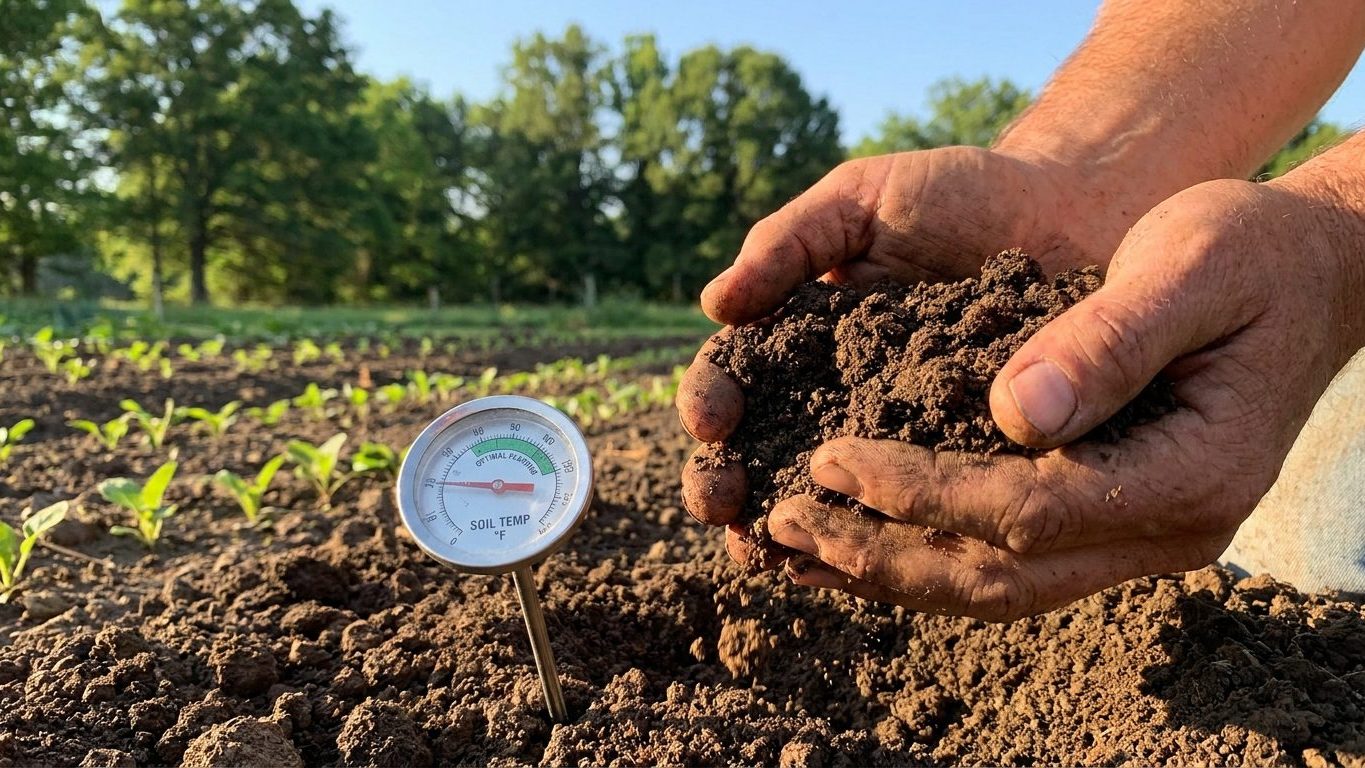
Checking soil readiness doesn’t require anything fancy. A basic soil thermometer, pushed a few inches into the bed on a sunny morning, tells you more than any calendar will. Beyond that, the practice that matters most early on is simply patience: resisting the urge to plant the moment frost risk clears, and instead waiting for the soil itself to signal it’s ready. For variety-specific timing trialled in your part of the state, MSU Extension’s outreach office is the resource to consult directly.
How long the season lasts here
Stack the two frost dates together and Michigan’s frost-free window runs from around 144 days in the shortest case (mid-May start, October 6 fall frost) to about 174 days in the longest (late April start near Detroit, October 21 fall frost in the milder zone 6a pockets). That’s roughly five months at the tight end, closer to six at the generous end, depending on where in the state you garden and how the particular year behaves.
That range matters more than it might seem. A window pushing toward six months gives southern Michigan gardeners, especially those near Detroit’s milder zone 6a conditions, enough room to consider a second sowing of a faster-maturing crop after an early harvest, or to stagger plantings so squash doesn’t all ripen and demand curing at once. A window sitting closer to five months, more typical further north or inland, generally makes the first sowing the only realistic one for winter squash. There simply isn’t slack left over for a do-over if an early planting fails.
That tighter margin also changes the transplanting calculation. Where the season runs long, the root disturbance risk of transplanting is worth accepting because there’s time to recover from a rough start. Where the season runs short, direct sowing becomes the safer default, since a seedling that sulks for two weeks after transplant shock can eat into margin you don’t have to spare. Gardeners weighing a second planting, or wanting to time successive sowings to spread out harvest and curing work, will find more detail in this site’s succession sowing guide, which walks through spacing plantings against a known frost window like the one Michigan offers.
Heat and water in Michigan

Michigan is not a hot, dry squash-growing territory, and the numbers say so plainly. The Detroit reference station logs an average of just 10.3 days a year reaching 90°F or higher, per NOAA’s 1991-2020 Climate Normals. That’s a modest heat load compared to states where summer squash-growing is a battle against scorching, thirsty air. Winter squash here isn’t fighting drought stress so much as it’s racing a clock: the fruit has to mature fully on the vine before that October frost date arrives, because an immature squash neither cures properly nor stores through winter.
Rainfall backs up that picture. Summer rain across June, July and August totals about 10.0 inches, out of 34.3 inches for the year, with August running driest at 3.26 inches, June at 3.26 inches, and July slightly wetter at 3.51 inches, according to NOAA’s monthly normals for the same reference station. That’s a reasonably damp summer by national standards, not a dry one demanding constant irrigation.
The catch is that a cool, damp summer brings its own set of problems, and they’re not the ones a hot-climate guide would warn about. Persistent leaf moisture and humid air favor powdery mildew and other fungal disease on squash foliage, slow the vine’s overall pace of growth and fruit-filling, and can push ripening later into a season that’s already working against a hard fall frost. Airflow between plants, morning watering rather than evening (so foliage dries before dark), and keeping an eye on vine health from midsummer on matter more here than any irrigation schedule.
None of this reads the same on every plot, either. The same inch of summer rain soaks in and drains within a day on sandy soil, but sits for a week on clay, and a single thunderstorm dumping most of a month’s rain at once mostly runs off rather than soaking into either. A rain gauge on your own ground, tracked over a season, tells you far more than a regional average ever will.
Which winter squash suit Michigan
Given a frost-free window that runs somewhere between roughly five and six months, and a summer that’s humid rather than scorching, the type of winter squash matters more here than the exact technique used to grow it. The state’s growing conditions point toward three broad considerations worth weighing before choosing what to plant.
| Squash type | Typical season needs | What Michigan conditions favor |
|---|---|---|
| Acorn-type | Shorter maturity window | Best fit where the season runs toward the tighter five-month end, or for a second planting after an early harvest |
| Butternut-type | Mid-length season | Workable across most of the state’s frost-free window, with disease-resistant selections worth prioritizing given humidity |
| Hubbard and other maxima-types | Longer maturity window | Better suited to the milder zone 6a pockets near Detroit, where the season stretches closer to six months |
Beyond maturity length, disease resistance deserves to be the first filter in a humid growing region like this one, since powdery mildew and related fungal pressure build steadily through a damp Michigan summer. Airflow matters too: spacing plants generously and avoiding overhead watering late in the day reduces the leaf-wetness window that mildew depends on, regardless of which type is in the ground.
What this page won’t do is name a specific variety. Naming one would mean guessing at seed catalog offerings this page has no way to verify, or repeating a name that performs well in a trial plot three states away but struggles in Michigan’s particular humidity and season length. The gardeners who actually know which varieties have performed well in local trials, across the state’s 4a-6b hardiness zone range under the USDA system, are the state’s own extension researchers. MSU Extension’s outreach office, at canr.msu.edu/outreach, publishes exactly that kind of locally-trialled variety information, and it’s worth checking before buying seed, since a variety bred for a different climate can underperform even when the type on paper looks right for this one.