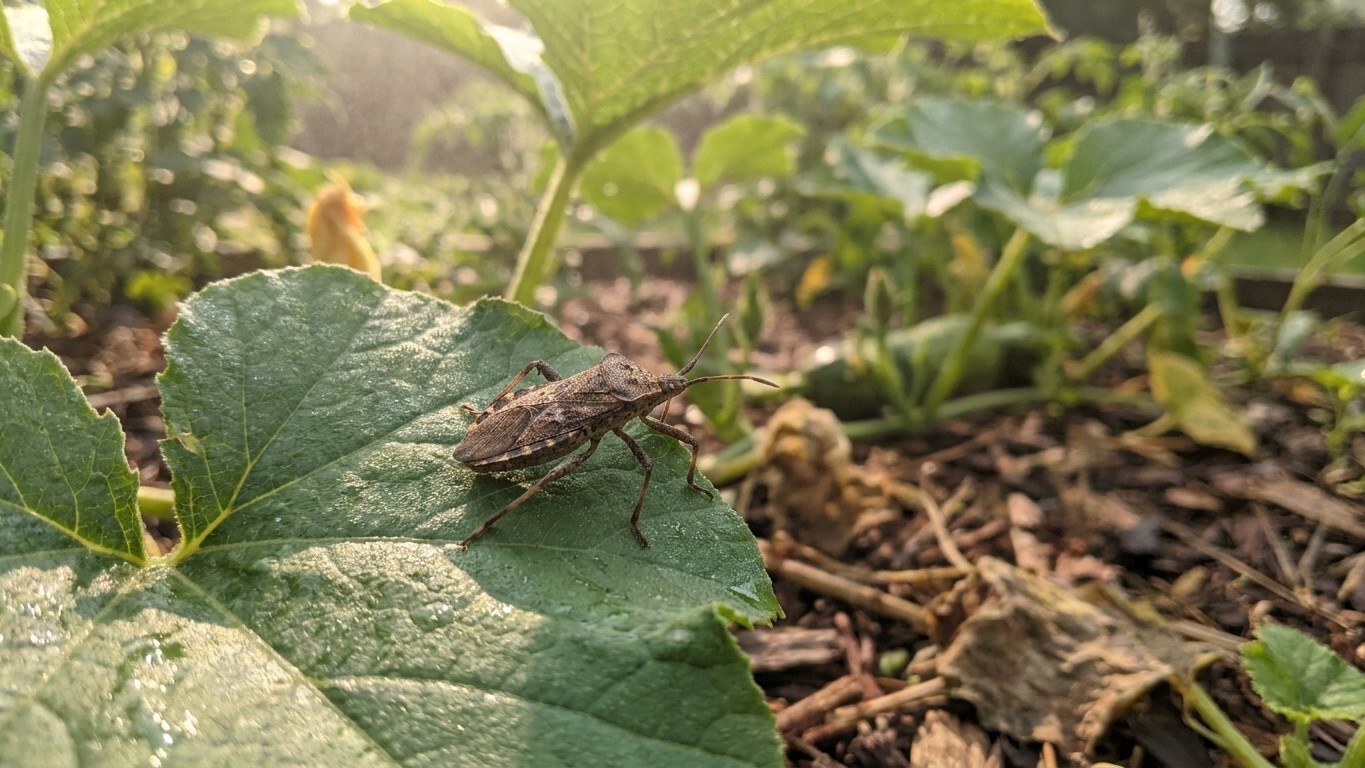

Squash bugs settle into Louisiana gardens earlier than almost anywhere else in the country, and they don’t fully leave. The mild winters across most of the state mean adult squash bugs (Anasa tristis) can survive in garden debris, mulch piles, or under porch boards straight through January, then wake up as soon as daytime temperatures hold above 70°F, often by late March in the southern parishes. What stops them isn’t one product. It’s a combination of timing your defenses before eggs hatch, disrupting their hiding spots, and picking cucurbit varieties they don’t love as much.
When Squash Bugs Show Up in Louisiana

Down in the Gulf South, squash bugs don’t wait for a hard freeze to disappear and a spring thaw to return. In New Orleans, Baton Rouge, or Lafayette, a warm February week can be enough to nudge overwintering adults out of leaf litter to start feeding on early cucurbit transplants. Farther north, around Shreveport or Monroe, emergence usually lags a few weeks behind, closer to mid-April.
Louisiana’s long growing season, often six to seven months of cucurbit-friendly weather, gives squash bugs room to produce two or sometimes three generations before fall. Compare that to states like Minnesota or Wisconsin, where gardeners typically deal with a single generation. That extra generation is the real reason infestations feel so much worse here by late summer: a handful of overwintering adults in March can become thousands of nymphs and adults by August.
The heaviest pressure tends to hit in two waves. The first shows up on spring-planted squash and cucumbers around May and June, right as plants start setting fruit. The second, often more damaging, wave builds in July and August on fall crops or on spring plantings that are already stressed by heat. Gardeners who plant a fall pumpkin crop for October harvest, common in parishes with 4-H and school garden programs, frequently see the worst bug pressure of the whole year on those plants.
Why the Climate Matters So Much Here
Squash bugs go dormant, not fully hibernate, when temperatures drop. In much of Louisiana, especially south of Alexandria, winter temperatures rarely stay cold enough long enough to kill overwintering populations outright. That means the “reset” gardeners in colder states get every winter barely happens here. A mild winter following a bad bug year almost guarantees an early, heavy infestation the following spring.
Spotting Squash Bugs Before They Take Over
Adults are about five-eighths of an inch long, brownish-gray, with a flat back and a shield-shaped body. They move fast when disturbed and tend to scatter toward the base of the plant or the soil line rather than fly off immediately, which actually makes them easier to catch by hand than many garden pests.
Eggs are the giveaway most gardeners miss. They’re bronze to copper-colored, roughly the size of a pinhead, and laid in tight clusters on the undersides of leaves, almost always in the V-shaped space between leaf veins. A single female can lay well over 100 eggs across a season. Nymphs hatch gray, then darken as they molt through five stages before reaching adulthood, a process that takes four to six weeks in Louisiana’s warm summers, faster than in cooler climates.
The damage pattern is distinctive. Squash bugs feed by piercing leaf tissue and sucking out sap while injecting a toxin, which causes leaves to wilt, turn black or brown, and eventually collapse, starting with the outer leaves and moving inward. This is different from Squash vine borer damage, which shows up as sudden wilting of a single vine with a hole and frass near the base. Squash bugs also spread cucurbit yellow vine disease, a bacterial infection that can kill plants outright, which is part of why controlling them early matters more than just protecting leaf tissue.
What Actually Stops Squash Bugs in Louisiana Gardens
Timing beats chemistry here. Because Louisiana’s climate lets squash bugs breed continuously, the most effective strategy is interrupting the egg-to-adult cycle before it compounds, rather than trying to spray your way out of an established infestation in August.
Early-Season Moves
Row covers put on immediately after planting keep the first wave of overwintering adults off young plants entirely. They need to come off once flowers open, though, since squash and pumpkins depend on bee pollination. Checking the undersides of leaves every three to four days during May and June, and scraping off egg clusters with a fingernail or piece of tape, remains one of the most reliable tactics gardeners in the region use, precisely because it targets the pest before it can reproduce.
Crop rotation helps more than most people expect. Squash bugs overwinter close to where they fed the previous season, often in the exact garden bed. Moving cucurbits to a different section of the yard, even 20 or 30 feet away, forces surviving adults to search farther for food, which reduces how quickly they find and colonize new plants.
Trap Crops and Sanitation
Blue hubbard squash and certain pumpkin varieties are more attractive to squash bugs than the crops gardeners actually want to protect. Planting a small border of blue hubbard around a plot of yellow squash or zucchini pulls bugs toward the trap crop, where they can be removed or treated more aggressively without worrying about harvest timing.
Old boards or shingles laid flat near the base of plants work as an overnight trap. Squash bugs, being nocturnal feeders that hide during the hottest part of the day, cluster under these boards by morning and can be collected and destroyed. It’s low-tech, but in Louisiana’s climate where populations build fast, checking traps every morning during peak season (June through August) makes a real dent.
Garden sanitation after harvest matters more here than in colder states. Removing old squash vines, fallen leaves, and mulch at the end of each planting cycle eliminates the overwintering sites that let populations carry over. Skipping this step is one of the most common reasons Louisiana gardeners see worse infestations year after year.
When Treatment Is Needed
Adult squash bugs have tough exoskeletons and tolerate most contact insecticides fairly well, which is why timing sprays for the nymph stage matters. Insecticidal soap or neem oil applied directly to young nymphs, ideally in the early morning when they’re clustered and less mobile, works far better than trying to hit hardened adults. Coverage on the undersides of leaves is non-negotiable since that’s where nymphs feed and hide.
Diatomaceous earth dusted around the base of plants and on leaf undersides can help with nymph populations too, though it needs reapplication after rain, which in Louisiana’s humid summers can mean every few days. For gardeners dealing with heavy pressure by midsummer, spot-treating rather than blanket-spraying the whole bed preserves beneficial insects like tachinid flies, which parasitize squash bug adults and are one of the few natural checks on populations in the region.
Varieties That Hold Up Better
Not all cucurbits draw squash bugs equally. Butternut and other hard-shelled winter squash tend to see less feeding damage than yellow summer squash or zucchini, which squash bugs seem to prefer. Gardeners in Louisiana who’ve struggled year after year with yellow squash sometimes get better results simply by shifting more of their planting toward butternut, acorn squash, or certain pumpkin varieties, while accepting that a small trap-crop planting of the more attractive types can still pull pressure away from the main harvest.
None of this makes squash bugs disappear for good. In a climate where a mild January can mean overwintering adults are already active by Mardi Gras, the realistic goal is keeping population growth slow enough that plants can outpace the damage, not eliminating the insect from the yard entirely.