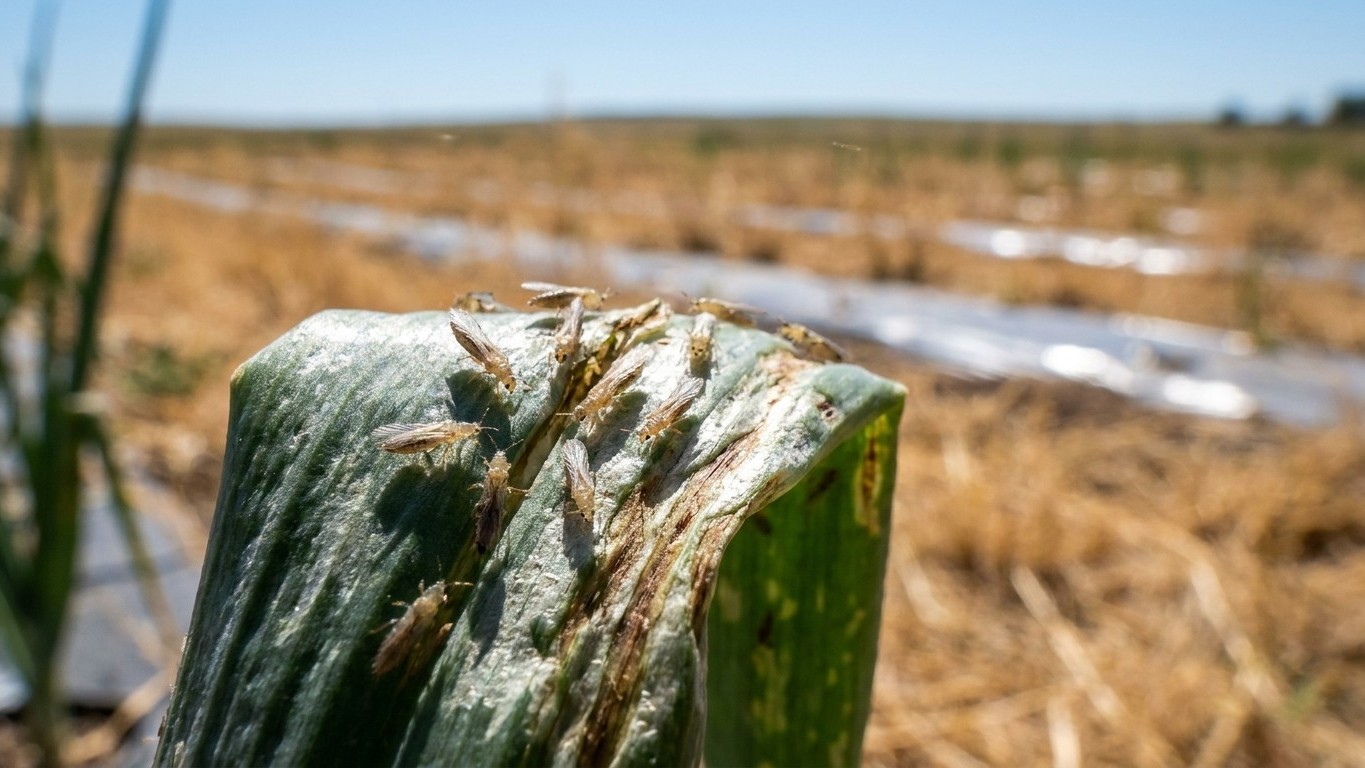

Thrips show up in Saskatchewan gardens and canola fields from late May through July, with population spikes tracking hot, dry stretches when humidity drops below 50 percent. The insects favor onions, garlic, canola, and greenhouse ornamentals, and they multiply fastest when daytime temperatures sit between 77 and 86 degrees Fahrenheit. Control that actually works combines early detection with reflective mulch, insecticidal soap, and targeted timing rather than a single spray applied after damage appears.
When Thrips Actually Arrive in Saskatchewan

Saskatoon and Regina both see the first thrips activity around the third week of May most years, based on degree-day models used by Saskatchewan Agriculture for canola pest tracking. That’s roughly two weeks after the last frost date for central Saskatchewan, which typically falls near May 10 in Zone 3 areas.
The real surge happens in June and July. Western flower thrips, the species most common on the prairies, complete a full generation in as little as 10 to 14 days when temperatures run warm. That means a small population noticed on onion leaves in early June can turn into a visible infestation by the Canada Day long weekend if conditions stay dry.
Drought years make this worse. Saskatchewan Agriculture’s pest surveillance notes have repeatedly flagged thrips pressure climbing during moisture-stressed seasons, since dusty, dry soil conditions favor thrips reproduction and reduce the effectiveness of natural predators like minute pirate bugs. A wet, cool spring, by contrast, tends to knock populations back before they establish.
Canola Fields vs. Home Gardens: Different Timelines
Commercial canola growers watch for thrips slightly later in the season, usually when the crop reaches the bud-to-flower stage in late June. That’s when thrips feeding causes the silvery-white scarring on pods and leaves that growers report to provincial crop specialists. Home gardeners, meanwhile, often spot thrips earlier, sometimes in mid-May on overwintered onion sets or transplanted seedlings that came from a greenhouse where thrips were already present.
This distinction matters for timing control. A backyard grower dealing with onion thrips in a raised bed faces a different calendar than a producer managing a 500-acre canola field, even though both are in the same province and dealing with a related pest.
How to Confirm It’s Thrips and Not Something Else
Thrips are tiny, usually under 1/16 inch long, and they’re easy to mistake for spider mite damage or general sun scorch. The giveaway is the pattern: thrips feeding leaves silvery, papery streaks with tiny black flecks (their droppings) scattered across leaf surfaces. Spider mite damage tends to look more like fine stippling without the metallic sheen, and it usually comes with visible webbing.
The tap test works well for confirmation. Hold a white sheet of paper or a paper plate under a suspect leaf and tap it firmly. Thrips are active fliers but slow to react, so they’ll often drop onto the paper and you can see thin, cigar-shaped bodies moving across the surface. This takes under a minute and beats guessing based on leaf damage alone.
Sticky traps in blue or yellow, hung at plant height, catch adult thrips within a few days if they’re present. Blue traps tend to outperform yellow ones for western flower thrips specifically, according to research summarized by university extension entomology programs, though yellow traps remain the standard for general greenhouse monitoring.
What Actually Stops Thrips in Saskatchewan Conditions
Reflective mulch is one of the better-documented, lower-cost interventions for home gardens and small plots. Silver or aluminum-coated plastic mulch laid around onion, garlic, or pepper plants disrupts the visual cues thrips use to locate host plants, and multiple extension trials have shown meaningful reductions in landing rates compared to bare soil or black plastic. It’s a one-time setup cost at planting time, which fits well with Saskatchewan’s short growing season since there’s no ongoing labor required once it’s down.
Insecticidal soap and horticultural oil handle light to moderate infestations without leaving lasting residue on food crops. Both need direct contact with the insect to work, so thorough coverage, including the undersides of leaves and inside curled foliage where thrips like to hide, matters more than the product choice itself. Applying in the early morning or evening avoids the leaf burn that can happen when oils are sprayed under direct prairie sun, which gets intense by midday even with moderate temperatures.
For heavier pressure, spinosad-based products offer a middle ground between soap sprays and harsher synthetic insecticides. Spinosad comes from a naturally occurring soil bacterium and is accepted for organic production in most cases, but it still carries real toxicity to bees, so applications should happen after flowers close for the day or before pollinators are active in early morning.
Predatory Insects and Biological Options
Minute pirate bugs (Orius species) and predatory mites like Amblyseius cucumeris are the two biological controls most commonly recommended for thrips, and both are available commercially for greenhouse or high tunnel release. Outdoors in Saskatchewan’s open garden conditions, natural populations of minute pirate bugs already exist and tend to build through the season, but they rarely establish fast enough to prevent early-season damage on their own.
Where these predators work best is in protected environments: greenhouses, hoop houses, or indoor seed-starting setups where thrips often hitch a ride in on purchased transplants. Releasing predatory mites at the first sign of thrips, rather than waiting for visible damage, gives the predator population a head start before the pest numbers climb.
Row covers made of fine mesh, rated for insect exclusion at 0.006-inch mesh or finer, physically block adult thrips from reaching plants in the first place. This works well for direct-seeded crops like onions and garlic in the early weeks, though covers need to come off once plants flower if you’re relying on pollinators, since most thrips-exclusion mesh also keeps out bees.
Why Some Seasons Are Worse Than Others
Saskatchewan’s thrips pressure swings noticeably year to year, and moisture is the biggest driver. The dry conditions across much of the province in recent growing seasons have coincided with elevated thrips reports from Saskatchewan Agriculture’s crop pest updates, a pattern consistent with what entomologists expect since thrips reproduce faster and survive better in low-humidity environments.
Wind plays a secondary role. Thrips are weak, inconsistent fliers on their own, but adults get carried on wind currents over surprisingly long distances, which is part of why isolated home gardens can see sudden thrips arrivals even without nearby infested plants. A dry, windy week in June can effectively seed thrips across a wide area in a way that’s hard to predict or prevent through garden hygiene alone.
Overwintering also factors in, though less than people assume. Thrips don’t survive Saskatchewan winters in the open outdoors, unlike some pests that overwinter in soil or plant debris. Most of the population arrives fresh each spring, either riding wind currents from warmer regions to the south or hitching in on nursery stock and transplants purchased from greenhouses. This is actually good news for gardeners: cleaning up garden debris in fall has limited impact on next year’s thrips pressure, since you’re not dealing with a resident population that survives the cold.
Practical Timing for Prevention
The most effective window for prevention sits in the two to three weeks before typical arrival, meaning early to mid-May for most of the province. Setting up reflective mulch, installing row covers on susceptible crops, and hanging a couple of sticky traps for early detection during this window costs little and catches problems before they become visible damage.
Inspecting any greenhouse-grown transplants before planting them out is worth the five minutes it takes. Thrips frequently travel in on bedding plants, tomato starts, and ornamental flowers bought from garden centers, and a quick check of the undersides of a few leaves with a hand lens can catch an infestation before it spreads to the rest of the garden.
Once thrips are established and visible damage has started, expect to need repeat treatments. Because thrips complete generations so quickly in warm weather, a single insecticidal soap application often knocks back the adults present at spray time but misses eggs and larvae hidden in plant tissue. Following up seven to ten days later catches the next generation before it matures and lays more eggs, which is the difference between a problem that resolves in two weeks and one that drags on all summer.