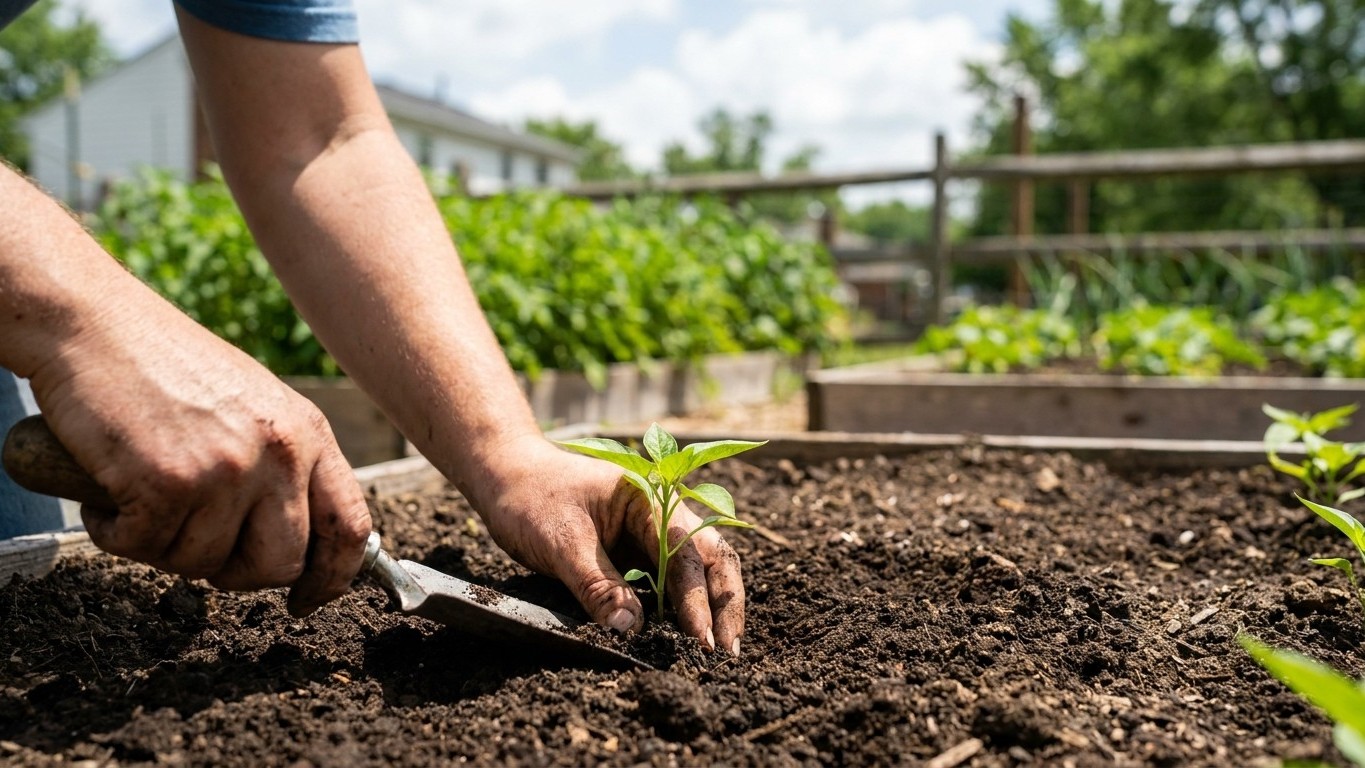

Columbus’s October frost window, not July’s calendar date, is what actually decides what you can still plant. The soil already warmed past caring weeks ago; the real question is whether a crop sown now can finish before frost lands sometime between October 5 and October 15. Bush beans and a second round of squash can make that deadline easily. Carrots and beets don’t even need to try — a light frost only sweetens them.
What goes in the ground in July

By July, soil across most of Ohio has been warm enough for weeks. OSU Extension’s Columbus-area figures put the last spring freeze at May 5 to May 15, so anything that needed warm ground to germinate has had its chance already. The constraint this month runs the other direction: the first fall freeze lands October 5 to October 15 in Columbus, and every crop going into the ground now has to reach a usable harvest before that window, with a little slack built in because growth slows as day length shortens through September.
Direct-sown crops with time to finish
Bush beans sown in the first half of July finish quickly enough to harvest by early-to-mid September, leaving a real cushion before the fall frost window. Summer squash and cucumbers make sense as a second planting now, replacing spring plants that squash bugs or powdery mildew have already worn down, since both mature fast enough to still produce before frost. Carrots and beets sown this month are aimed at a fall harvest. Because both tolerate a light frost, they don’t need to finish before the October window, just need enough growing weeks ahead of a hard freeze.
Transplants going out this month
Fall broccoli, cabbage and kale started under cover on the schedule in What to Plant in Ohio in June are usually ready to harden off and set into the garden now. Their 60 to 70 day run to maturity fits inside the stretch between now and the Columbus-area frost window, provided they go in without much delay.
Count forward from your sowing date to the October frost window before you commit a row to anything, rather than planting by habit. If the arithmetic doesn’t leave a comfortable margin, choose a faster crop or shift to something that tolerates cold instead.
What to start under cover
Starting seeds under cover in July is a backwards calculation from the fall frost date, not a forward one from today. OSU Extension’s Columbus figures put the first fall freeze at October 5 to October 15, so the arithmetic works back from there.
Working the arithmetic
A fall cabbage or broccoli transplant that needs roughly 60 to 70 days from transplant to harvest has to go into the ground by late July to early August to finish before that October window. Counting back another four to five weeks for the seedling to reach transplant size puts the sowing date for those seeds in the second half of June through the first half of July. Fast-maturing greens like lettuce and spinach need less lead time and can be started later in the month for direct transplant or for a cold frame.
Two ways to get the timing wrong
Start too early and the seedlings sit in cell trays through the worst of the summer heat, get rootbound, and stall out the moment they’re transplanted, a setback most of them never fully recover from. Start too late and the plants are still small when the shortening days of September slow growth regardless of temperature, so they never size up before the transplant window closes, which is exactly what What to Plant in Ohio in August covers next.
Track transplant size, not calendar weeks, when deciding when seedlings are ready to go out. A stocky four-to-five-week-old seedling beats a leggy six-week-old one every time.
What is ready to pick
The tomatoes set out mid-May to late May are hitting their stride by July. Their first-ripe dates and margin before the Columbus-area frost window come straight from the catalog figures for each cultivar, counted forward from transplant.
| Cultivar | Days to maturity | First ripe | Margin before frost |
|---|---|---|---|
| Sun Gold | 57 | Late July | 72 days |
| Sakura | 55 | Late July | 74 days |
| Supersweet 100 | 60 | Late July | 69 days |
| Juliet | 60 | Late July | 69 days |
| Jasper | 60 | Late July | 69 days |
| Cherokee Purple | 72 | Early August | 57 days |
| Big Beef Plus | 72 | Early August | 57 days |
| Amalfi | 68 | Early August | 61 days |
The cherry and grape types, Sun Gold, Sakura, Supersweet 100, Juliet and Jasper, are the ones actually coloring up by late July. A cherry tomato is ready when it has taken on its full color and comes off the vine with a light tug, not when it just starts to blush. The larger slicers, Cherokee Purple, Big Beef Plus and Amalfi, are still sizing at this point and won’t show color until early August.
Everything else coming out of the garden
Summer squash and cucumbers planted back in June are usually producing heavily by now. Pick squash while the skin is still tender enough to mark with a fingernail, and pick cucumbers small and firm before the seeds inside toughen. Bush beans from early sowings come in flushes, and picking them promptly keeps the plant setting more pods rather than putting energy into maturing seed already on the vine.
The jobs that matter this month

Several jobs in July have a real deadline attached, not just a preference.
Staking and mulching before plants get away from you
Indeterminate tomatoes, Sun Gold, Cherokee Purple and Amish Paste among them, put on their heaviest vine growth in July. Get stakes, cages or trellis twine tightened now, before the weight of a full crop of fruit pulls stems down into the dirt where slugs and soil-borne disease reach them. A two to three inch layer of straw or grass clippings around the base holds soil moisture through the hottest stretch of the month and keeps splashing rain off the lower leaves, which cuts down on early blight.
Watering rhythm and blossom end rot
Tomatoes and peppers do better on a deep, infrequent soak than a light daily sprinkle. Uneven watering, a dry week followed by a heavy soak, is the most common cause of blossom end rot and split fruit in Ohio gardens this time of year. Aim for consistency instead of a fixed schedule, checking soil moisture a couple inches down before deciding whether to water.
Succession sowing and pest scouting
Bush beans, summer squash and cucumbers sown every two to three weeks through July keep the harvest coming instead of arriving all at once and then stopping. While you’re out there, scout for the pests doing the most damage this month:
- Japanese beetles skeletonizing leaves on beans, roses and grapes
- Squash vine borer, look for a small hole and sawdust-like frass at the base of squash stems before wilting shows
- Tomato hornworm, large and green, easiest to spot by the dark droppings on leaves below where it’s feeding
- Squash bugs and their bronze egg clusters on the undersides of leaves
Catching any of these in the first week buys time that spraying after a plant has collapsed can’t.
What not to do in July
A few habits cost more in July than in any other month.
Feeding nitrogen at the wrong point
A high-nitrogen fertilizer applied after tomatoes and squash are flowering pushes leafy growth at the expense of fruit, and it can make blossom end rot worse rather than better. Hold off on nitrogen once fruit has set and let the plant put its energy into what’s already hanging on it.
Starting long-season crops from seed now
It’s tempting to fill a gap in the bed with a tomato or pepper seed in July because the weather feels right for it, but a slicer like Brandywine or Amish Paste needs 78 to 85 days from transplant, and there isn’t enough runway left before the Columbus-area frost window of October 5 to October 15 to take one from seed to harvest. If a spot needs filling, use a fast crop instead, a bush bean, a quick summer squash, or a fall green.
Letting soil moisture swing
Skipping water through a hot stretch and then flooding the bed to make up for it stresses roots more than steady neglect would. Mulch first, then water on a rhythm, rather than reacting to how dry the surface looks on a given afternoon.
Ignoring early signs of disease
Early blight and powdery mildew both start small, a few spotted lower leaves easy to miss in a full canopy. Pulling and trashing, not composting, the first infected leaves keeps the problem from climbing the plant. Home compost piles rarely get hot enough to kill these pathogens, so diseased material added to the pile can reinfect the garden the following season.
Checking this against your own county
Every figure above comes from OSU Extension’s Columbus-area numbers, and Ohio is a big enough state that they shift in both directions from there. Counties along Lake Erie run their spring later and their fall milder because of lake effect, while much of southern Ohio warms up earlier in spring and can push the fall frost back a bit further. Elevation matters too, ridgetop gardens in the Appalachian counties often see frost before valley gardens a few miles away. Treat the dates here as a starting point, then check them against OSU Extension directly at extension.osu.edu and against the Ohio planting calendar for the specifics of your own county before locking in a sowing date.
Common questions
Is it too late to start tomatoes from seed in July?
For anything but the earliest cherry types, yes. Slicers like Cherokee Purple, Big Beef Plus and Amalfi need 68 to 72 days from transplant, and a seed started in July still needs four to six weeks before it’s even ready to go in the ground, which leaves too little runway before the Columbus-area frost window of October 5 to October 15. Buying an already-grown transplant closes some of that gap, but garden centers rarely stock tomato starts this late in the season.
What can I plant in July if I missed my spring window entirely?
Bush beans, summer squash, cucumbers and fall root crops like carrots and beets are still realistic, since all of them mature quickly enough to fit before the first fall freeze. Long-season crops that missed their spring window, like a full-size pepper or a paste tomato, aren’t recoverable this late, so shift that space to something fast instead.
Why did my carrots planted in July not come up?
Carrot seed germinates poorly in hot, dry soil, and July sun can crust the surface of a seedbed before the seedlings ever break through. Keep the row consistently moist, not just watered once, and consider a light row cover or a board over the row until you see the first sprouts, then remove it right away.
How do I know if my county’s frost dates are different from Columbus?
Assume they are, and check rather than guess. OSU Extension publishes county-level guidance beyond the statewide averages used here, and the difference between a Lake Erie county and a southern Ohio county can run several weeks in both the spring and fall dates.