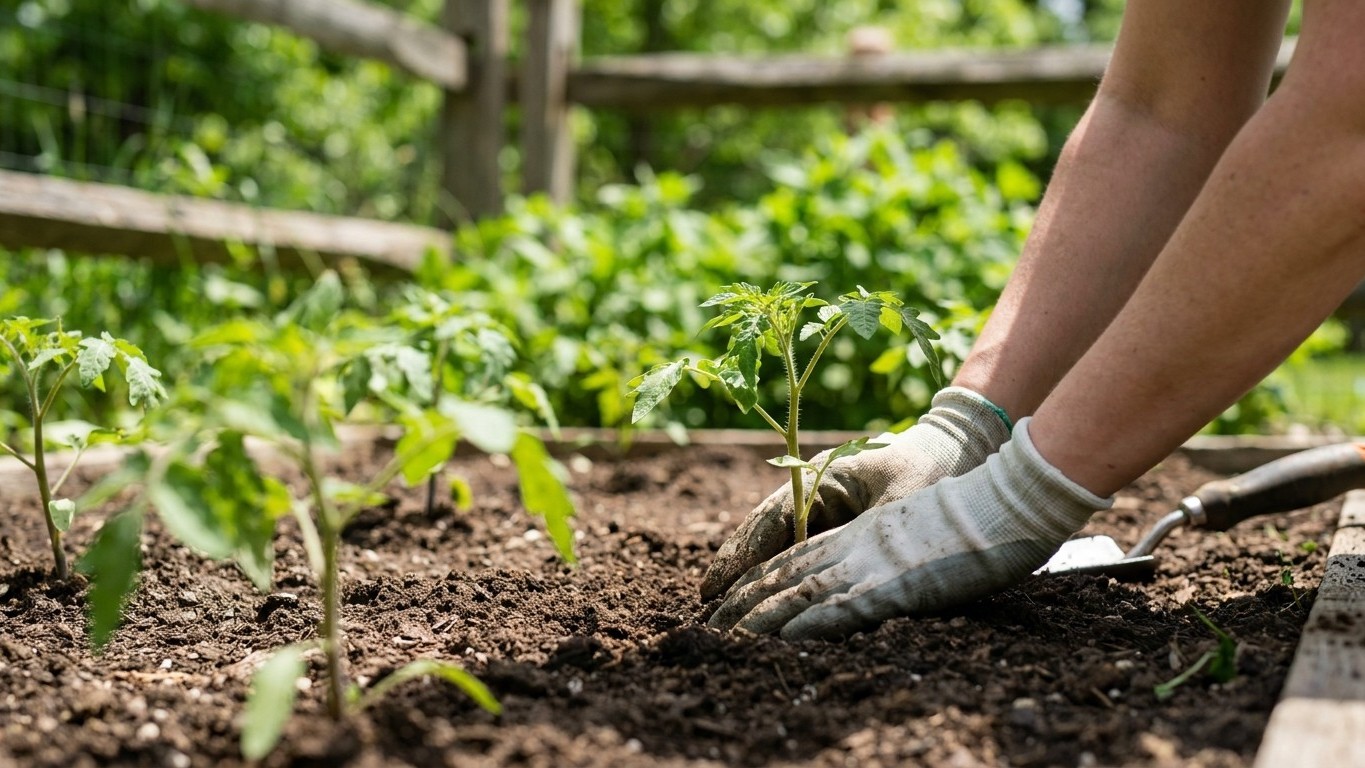

June in Ohio starts well past the last spring frost, which OSU Extension’s Ohio Gardening Calendar puts at May 5 to May 15 for the Columbus area in USDA zone 6a. That means nearly everything on a summer garden list can go into open ground this month. The one thing worth checking before you plant is soil temperature at a four-inch depth, not just how warm the air feels, since a mild week doesn’t always mean the ground underneath has caught up.
What goes in the ground in June

Standing in the yard wondering what actually goes in this month? Almost everything on your summer list — the frost danger passed weeks ago, so tomatoes, peppers, beans, squash, cucumbers, melons, all of it can go straight into open ground now. Before you plant, though, push a thermometer four inches into the soil where the bed sits, not just check how the air feels — a warm afternoon doesn’t mean the ground underneath has caught up yet, and that’s the number that actually tells you the soil is ready.
Tomatoes are the clearest example of how the math works. OSU Extension’s frost data gives a set-out window of mid-May to late May for transplants at Columbus, and each catalog variety’s days-to-maturity figure builds forward from there to a harvest date with a cushion before the first fall frost, which lands October 5 to October 15 in the same reference window. The shorter the days-to-maturity number, the more slack you have if the season runs cold or wet.
| Variety | Days to maturity | Type | First ripe | Margin before fall frost |
|---|---|---|---|---|
| Sakura | 55 | Indeterminate | Late July | 74 days |
| Sun Gold | 57 | Indeterminate | Late July | 72 days |
| Jasper | 60 | Indeterminate | Late July | 69 days |
| Big Beef Plus | 72 | Indeterminate | Early August | 57 days |
| San Marzano II | 78 | Indeterminate | Mid August | 51 days |
| Amish Paste | 85 | Indeterminate | Late August | 44 days |
Direct-sown crops follow a looser rule since there’s no transplant date to track, just soil warmth. Beans, cucumbers and summer squash germinate reliably once the soil has held steady warmth for a week or more, which by June is true almost everywhere in the state. The real gamble in June isn’t cold, it’s waiting too long on crops that hate heat: spinach and lettuce sown now will likely bolt before they size up, so treat those as a fall project instead, tracked against the same OSU Extension frost window you’d use for any other fall crop. For a fuller rundown of what belongs in the ground earlier in the season, What to Plant in Ohio in May covers the transplant window this month’s plantings are built on.
What to start under cover
June under cover is less about protecting seedlings from cold and more about timing fall crops backward from autumn frost. OSU Extension’s first fall frost window for Columbus runs October 5 to October 15. A crop that needs roughly 70 days from transplant to harvest, worked backward from the earlier end of that window, needs to be in the ground by late July at the latest, which puts seed-starting for that transplant in June if you’re growing broccoli, cabbage or cauliflower from your own seed rather than buying starts.
Two ways to miss the window
Starting fall brassicas too early in a warm house means the trays sit far too long before outdoor soil and air conditions are right for them, and by transplant time they’re rootbound and stressed, which shows up later as poor heading and early bolting. Starting too late is the more common mistake in June, because it’s easy to assume there’s plenty of summer left. Counting backward from the OSU Extension fall frost window, rather than from a fixed date on the calendar, is the only way to know for certain whether a given crop still has time to mature before the cold returns. If the arithmetic comes up short for your county, buying transplants later in the season instead of starting from seed recovers some of that lost time.
Indoors, a bright windowsill rarely provides enough light for stocky seedlings this time of year, since the sun angle is high and window light drops off fast a few feet back from the glass. A shop light on a timer, held two to three inches above the leaves and raised as the plants grow, does more to prevent legginess than anything done at transplant time.
What is ready to pick
June is when the crops planted in April and early May start paying off, even though the tomatoes and peppers set out this month are still weeks from producing. Lettuce, spinach and other cool-season greens sown earlier in spring are usually at their peak size now, and the harvest window is short before heat pushes them to bolt: pick heads and leaves as soon as they size up rather than waiting for them to get larger. Radishes sown in April are almost certainly past their prime by now if they weren’t pulled already, since they turn woody and hollow within a couple of weeks of reaching full size.
Peas planted early are usually finishing their run by June as daytime heat builds, so check vines regularly and strip them once pods start to yellow rather than leaving them to dry on the vine unless seed saving is the goal. Strawberries from an established bed are typically at their peak, and the tell for ripeness is color all the way to the stem cap, not just on the shoulders. Garlic planted the previous fall is not ready to pull yet, but scapes, the curling flower stalks, can be cut as they appear, which redirects the plant’s energy into the bulb and gives you an edible bonus in the meantime.
The jobs that matter this month

June is the month staking and caging either happen or don’t, and a tomato plant left to sprawl on the ground for even a few weeks is much harder to correct later without breaking stems. Indeterminate varieties like Cherokee Purple, Brandywine and San Marzano II keep growing and setting fruit all season, so a cage or stake put in now saves an afternoon of tangled, snapped vines in August.
Watering, mulch and weeds
Mulch laid down now, once the soil has fully warmed, holds moisture through the hotter stretch ahead and keeps weed pressure down at the point in the season when weeds are growing fastest. A layer of straw or shredded leaves two to three inches deep around vegetable beds does more for consistent soil moisture than any watering schedule alone. Deep, infrequent watering beats a daily light sprinkle, because shallow watering trains roots to stay near the surface, which makes plants far more vulnerable the first time a watering day gets missed.
Succession sowing keeps the harvest window rolling instead of dumping everything at once: a fresh round of bush beans or summer squash seed every two to three weeks through early summer means a steady supply rather than one glut followed by nothing. Pest scouting also earns its keep now, since squash bugs, Colorado potato beetles and the first tomato hornworms of the season are easiest to deal with while numbers are still low. Checking the undersides of leaves once a week catches egg clusters before they hatch into a bigger problem.
What not to do in June
The most common June mistake is treating a stretch of warm weather in the air as proof the soil has caught up, and pushing heat-loving transplants or seed into ground that’s still cold a few inches down. By June this is rarely a real risk in most of Ohio, but in years with a cool, wet spring it can still bite, especially in low spots and heavy clay that hold cold longer than the surrounding beds. A soil thermometer settles the question in a way that guessing at air temperature never does.
Overfeeding nitrogen once tomatoes and peppers are flowering is another classic error. Too much nitrogen at this stage pushes leafy growth at the expense of fruit set, leaving a lush, dark green plant with disappointing yields. Once flowering starts, a fertilizer lower in nitrogen and higher in phosphorus and potassium does more for the harvest than another round of the same feed used earlier in the season.
It’s also easy to let early crops linger too long out of reluctance to pull something that’s still technically alive. Bolting lettuce and spinach won’t come back to eating quality no matter how much water they get, and leaving them in place only ties up space that could go to a succession planting or a fall crop started under cover. Pulling spent crops promptly, rather than waiting for them to fully finish, is what keeps a small garden productive across the whole season rather than just the first half of it.
Checking this against your own county
Every figure here is anchored to Columbus, and OSU Extension’s own data makes clear that the rest of the state doesn’t move in lockstep. The USDA’s 2023 Plant Hardiness Zone Map puts Ohio across zones 5b to 6b, with lake effect along the Erie shore and elevation in the southeastern hill country both capable of shifting frost dates by real weeks in either direction. Treat every date and window in this piece as a starting point for your own county, not a fixed instruction. OSU Extension’s county offices track local conditions more closely than any statewide figure can, and the Ohio planting calendar is worth checking against your own frost records before committing a full bed to any one planting date. Looking ahead, What to Plant in Ohio in July picks up where this month’s succession sowings leave off.
Common questions
Is it too late to plant tomatoes in Ohio in June?
No. OSU Extension’s set-out window for the Columbus area runs mid-May to late May, but a transplant that goes in a few weeks after that window still has a solid run before fall frost, especially a short-season variety like Sakura or Sun Gold, both around 55 to 57 days to maturity with well over two months of margin before the first fall frost.
Can I still direct sow beans and squash this late in spring?
Yes, direct-sown warm-season crops like beans, cucumbers and summer squash are still well within season in June, and a second round sown now extends the harvest rather than replacing an earlier one.
My spring peas are still producing but it’s getting hot, what do I do?
Keep picking until the vines clearly decline, since heat stress shows up as smaller, tougher pods before the plant stops entirely. Once production drops off, pull the vines and use the space for a succession crop rather than waiting for them to fully die back.
Should I start fall broccoli from seed indoors or just buy transplants later?
Either works, but starting from seed in June only makes sense if you count backward from OSU Extension’s fall frost window and confirm the math leaves enough days. If a cool spring or a late start eats into that margin, buying transplants closer to the fall planting date is the safer route.