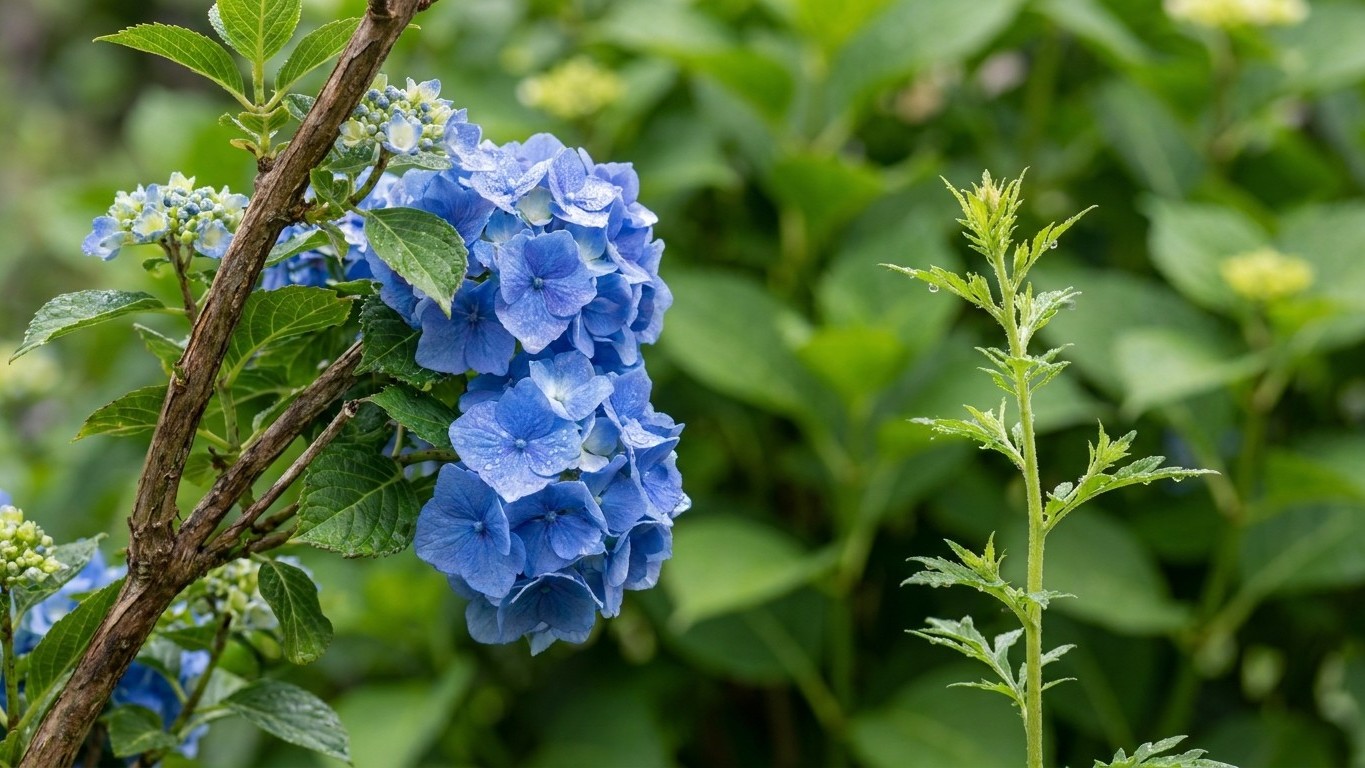

Delaware gardeners can plant Hydrangeas in spring once the last frost risk has passed, typically after mid-April near Wilmington, or in early fall before the ground cools. Bigleaf and panicle types thrive in the state’s humid summers and mild winters, and flower color on bigleaf varieties can be shifted blue or pink by adjusting soil pH, while winter protection matters most for gardeners near the Pennsylvania line.
When to plant Hydrangeas in Delaware
The reference point for frost timing in this guide comes from a NOAA weather station in Wilmington, and it puts the last spring freeze at 32°F between April 3 and April 14, with the first fall freeze landing between October 26 and November 7 (NOAA NCEI 1991-2020 Climate Normals, station USW00013781). That’s the airport reading. Gardens outside the city, especially in higher ground toward the Pennsylvania border or inland from the bay, often see frost linger a week or two longer in spring and arrive a week or two earlier in fall. Sussex County’s coastal moderation can push both dates the other way. Check your own county extension office before locking in a planting date.
Hydrangeas aren’t started from seed the way tomatoes or peppers are. Home gardeners buy container-grown or balled-and-burlapped shrubs from a nursery, or they propagate favorite plants from softwood cuttings taken in early summer. If you’re rooting cuttings indoors or in a cold frame, plan on six to eight weeks from cutting to a rooted plant ready for the ground. Count backward from your area’s last frost date: taking cuttings in late May or June and hardening them off through July gives roots time to establish before the shrub faces its first Delaware winter.
Spring versus fall planting
Spring planting, once soil has warmed and the frost window from the Wilmington data has closed, gives roots a full growing season to settle in before winter. Fall planting, done four to six weeks before that first fall freeze, lets roots grow in cooler, moister soil without the stress of summer heat. Either works in Delaware. What doesn’t work is planting in the dead heat of July or August, when a new hydrangea’s shallow root ball dries out fast and the plant spends its energy just surviving rather than rooting.
For nursery stock, skip any worry about hardening off in the vegetable-garden sense. These shrubs have already been grown outdoors or in shade structures. The one adjustment worth making: if you bought a hydrangea from a big-box store that kept it under heavy shade cloth, give it a few days in a partly shaded spot in your own yard before moving it into its final, sunnier planting site.
Soil and site preparation
Bigleaf and panicle hydrangeas want morning sun and afternoon shade across most of Delaware, since the state’s summer humidity combined with full afternoon sun stresses leaves and speeds up wilting. A spot that gets four to six hours of light, with relief from the harshest midday and afternoon rays, suits both types. Oakleaf hydrangea and smooth hydrangea (the ‘Annabelle’ type) tolerate a bit more shade.
Soil texture matters more than most gardeners expect. Hydrangeas like a loose, humus-rich soil that holds moisture without staying waterlogged. Where Delaware’s coastal plain gives you sandy soil, work in a few inches of compost or aged leaf mold before planting so the bed holds water longer between rains. Where you’re dealing with heavier clay, especially inland, raise the planting area a few inches above grade and mix in coarse organic matter so roots don’t sit in standing water after a storm.
Amend beds two to three weeks ahead of planting rather than on planting day itself, so the organic matter has started to break down and settle. Dig the hole twice as wide as the root ball but no deeper, set the top of the root ball level with or slightly above the surrounding soil, and backfill with the amended native soil rather than pure potting mix, which can create a bathtub effect that traps water around the roots.
Space plants according to their mature spread rather than their nursery-pot size. Bigleaf hydrangeas need three to five feet of room on each side; panicle types, which can grow considerably larger, deserve five to eight feet. Crowded plants compete for water and stay damp longer after rain, which invites the fungal problems covered later in this guide.
Varieties that suit Delaware
The traits that matter here are cold hardiness through a Delaware winter, tolerance for summer humidity, and, for bigleaf types, some resistance to losing flower buds after a late spring cold snap. Given the frost window running into mid-April at the Wilmington station, and later in outlying areas, a hydrangea that blooms only on old wood risks losing that year’s flowers to a hard freeze after new growth has started. Varieties that bloom on both old and new wood hedge against that risk.
Widely available options
- Rebloomers such as ‘Endless Summer’: bigleaf hydrangeas bred to flower on both old and new wood, useful insurance against a late frost taking out the previous season’s buds.
- ‘Nikko Blue’: a classic bigleaf variety, reliable in mild winters, but it blooms mainly on old wood, so a hard late freeze can mean a bloom-free year.
- Panicle types like ‘Limelight’ and ‘Little Lime’: bloom on new wood only, which sidesteps the late-frost bud problem entirely, and they handle full sun and summer heat better than bigleaf types.
- ‘Annabelle’ (smooth hydrangea): also blooms on new wood, tolerant of a hard pruning each spring, and forgiving of Delaware’s clay soils.
- Oakleaf hydrangea: native to the eastern United States, tolerant of drier shade once established, and less fussy about soil pH than bigleaf types.
No extension service or agency named in this guide endorses a specific brand or cultivar, and gardeners should treat cultivar names as a starting point for asking a local nursery what performs well in their particular yard and microclimate.
What to plant alongside
Hydrangeas pair well with plants that share their preference for moist, well-drained soil and partial shade without directly competing for the same root zone. Ferns, hostas, and astilbe fill the space beneath and around a hydrangea’s canopy, hide the bare lower stems that develop on older shrubs, and don’t demand the same nutrients aggressively enough to stunt the hydrangea’s growth.
Shallow-rooted groundcovers like sweet woodruff or foamflower work as a living mulch, keeping soil temperatures more even and suppressing weeds that would otherwise compete for water. For pollinator interest, plant catmint or salvia at the sunnier edge of a hydrangea bed. They draw bees without pulling much water from the hydrangea’s root zone since their own roots run shallower and spread outward rather than down.
Avoid planting hydrangeas near shallow-rooted trees such as maples, which send surface roots into any amended, moisture-retentive bed and outcompete the shrub for water within a season or two. Keep hydrangeas away from areas where lawn irrigation runs daily on a shallow cycle. That watering pattern trains hydrangea roots to stay near the surface, making the plant more vulnerable to drought stress the moment watering is interrupted.
One pairing claim worth debunking: the idea that planting garlic or onions near hydrangeas repels aphids or fungal disease has no real evidence behind it. If you see that suggestion in a gardening forum, treat it as folklore rather than a control method.
Watering, feeding and support
New hydrangeas need consistent moisture through their first two growing seasons while roots establish. A deep soak, enough to moisten the top eight inches of soil, once or twice a week during dry stretches beats frequent shallow watering, which trains roots to stay near the surface. Established plants in Delaware’s typical summer rainfall pattern often need supplemental water only during multi-week dry spells, but bigleaf hydrangeas will wilt visibly in afternoon heat even when soil moisture is adequate. That’s a normal response to transpiration outpacing root uptake in high heat, and the plant usually perks back up by evening. Wilting that persists into the next morning signals an actual water problem.
A two- to three-inch layer of shredded bark or leaf mulch, kept a few inches back from the stems, holds soil moisture, moderates root-zone temperature, and breaks down slowly to feed the soil. Refresh it each spring as it thins out.
Feed lightly. A balanced, slow-release fertilizer applied once in early spring as new growth starts is usually enough. Heavy nitrogen feeding pushes leafy growth at the expense of flowers and can make bigleaf hydrangeas more prone to flopping under the weight of their own blooms. If you’re adjusting soil pH to shift bigleaf flower color toward blue (lower pH, more available aluminum) or pink (higher pH), do it gradually over a season with soil amendments recommended for that purpose rather than a single heavy application.
Most hydrangeas don’t need staking, but large-flowered panicle varieties and older bigleaf shrubs carrying a heavy bloom set sometimes benefit from a simple three-stake ring of twine to keep stems from splaying open after a summer thunderstorm. Prune bigleaf and oakleaf hydrangeas right after flowering, since they set next year’s buds on the current season’s old wood by late summer; prune panicle and smooth types in late winter or very early spring, before new growth starts, since they bloom on new wood regardless of timing.
Common problems
The complaint gardeners bring up most about hydrangeas isn’t a disease at all: it’s a shrub that grows well but never blooms. Usually the cause is pruning at the wrong time and cutting off the very buds that would have flowered, or a late spring freeze after the frost window discussed earlier that damages buds already forming on an old-wood bloomer like ‘Nikko Blue’. Rebloomers and new-wood bloomers sidestep this by setting a second round of buds later in the season.
Afternoon wilting on hot days is common on bigleaf hydrangeas and, as covered above, usually resolves by evening. Persistent wilting, paired with yellowing leaves and a mushy feel at the base of stems, points to root rot from soil that stays waterlogged, a common issue in Delaware’s heavier clay pockets when beds aren’t raised or amended for drainage. Pull the plant back and check the root ball; soft, dark roots mean the soil has been too wet for too long, and the fix is improving drainage, not adding more water.
Leaf scorch, showing up as brown, crispy edges on leaves exposed to full afternoon sun combined with dry soil, is a sun and moisture problem rather than a disease. Moving the plant to better afternoon shade, or improving watering during heat waves, usually solves it over a season.
Powdery mildew, a grayish-white coating on leaves, shows up when humidity is high and air circulation is poor, which describes a lot of Delaware summers in a crowded bed. Spacing plants properly, as covered in the soil prep section, and watering at the base rather than overhead in the evening cuts down on the humid leaf surface that mildew needs to spread. Established, healthy hydrangeas usually tolerate a mild case without lasting harm.
Pests that actually show up in Delaware
The University of Delaware Cooperative Extension’s published pest fact sheet for home gardens lists Colorado potato beetle, tomato and tobacco hornworm, cucumber beetles, squash bug, squash beetle, squash vine borer, harlequin bug, imported cabbageworm, and Mexican bean beetle as the insects that cause real damage in the state’s home gardens, with pressure building through July and August (University of Delaware Cooperative Extension, Non-chemical pest control options for managing insect pests). That list, and the sourcing behind it, is specific to vegetable crops: tomatoes, cucurbits like squash and cucumbers, and brassicas like cabbage. Hydrangeas aren’t a host plant for any of them.
What that means for a hydrangea bed: if you’re growing hydrangeas near a vegetable garden, as many Delaware yards do, those insects will stay on the tomatoes and squash rather than migrate to your shrubs. It also means the sourced state data for this guide doesn’t cover hydrangea-specific insects like aphids, spider mites, or Japanese beetles, which are commonly reported problems on hydrangeas nationally but aren’t part of the published Delaware fact sheet cited here. Rather than guess at local pressure for those pests, the honest answer is that specific Delaware figures for hydrangea insects aren’t published in the source used for this guide.
If you notice sticky residue on leaves, distorted new growth, or fine stippling on foliage, those are the visual signs typically associated with aphids or Spider Mites on hydrangeas elsewhere in the country. Bring a sample or a clear photo to your county extension office for a confirmed identification rather than treating for a pest based on a guess, since the wrong control method wastes effort and can harm beneficial insects that would otherwise keep populations in check.
Harvest and end of season
Hydrangeas aren’t a food crop, so there’s no harvest window in the traditional sense, but cutting blooms for indoor arrangements has its own timing. For fresh arrangements, cut stems in the morning once flowers feel firm and slightly papery to the touch rather than soft, and place them in water immediately. For dried arrangements, wait until the blooms have started to feel papery on the shrub itself, usually in late summer, then cut and hang stems upside down in a dark, dry spot for a few weeks.
As the season winds down toward that first fall freeze at the Wilmington station, expected between October 26 and November 7, resist the urge to cut back bigleaf or oakleaf hydrangeas. Their old wood is already carrying next year’s flower buds, and pruning now removes next season’s blooms along with this year’s spent flowers. Panicle and smooth hydrangeas can be cut back in late fall or left standing through winter for structure and seed-head interest; either is fine since they bloom on new wood.
A layer of mulch pulled up around the base of younger or borderline-hardy hydrangeas before the ground freezes helps protect roots and the lowest buds through a hard winter, especially for gardens farther from the coast where cold settles in earlier than the reference dates suggest. Established shrubs in milder, coastal parts of the state often need no extra winter protection at all.
Local help
Frost dates, soil conditions, and pest pressure all vary by county within Delaware, and the closest thing to a reliable local answer comes from the University of Delaware Cooperative Extension, which offers soil testing and county-specific planting guidance for home gardeners.
Common questions
Can I grow hydrangeas anywhere in Delaware, or does the coast matter?
Yes, hydrangeas grow across the state, but coastal areas near the bay tend to have milder winters and later first frosts than inland or northern spots, which affects how much winter protection a shrub needs.
Why did my hydrangea grow well but never flower?
The most common cause is pruning old-wood bloomers like many bigleaf varieties at the wrong time, or losing buds to a late spring freeze after the shrub had already broken dormancy.
Do I need to change my soil to get blue flowers?
Only bigleaf hydrangea flower color responds to soil pH, and the shift takes a season or more of gradual amendment rather than a single application. Panicle and smooth hydrangeas don’t change color this way.
Will the vegetable garden pests my extension office warns about attack my hydrangeas?
No. The pests highlighted by University of Delaware Cooperative Extension for home gardens target tomatoes, cucurbits, and brassicas specifically, not hydrangeas.
How close to my last frost date can I safely plant a hydrangea?
Wait until the frost risk has clearly passed in your own yard, which can run a week or two later than the Wilmington station dates in outlying or higher-elevation areas, and confirm timing with your county extension office if you’re unsure.