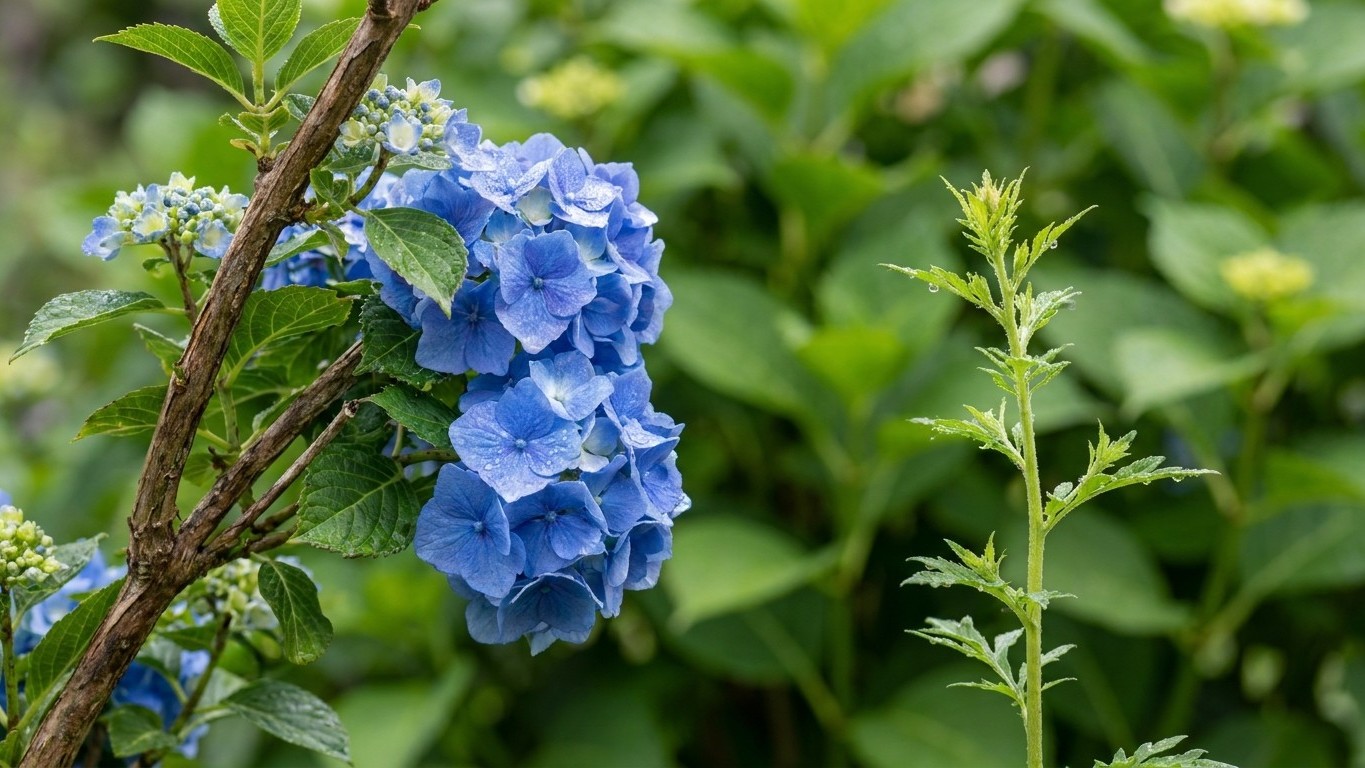

Around Calgary, Hydrangeas that bloom on new spring growth, mainly Hydrangea paniculata and Hydrangea arborescens types, are the ones that reliably survive winter and still flower here. Hydrangea macrophylla, the classic blue or pink mophead sold at most garden centers, usually survives as a root system in this climate but loses its flower buds when last year’s stems die back, so it rarely blooms in an Alberta yard.
What this comes down to in Alberta
Around Calgary, the frost-free window runs on average from May 21 to September 16, a stretch of roughly four months bracketed by a hardiness rating of zone 4a in the Canadian system. That’s short enough, and the winter minimums cold enough, that only hydrangeas able to regrow and set flower buds from the crown each spring have real odds of blooming in most Alberta gardens.
The reason comes down to where each type keeps its flower buds. Paniculata and arborescens cultivars form their buds on the current season’s growth, so even if a hard winter kills the visible stems to the ground, the plant regrows from the roots and still flowers by midsummer. Macrophylla cultivars store their buds on stems that lived through the previous winter, and those stems rarely make it through a Calgary-area cold snap intact. Worth flagging too: the zone 4a figure here comes from 1991-2020 normals for Calgary specifically, while the frost dates above come from an older 1981-2010 dataset, so the two numbers describe slightly different periods even though they point to the same conclusion. The Canadian zone system also isn’t the same scale as the USDA zones used on US gardening sites; it’s built from seven climate variables instead of one, so a Canadian 4a can’t be read across as a USDA 4a.
Annabelle
Hydrangea arborescens ‘Annabelle’ pushes new stems from the ground every spring and sets its flower buds on that same growth, so a winter that kills the top growth back to the crown still leaves a full flush of white blooms by midsummer. It’s a North American native selection, useful for cut flowers and drying, and it’s about as dependable as hydrangeas get this far north.
Incrediball
Also an arborescens selection, ‘Incrediball’ shares ‘Annabelle’s’ new-wood blooming habit but carries sturdier stems that hold up its heavier flower heads after rain. Because it regrows and buds entirely on the current season’s wood, winter dieback doesn’t cost it a bloom, which keeps it among the safer picks for a Calgary-area yard.
Limelight
Hydrangea paniculata ‘Limelight’ also flowers on new wood, but it needs a longer stretch of warm growth after spring regrowth begins before buds open, typically coloring up later in summer than the arborescens types. In a season that runs from late May to mid-September, it usually has just enough time, though a late spring can push flowering closer to frost than most gardeners would like.
Bobo
‘Bobo’ is a compact paniculata bred to bloom earlier and on a smaller frame, which suits Alberta’s shortened season better than its taller paniculata relatives. Its new-wood flowering habit means winterkill of the top growth isn’t fatal to bloom, and the shorter path from regrowth to flower gives it some cushion against a late last-frost date.
Quick Fire
Hydrangea paniculata ‘Quick Fire’ is bred to flower several weeks ahead of standard paniculata types, opening its first blooms in early summer rather than late summer. That head start matters in a growing season bracketed by roughly four frost-free months, giving it more margin than later-blooming panicle types if spring arrives on the late side.
Endless Summer
Hydrangea macrophylla ‘Endless Summer’ was bred to bloom on both old and new wood, which helps it in milder climates but is only a partial fix here: the old wood usually doesn’t survive a zone 4a Canadian winter, leaving the plant to rely entirely on new-wood buds that may not finish forming before the average mid-September frost. Expect thin flowering in a mild year and none after a hard winter.
Nikko Blue
Hydrangea macrophylla ‘Nikko Blue’ sets its flower buds only on the previous year’s stems, a habit that works in milder regions but fails routinely in Alberta, where those stems die back over winter. The plant can survive as a root system and put out leaves, but gardeners here should expect a shrub that rarely, if ever, flowers.
Working it out for your own garden
The arithmetic here isn’t built around a planting date so much as a bud-and-bloom date, and it starts with the two anchors from the reference station: an average last spring frost of May 21 and an average first fall frost of September 16. Those are means, not guarantees, so in roughly half of all years frost lands later on both ends. Treat the window as about four months at best, and expect to give up two or three weeks of it in a slow spring.
New-wood bloomers start their internal clock whenever growth resumes after the last frost, not on a fixed calendar date. Take ‘Quick Fire’: nursery descriptions generally place it among the earliest paniculata types to color up, often within about eight to ten weeks of new spring growth. If regrowth starts in the last week of May, that eight-to-ten-week run lands bloom in late July to early August, well inside the window before the mid-September average frost, with five or six weeks left over even in a slower year.
‘Limelight’ typically needs longer, closer to eleven or thirteen weeks from regrowth to full color, since it’s built to flower later by design. Starting from that same late-May regrowth date, the bloom stretches into mid-to-late August, trimming the safety margin down to three or four weeks before the average first fall frost, and closer to nothing if frost arrives on the early side of normal, which it does about half the time.
For a macrophylla like ‘Endless Summer,’ the arithmetic changes shape entirely: the question isn’t how many weeks to bloom, but whether last year’s stems survived the winter at all. With the reference city rated Canadian zone 4a, macrophylla wood generally needs milder conditions to overwinter above ground, so most rebloom depends on new wood formed after the last frost, with far less runway to mature buds before the first one in fall.
The method that travels with you, even to a different yard: track when your own property typically greens up in spring, since that can run later than the Calgary average at higher elevation or farther north, count forward the number of weeks a cultivar’s tag lists for bud development, and compare that landing date against your own area’s typical first fall frost rather than the provincial figure.
What changes across the state
Alberta’s odds for hydrangeas don’t look the same in the foothills as they do on the northern prairie. Elevation is one of the biggest movers: towns sitting higher than the Calgary reference point tend to see both a later last spring frost and an earlier first fall frost, squeezing the growing window from both ends. Distance from the Rocky Mountain foothills matters too, since valley locations can pool cold air overnight and run several degrees colder at ground level than open prairie sites nearby.
Southern Alberta has one more variable the Calgary station doesn’t fully capture on its own: chinook winds. These sudden warm spells can swing temperatures by tens of degrees within a single day in the middle of winter, and that freeze-thaw cycling is harder on dormant hydrangea wood than steady, unbroken cold, because it stresses bark and buds that had settled into dormancy. Further north, around Edmonton and beyond toward Peace River and Grande Prairie, both the growing season and the winter hardiness picture shift the other direction, with shorter frost-free stretches and colder averages than the Calgary figures describe.
None of this changes which cultivars belong on the new-wood side of the list. It does mean gardeners north of Edmonton or at elevation should lean even harder toward the earliest-blooming types on it, since the margin that ‘Limelight’ or ‘Endless Summer’ already run thin around Calgary tends to disappear entirely farther from that reference point.
The mistakes this state punishes
Planting right after a chinook warm spell is a common one. Air temperatures can hit a springlike range for a few days in the middle of winter, but the soil a few inches down often stays frozen or waterlogged from the sudden thaw, and a root ball set into that ground doesn’t establish before the cold returns.
Choosing a macrophylla cultivar for its blue or pink color range without realizing it blooms only on old wood is another. Gardeners plant it, get one good flowering year if the winter happened to be mild, then spend the following years wondering why it won’t bloom again, when the real fix was picking a paniculata or arborescens type from the start.
Pruning at the wrong time compounds both problems. Cutting back a macrophylla in fall or early spring removes the only stems it has left to flower from, while the same pruning does no harm to a paniculata or arborescens cultivar that blooms on whatever grows back. And skimping on mulch over the crown in a zone 4a Canadian winter can cost gardeners even the reliable new-wood bloomers, since a killed crown has nothing left to regrow from at all.
Checking this against your county
The Calgary figures here are a starting point, not a guarantee for every Alberta address. Elevation, chinook exposure, and how far north or south a property sits can all shift the real numbers by weeks in either direction. For a reading closer to home, reach out to your local municipal district or county agriculture office, and check Alberta’s agriculture and irrigation resources for guidance tailored to your region.
Common questions
Do hydrangeas need winter protection in Alberta?
Macrophylla types benefit most from heavy mulch and stem wrapping, since their old wood is what’s at risk. New-wood bloomers like arborescens and paniculata tolerate more exposure, though a thick mulch over the crown still helps them regrow reliably.
Can Hydrangea macrophylla grow in Alberta at all?
It can survive as a die-back perennial that leafs out but rarely flowers, since its buds form on stems that don’t reliably overwinter here. Some gardeners grow it in a large container and move it somewhere unheated but frost-free over winter instead of leaving it in the ground.
What’s the hardiest hydrangea for Alberta gardens?
Arborescens cultivars such as ‘Annabelle’ and ‘Incrediball’ are generally the most dependable, since they regrow and bloom on new wood every year regardless of how hard the winter was.
Does a Canadian zone 4a rating mean the same thing as a USDA zone 4a?
No. The Canadian system is built from seven climate variables rather than one, and a Canadian zone 4a can overlap several different USDA zones. Treat the two ratings as separate scales rather than interchangeable numbers.