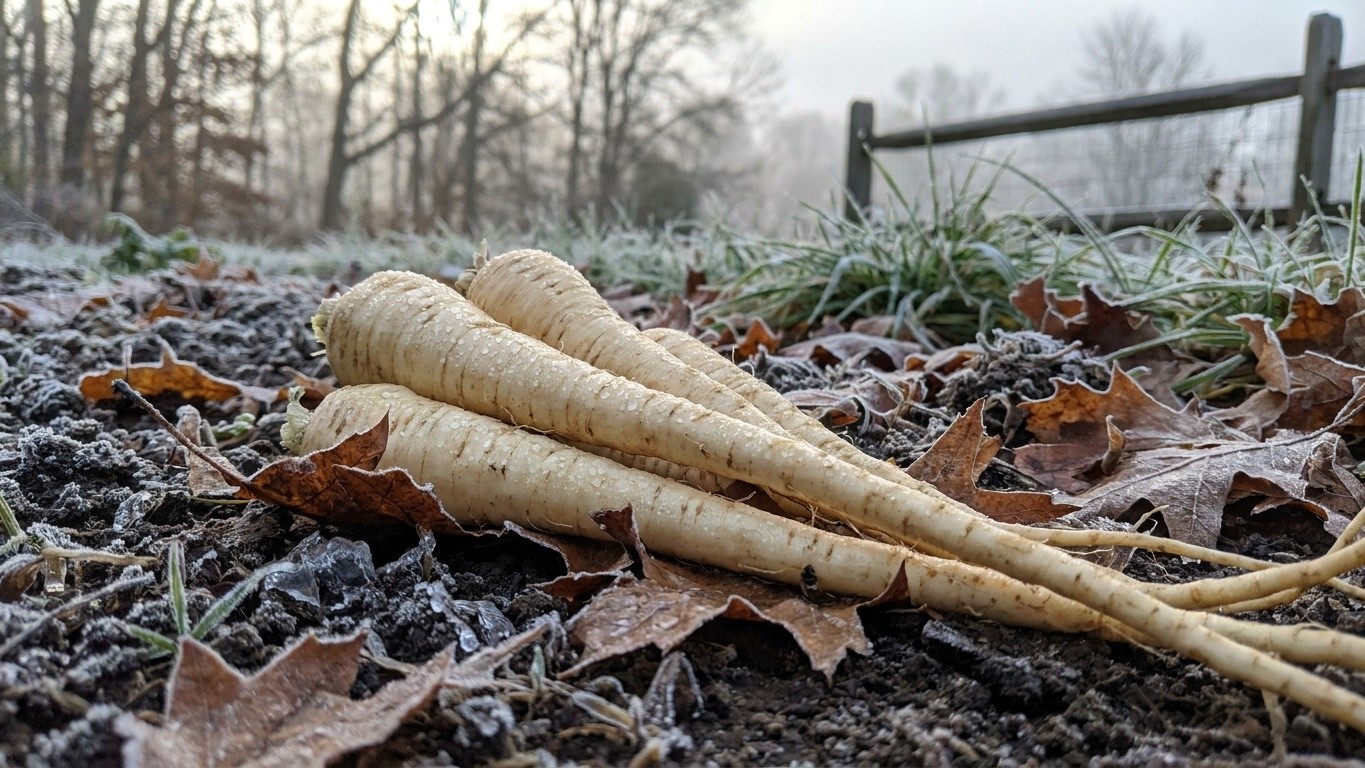

NDSU Extension documents six pest species with a track record in the state: apple maggot, boxelder bug, Colorado potato beetle, corn earworm, emerald ash borer, and yellowheaded spruce sawfly. None of them target parsnip roots or foliage. Each is tied to a different host, apples, boxelder and maple trees, potato-family plants, corn and other fruiting crops, ash trees, spruce needles, so a home parsnip bed in North Dakota isn’t on any of their menus. What actually decides how a parsnip crop turns out here is the frost calendar, not a documented insect.
Which pests attack parsnip in North Dakota

NDSU Extension documents six pest species for the state: apple maggot, boxelder bug, Colorado potato beetle, corn earworm, emerald ash borer, and yellowheaded spruce sawfly. That’s the full list this site can point to for North Dakota, and it’s worth saying plainly, the extension service documents few pests here with any connection to a parsnip bed, and none of these six.
Sort through the list and the reason becomes clear. Apple maggot lays eggs in apples and related fruit, not root vegetables. Boxelder bug feeds on boxelder and maple seeds, and shows up on siding and porches in fall looking for winter shelter; it can wander across a garden without feeding on anything growing there. Colorado potato beetle is a specialist on the nightshade family, potatoes, tomatoes, eggplant, and doesn’t switch to a carrot-family root like parsnip. Corn earworm goes after corn ears and the fruiting parts of a handful of other crops; parsnip foliage and roots aren’t on its host list. Emerald ash borer develops only under the bark of ash trees. Yellowheaded spruce sawfly larvae feed exclusively on spruce needles.
None of the six pests NDSU Extension documents for this state are known to feed on parsnip. That’s an honest answer, not a gap in reporting: whatever insect pressure exists on a North Dakota parsnip crop hasn’t been documented at the state level in a way this site can cite. Spotting one of these insects near a garden bed, which happens often with boxelder bugs in fall, isn’t evidence it’s eating the crop.
When each one shows up, and what it does first
Because none of the six documented pests target parsnip, there’s no pest emergence calendar to give here, and inventing one would mean attaching numbers to insects that don’t feed on this crop. What does have a documented calendar is the plant itself.
Parsnip is sown directly in place, not transplanted, and the clock starts at seeding. Seed should go in two to three weeks before the last spring frost, which at the Fargo reference station falls between May 4 and May 15, per NOAA NCEI’s 1991-2020 climate normals. Gardens away from that station, and especially at higher elevation, often see the last frost arrive later, so local history should adjust that date. Germination takes 14 to 21 days, and a bed that looks empty at day ten hasn’t failed, it’s just not there yet.
From sowing, the crop needs 100 to 120 days to mature, per Utah State University Extension, which puts harvest close to the first fall frost at the reference station, September 25 to October 5. The milestone worth watching isn’t an insect symptom at all, it’s the arrival of hard frost, which converts stored starch in the root to sugar over several weeks. A parsnip pulled before that cold exposure will be edible but flat, no matter how full the foliage looked all summer.
With no documented insect timeline for this crop in this state, the practical approach is tracking the plant’s own stages, germination, canopy fill, first frost, and treating anything actually chewing on foliage or root as a symptom to identify on its own, rather than assuming it matches one of the six species NDSU Extension tracks for other hosts.
Telling the damage apart from everything else
Since no documented insect is confirmed feeding on parsnip in North Dakota, damage on a home crop more likely traces back to soil, water, or the plant’s own biology than to a pest.
Two different causes for a forked root
A forked or split root has two separate possible causes here, and they shouldn’t be merged into one diagnosis. Heavy or stony ground makes the taproot deflect around an obstacle, which is why Utah State University Extension recommends deep sandy soil, or double-digging heavy soil before sowing. Separately, uneven watering, especially swings between dry spells and heavy soaking, can also cause forking even in loose soil. The fix differs by cause: depth and drainage for the soil problem, a steady schedule for the water problem.
| Symptom | Likely cause | What distinguishes it |
|---|---|---|
| Forked or split root | Heavy or stony soil | Root deflects around an obstruction; affects a whole row similarly |
| Forked or split root | Uneven watering | Happens even in loose soil, tracks with an irregular watering history |
| No seedlings by day 10-12 | Normal slow germination | Resolves by day 14-21; don’t re-sow yet |
| Flat, starchy taste at harvest | Pulled before enough frost exposure | Foliage can look completely healthy; taste is the only sign |
| Chewed foliage or tunneled root | Unidentified insect feeding | Doesn’t match any species documented for this crop in this state |
That last row matters most. If foliage or roots show real feeding damage, the useful step is a sample or clear photo to the county extension office, not a guess among the six state-documented species, since the evidence says none of them are responsible.
What actually works here, and what is a waste of time
With no confirmed insect pest on record for parsnip in North Dakota, the highest-value work happens before planting. Getting the soil right, sandy and deep, or heavy soil double-dug ahead of sowing, prevents the forked roots gardeners most often mistake for pest damage. That single step does more for a North Dakota parsnip bed than any treatment applied mid-season.
Timing the sow date is the other lever that matters on a short season. Sowing two to three weeks before the last spring frost, expected May 4 to May 15 at the reference station, gives the crop the full 100 to 120 days it needs before the first fall frost arrives, September 25 to October 5. Miss that window on the front end, and there isn’t enough season left to make it up.
What’s a waste of time, given what’s documented here: treating preventively for any of the six state-listed pests around a parsnip bed. Apple maggot, boxelder bug, Colorado potato beetle, corn earworm, emerald ash borer, and yellowheaded spruce sawfly all have their own hosts elsewhere. Digging up a bed that hasn’t germinated in the first two weeks is another common waste, since it disturbs seed that simply hasn’t had its 14 to 21 days yet. Pulling the crop early to beat a suspected pest is also counterproductive, since it sacrifices the frost exposure that builds sweetness without any documented pest pressure to justify it. If feeding damage does turn up and gets identified, the treatment decision belongs with the county extension office, which knows what’s labeled for use in North Dakota gardens.
Where to check this for your own county
NDSU Extension is the source for what’s documented statewide, and its county offices are the next step for anything specific to one garden. A state-level pest list describes what’s been found and reported somewhere in North Dakota, it doesn’t describe what’s present in any single yard, and presence inside the state varies by county, soil, and what’s growing nearby, an orchard, a stand of ash or boxelder trees, a potato field.
That matters for parsnip directly. The six species NDSU Extension documents are tied to hosts that may or may not exist near a given garden, boxelder and maple trees, ash trees, spruce, apple trees, potatoes or corn. A property without any of those nearby has even less reason to expect them in a vegetable bed; a property surrounded by them might see the insects themselves without ever seeing feeding damage on the parsnip.
The next useful step, if foliage or roots show damage that doesn’t match soil, water, or the germination timeline above, is a call or sample submission to the county extension office, rather than a search for a match among the six statewide-documented species. County staff can identify what’s actually on the plant and say whether it’s been seen locally before, which state-level records alone can’t answer.
Common questions
Does NDSU Extension list any pest specifically for parsnip?
No. The six species it documents for the state, apple maggot, boxelder bug, Colorado potato beetle, corn earworm, emerald ash borer, and yellowheaded spruce sawfly, are all tied to other hosts: fruit trees, boxelder and maple, potato-family crops, corn, ash trees, and spruce.
When should parsnip be sown in North Dakota?
Two to three weeks before the last spring frost, which falls between May 4 and May 15 at the Fargo reference station according to NOAA NCEI climate normals. Gardens away from that station often see frost run later, so local history should adjust the date.
Why does my parsnip taste bland even though it grew well?
It likely came out of the ground before enough cold exposure. Utah State University Extension notes the root needs several weeks of frosty weather after maturity to convert stored starch to sugar; healthy foliage doesn’t guarantee that conversion has happened yet.
What causes a forked parsnip root?
Two separate things, not one: heavy or stony soil that deflects the taproot, or uneven watering that stresses the root as it grows. Deep, well-worked soil and a steady watering schedule address both.