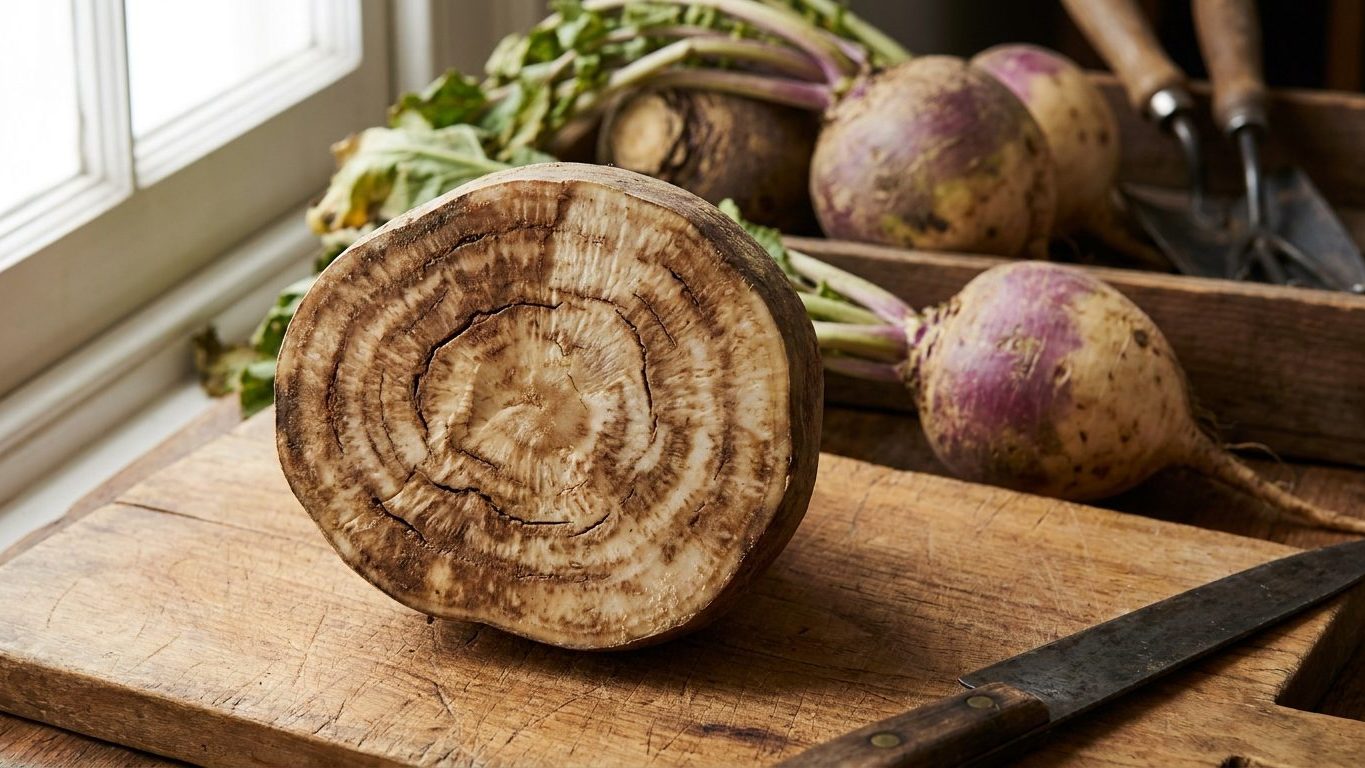

A woody turnip or rutabaga isn’t a failed variety or a kitchen mistake. It’s a root that grew through some kind of stress and then kept sizing up past the point of good eating. The fiber laid down during that stress is permanent. No amount of boiling, roasting or peeling brings back the texture that even, steady growth would have produced instead.
What is actually going on
The thing to understand here is interrupted growth. A turnip or rutabaga root grows the way tree rings do, in layers, and each layer reflects the conditions the plant was under when it was laid down. When growth is steady, those layers stay tender and full of moisture. When growth slows, whether from heat, drought or crowding, the plant shifts some of its energy into structural tissue instead of storage tissue. That structural tissue is lignin, the same compound that stiffens stems and bark, and once it’s built into the root there’s no reversing it with cooking.
Three triggers cause most of this stalling:
- A stretch of hot weather that pushes the soil temperature well above what the root prefers for sizing
- A dry spell severe enough that the plant slows growth to conserve water, followed by a soaking that resumes growth unevenly
- Overcrowded rows, where roots compete for space and water and none of them size up cleanly
There’s a fourth cause that’s less about the weather and more about the calendar: age. Turnips and rutabagas are biennials. Left in the ground long enough, especially once day length and temperature start signaling the end of the growing season, the plant begins preparing to bolt and flower the following year. That preparation pulls fiber into the root’s core to support a future seed stalk, and it happens whether or not the gardener ever lets the plant actually flower. A root held in the ground well past its type’s normal sizing window is building that fiber even while it still looks fine from the top.
Stress from pests and disease can trigger the same response. A root fly larva tunneling through a young root, or a fungal infection slowing the plant down, forces the same kind of interrupted growth as heat or drought. This matters because Turnips and Rutabaga are brassicas, in the same family as cabbage, kale and mustard, and they share nearly all of their pest and disease pressure with those crops. A gardener who moves turnips into a bed that grew cabbage the year before hasn’t rotated anything at all. The pest and disease guide and the rotation guide cover which brassica relatives to avoid planting in sequence.
In the garden
Diagnosing which cause produced a woody root after the fact is mostly guesswork, but the pattern of the season usually points to one culprit more than the others. Here’s how the four causes typically show up, and what tends to happen when each one goes wrong.
| Cause | What happens | Where it shows up | What to do instead |
|---|---|---|---|
| Heat during sizing | Root growth stalls during the hottest stretch, then resumes once temperatures drop, leaving a fibrous band inside | Roots pulled after a heat wave, often still small on top but tough when cut | Time the crop so root sizing falls in cooler weather, and mulch to buffer soil temperature |
| Drought then rewetting | Growth slows under dry soil, then surges unevenly once watered, cracking or fibering the root | Roots that look split or have a hard core despite a normal size | Water on a steady schedule rather than letting soil dry out completely between waterings |
| Crowding | Roots compete for space and never size evenly, some staying small and tough, others splitting | Rows where seedlings were never thinned | Thin early, while seedlings are small, rather than waiting to see which ones look strongest |
| Age or bolting prep | Fiber builds in the root core as the plant readies to flower the following season | Roots left in the ground long after they reached full size for their type | Pull by size and feel for the type grown, not by how long ago it was planted |
The size at which woodiness sets in isn’t the same for both crops. Turnips grow fast and are meant to be pulled small, generally when the root is still comfortably under a fist’s width across. Left past that stage, especially in warm weather, a turnip toughens quickly. Rutabaga grows slower and sizes over a longer, cooler stretch, which means it tolerates a larger diameter before the texture turns. That’s a structural difference between the two crops, not a matter of one variety being better bred than another, and it’s worth checking a current variety trial from a state extension service before assuming any one type will behave the same way in a home garden as it does in a commercial field.
Once roots come out of the ground, the same inspection habit that catches a woody root should catch anything worse. A soft patch, a weeping spot, or a moldy crown means the root gets discarded, not stored, regardless of how sound the rest of it looks. Woodiness affects texture, not safety, but it often shows up on roots that were also under other kinds of stress, and that’s worth a closer look before anything goes into storage.
What it depends on where you are
How often a garden runs into woody roots has a lot to do with season length and summer weather, and this page can’t know either one for a specific reader. A region with a long, mild, evenly moist growing season gives Turnips and Rutabaga the steady conditions that keep tissue tender for most of the sizing period. A region with sharp heat spikes, or a summer that swings between drought and downpour, makes woodiness far more likely no matter how carefully the crop is managed.
Timing shifts with climate too. In places where summer heat arrives early and stays late, the safer approach is often to grow turnips and rutabaga as a fall or even a mild-winter crop, planting late enough that root sizing happens as temperatures cool rather than during the hottest stretch of the year. In places with short, cool summers, sizing can happen in the open growing season without that same heat risk, but a shorter season also means less room for error if growth stalls for any reason. Soil type plays a role as well: sandy soil dries and heats faster than heavier soil, which changes how often watering needs to happen to avoid the drought-then-rewetting pattern that produces fiber.
None of this is something a national gardening page can settle with a single planting date or a single zone number, because the same zone number covers areas with very different summer rainfall and very different heat patterns. The more useful path is checking a state-specific growing guide for the details that actually apply locally, and calling or visiting the local extension service, which will know which sizing windows and which trialed types have performed well in that particular region’s summers. The state growing guides on this site are built for exactly that gap, but they still won’t replace a conversation with someone who has seen how the crop behaves in that specific county’s soil and weather.
The mistake that costs the most
The single costliest habit is leaving roots in the ground because they still look small on top, on the assumption that another week or two will only make them bigger and better. That assumption holds during steady, cool growth. It falls apart the moment a heat wave, a dry stretch, or the plant’s own seasonal shift toward flowering interrupts that growth, because by the time the top growth signals a problem, the fiber inside the root is already built and permanent.
The fix isn’t a stricter calendar. It’s checking roots physically, by gently brushing back soil at the shoulder of a few roots partway through the expected sizing window and judging by diameter and firmness for the type being grown, rather than by how many weeks have passed since planting or by how the leaves look. Turnips reward an early, almost impatient harvest. Rutabaga can wait longer, but even rutabaga has a point past which further time in the ground trades size for texture rather than adding both.
This is also where knowing the type matters more than knowing a specific variety name. Different turnip and rutabaga types are bred for different sizing speeds and different tolerance to heat, and a state extension service’s current variety trial results will say which types have held tender texture longest in local trial conditions. That’s a more reliable source than guessing from a seed packet’s general description, and it turns the sizing question from a gamble into something closer to a known quantity for the specific place the crop is being grown. Once that window is known, pulling a few roots early to check, rather than waiting for a sign of trouble, is the one habit that prevents most woody harvests before they happen.