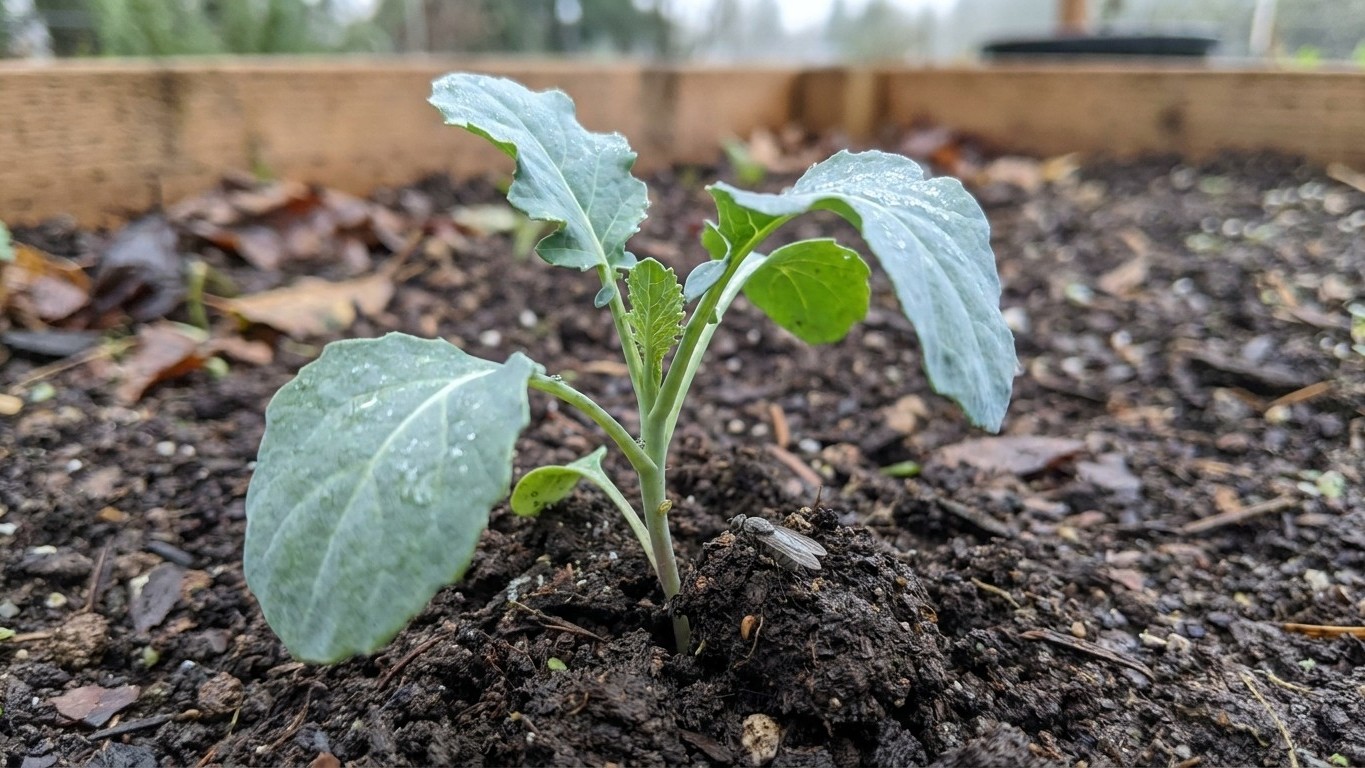

Cabbage maggot shows up in Washington gardens as soon as soil temperatures hold steady around 50°F, which typically means late March through April on the west side and a few weeks later east of the Cascades. The larvae tunnel into roots and stems of any brassica you’re growing, and once you see wilting seedlings on a cool, damp morning, the damage is already done underground. Stopping it means acting before the flies lay eggs, not after you spot the first droopy leaf.
When Cabbage Maggot Season Starts in Washington

Delia radicum, the fly behind this pest, spends winter as a pupa buried two to six inches deep in soil near last season’s brassica roots. It waits for sustained soil warmth, not just a sunny afternoon, before emerging as an adult. That single detail explains why timing varies so much across the state.
In the Puget Sound corridor, from Bellingham down through Olympia, the maritime climate delivers a slow, steady spring warm-up. Soil temperatures cross the 50°F threshold by late March in most years, and the first wave of adult flies, small gray insects about a quarter-inch long that look like miniature houseflies, starts hunting for host plants within days. Females lay eggs right at the soil line next to stems, often more than a hundred eggs per plant over a laying period of a week or two.
East of the mountains, in areas like Yakima, Spokane, and the Walla Walla valley, colder winter soil delays that first emergence by two to three weeks compared to the coast. But once irrigated fields and garden beds warm up in April and May, the timeline catches up fast. The bigger difference on the dry side of the state shows up in summer. Sustained heat above 85°F suppresses both adult activity and egg survival, so the second-generation pressure that hammers western Washington gardens in June and July often fizzles out in eastern counties.
Multiple Generations, Different Risk Windows
Washington gardeners typically deal with two to three generations per year, and the risk windows differ by region:
- Western Washington: generation one in April-May, generation two in June-July, and a mild third wave in September-October thanks to cool, wet fall conditions.
- Eastern Washington: a strong spring generation in April-May, a suppressed midsummer generation due to heat, and a rebound generation in September as temperatures drop.
- Palouse canola fields: growers and WSU researchers track soil degree-days to predict fly emergence for large-scale plantings, a model home gardeners can mimic just by tracking soil temperature with a basic probe thermometer.
That fall generation catches a lot of people off guard. Gardeners planting a second round of kale, turnips, or radishes for autumn harvest often assume the maggot threat ended with summer, but a cool, damp September in Seattle or Tacoma can trigger egg-laying just as aggressively as April does.
What Cabbage Maggot Damage Looks Like
The giveaway is a plant that wilts on a day when the soil is clearly moist enough. Because the larvae are chewing through root tissue and the lower stem, the plant can’t move water efficiently even with adequate irrigation. Lower leaves yellow first, growth stalls, and in seedlings the whole plant can collapse within a few days of transplanting.
Pull a suspect plant and the diagnosis is usually obvious. Roots show brown, water-soaked tunnels, sometimes with visible cream-colored larvae less than half an inch long still feeding inside. Secondary rot frequently sets in behind the tunneling, turning firm root tissue soft and foul-smelling, which is why heavily infested radishes, turnips, and rutabagas often show a slimy, rotted core even if the top growth still looks half-decent.
Every brassica in the garden is a potential host: cabbage, broccoli, cauliflower, Brussels sprouts, kale, collards, radish, turnip, rutabaga, and even ornamental relatives like sweet alyssum in some cases. Commercial canola fields in eastern Washington face the same pest, just at field scale, which is part of why regional monitoring data exists at all.
Stopping Cabbage Maggot in a Washington Garden
The most reliable control is physical exclusion, because once eggs are laid at the stem base, no spray reaches the larvae before they’ve already tunneled in. Floating row cover or fine insect netting installed at the moment of planting, and sealed tight against the soil on all sides, blocks adult flies from ever reaching the stem. This single step, done consistently, prevents more damage than any product applied after the fact.
For transplants going into open beds, cardboard or heavy paper collars cut into four-inch squares with a slit and a small center hole work as a low-tech barrier. Slide one around each stem at planting so it sits flush with the soil surface, and the female fly has nowhere to lay eggs near the base. Gardeners in Skagit and Whatcom counties, where brassica seed and vegetable production is common, have used this trick for decades because it costs almost nothing and needs no monitoring.
Timing Plantings to Dodge Peak Egg-Laying
Delaying spring transplants until soil consistently sits above 60°F pushes your crop past the first and most damaging emergence wave, since flies strongly prefer cooler soil for egg survival. On the west side, that often means holding cabbage and broccoli transplants until early May instead of mid-April. For fall crops, getting brassicas in the ground and covered before the September rains return in the Puget Sound region reduces exposure to that late-season generation.
Crop rotation matters more than most gardeners assume. Pupae overwinter in the same soil where the previous crop grew, so planting brassicas in the same bed year after year guarantees a resident population waiting to emerge each spring. Moving brassica plantings to a different section of the garden, ideally with a two-to-three-year gap, cuts local emergence numbers significantly.
Sanitation closes the loop. Pulling and disposing of all root debris after harvest, rather than tilling it back into the soil, removes a major overwintering site. Composting infested roots in a hot, actively managed pile can work, but a cold or slow compost heap just relocates the problem.
Biological and Barrier Options
Beneficial nematodes in the Steinernema feltiae species, applied to moist soil around the root zone, actively hunt and infect maggot larvae underground. They work best in soil that’s consistently damp and above roughly 50°F, conditions that match spring and fall pretty well on both sides of the state. Diatomaceous earth sprinkled in a ring around the stem base offers a modest mechanical barrier for adult flies walking across the soil surface, though it needs reapplication after rain or irrigation.
Yellow sticky cards placed at plant height near brassica beds give an early warning of adult activity, letting gardeners know when to tighten up row cover seals or hold off on new transplants for a week or two. It’s a low-effort way to track the emergence timing specific to your yard rather than relying on regional averages alone.
None of these tactics work as well in isolation as they do stacked together. A gardener in Bellingham running row cover, a two-year rotation, and fall sanitation is dealing with a fundamentally different pest pressure than one relying on a single method. The pest isn’t going away from Washington gardens, given how well the state’s cool, damp spring and fall conditions suit its life cycle, but consistent timing and exclusion keep it from becoming the reason a cabbage crop fails.