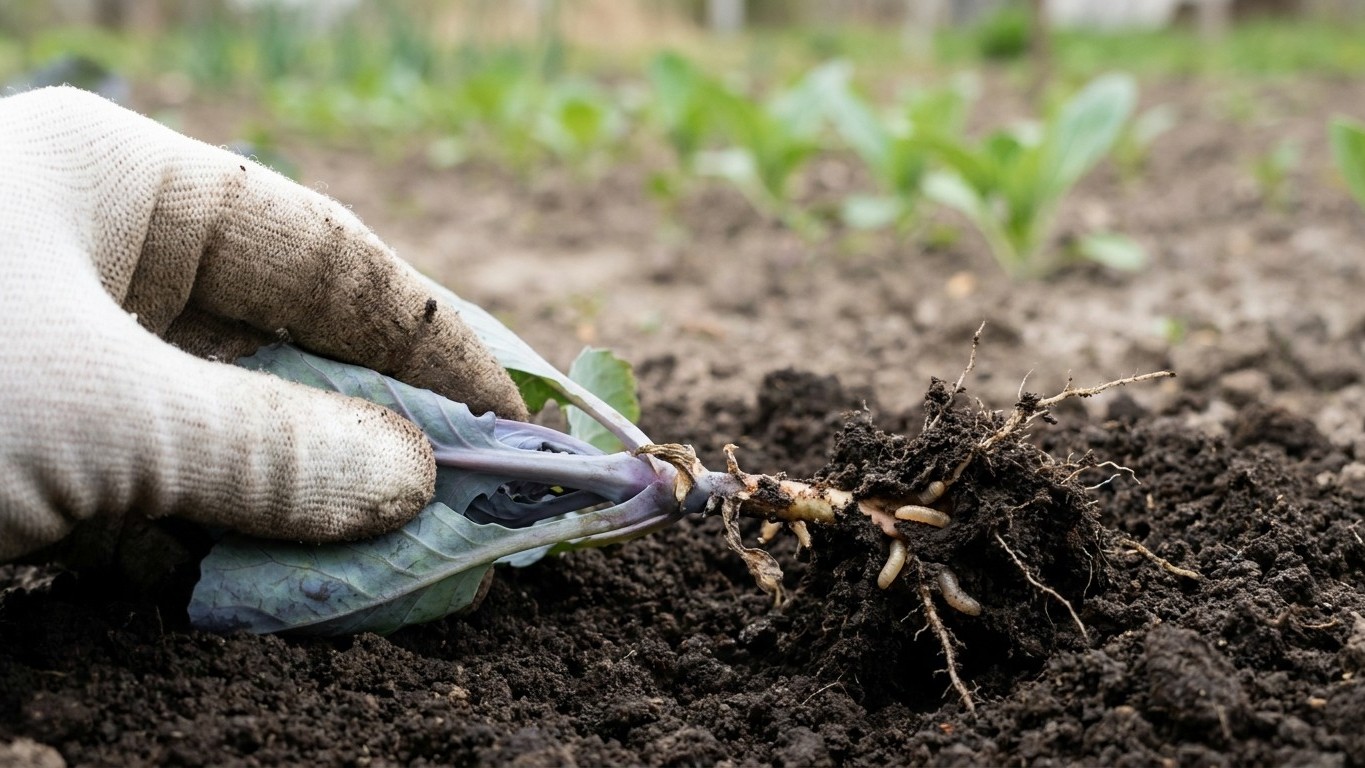

Cabbage maggot larvae start feeding on brassica roots in Wisconsin as soon as soil temperatures climb into the mid-50s°F, which typically means late April in the southern counties and mid-to-late May farther north. The pest runs on two generations most years, with a second wave of adult flies showing up in July and August. If your cole crops wilted for no obvious reason last spring, this root maggot is one of the top suspects, and timing your defenses around those two windows matters more than any single spray or trap.
What the Pest Actually Looks Like

The damage almost never comes from something you’ll spot crawling on a leaf. Cabbage maggot (Delia radicum) spends its destructive phase underground as a small, cream-colored larva, roughly a quarter inch long, tunneling through the roots and lower stems of cabbage, broccoli, cauliflower, kale, radishes, turnips, and rutabagas. The adult is a gray fly about the size of a housefly, easy to mistake for a common fruit fly if you’re not looking closely.
Above ground, the first sign is usually a plant that looks stunted or bluish-purple around the leaf edges, wilting even when the soil is moist. Pull that plant and you’ll often find tunnels riddled through the taproot, sometimes packed with brown frass. Younger transplants can die outright within a week or two of a heavy infestation, while older, more established plants tend to survive but produce smaller, misshapen roots. Radishes and turnips show the damage most dramatically since the maggots feed directly in the part you’re trying to harvest.
When Cabbage Maggot Shows Up in Wisconsin
Adult flies overwinter as pupae in the soil and emerge once the ground warms past a threshold biologists track with degree-day accumulation, using a base temperature around 43°F. In practice, that translates to first flight activity in southern Wisconsin (think Madison, Milwaukee, Beloit) sometime between late April and mid-May, with the flight peaking two to three weeks later. Growers in the central and northern parts of the state, from Wausau up through Rhinelander, usually see that same activity pushed back by two to four weeks depending on how slow the spring thaw runs.
Females lay eggs at the base of host plants, right at the soil line, and the eggs hatch within a few days into larvae that immediately start burrowing toward the roots. That short gap between egg-laying and root damage is why reactive treatments so often fail. By the time you notice wilting, the larvae have already been feeding for a week or more.
A second, usually smaller generation flies in mid-to-late summer, generally July into early August across most of the state. This second wave tends to do less damage to spring-planted crops that have already matured but can hit fall plantings of radishes, turnips, and late brassicas hard if those crops are going into the ground right as adults are laying eggs. Wisconsin’s short but intense fall harvest window for cole crops means a poorly timed late planting can walk straight into peak fly activity.
Cool, wet springs tend to favor higher maggot populations because moist soil helps eggs survive and larvae move through the soil more easily. A dry stretch in May can knock numbers down noticeably, which is one reason infestation severity swings so much from year to year even on the same piece of ground.
Signs You’re Dealing With Cabbage Maggot, Not Something Else
Wireworms and other root-feeding pests can produce similar wilting, but cabbage maggot damage is distinctive once you know what to check:
- Tunneling concentrated in the taproot and lower stem, rarely higher up the plant
- Small white eggs (about 1/8 inch) clustered at the soil line near the stem base
- Damage appearing in patches tied to specific rows or beds rather than scattered randomly
- Symptoms showing up within two to three weeks of transplanting or seeding brassicas
If you cut open the root and find hollow galleries with soft, discolored tissue rather than the club-shaped swelling typical of clubroot disease, you’re almost certainly looking at maggot damage rather than a soilborne pathogen.
What Actually Stops Cabbage Maggot in Wisconsin Gardens and Fields
Chemical sprays applied after wilting starts rarely help, since the larvae are already inside the root and out of reach. Effective control leans almost entirely on prevention, timing, and physical barriers rather than reactive treatment.
Row Covers Timed to Emergence
Floating row covers installed at transplanting, before adult flies start laying eggs, block the females from ever reaching the stem base. This is consistently the most reliable home-garden defense because it removes the egg-laying opportunity entirely rather than trying to kill larvae after the fact. The cover needs to go on immediately at planting and stay sealed at the edges with soil or pins, since flies will find any gap. Growers who wait even a few days after transplanting to cover their beds often lose the advantage, since females can lay eggs within hours of finding an exposed host plant.
Planting Timing to Dodge Peak Flight
Because the first generation’s flight window is fairly predictable by region, shifting transplant dates to land after the peak egg-laying period can reduce damage significantly. In southern Wisconsin, that often means either planting brassicas very early (before flies are active in numbers) or waiting until early June once the first flight has tapered off. For fall crops, backing off the planting date by a week or two to avoid the July flight can make the difference between a clean harvest and a wormy one.
Crop Rotation and Sanitation
Pupae overwinter in the soil where the previous season’s brassicas grew, so rotating cole crops to a different section of the garden or field each year, ideally a distance of at least several hundred feet, cuts down on the population that can find your plants come spring. Clearing out old brassica roots and stems after harvest rather than leaving them to decompose in place removes a food source and breeding site for any larvae still developing.
Tilling the soil in fall or early spring, before adults emerge, can physically disrupt pupae and expose them to predators like ground beetles and birds. This works best when done on a dry, sunny day rather than after rain, since the pupae are more vulnerable when the soil structure is broken apart and dried out.
Beneficial Nematodes and Biological Options
Entomopathogenic nematodes applied to the soil around transplants can attack maggot larvae before they do serious damage. These need moist soil and soil temperatures generally above 50°F to be effective, which lines up reasonably well with the timing of Wisconsin’s first fly generation. They’re not a standalone fix but work as one layer in a broader approach, particularly for gardeners who want to avoid synthetic insecticides.
Ground beetles, rove beetles, and certain parasitic wasps are natural predators of cabbage maggot eggs and pupae. Reducing tillage in areas that aren’t directly growing brassicas and avoiding broad-spectrum insecticide use nearby helps keep these predator populations around from one season to the next.
Resistant Varieties and Transplant Health
No commonly grown brassica variety is fully immune, but larger, well-established transplants generally tolerate maggot feeding better than seedlings direct-sown into cool spring soil. Starting plants indoors and transplanting them once they have a stronger root system gives them a head start before the first fly generation is even active. Direct-seeded radishes and turnips are more vulnerable simply because they spend their entire early life at the exact soil depth where eggs are laid.
Putting the Timing and Defenses Together
The practical playbook for Wisconsin growers comes down to matching two things: your region’s typical fly emergence window and a physical or cultural barrier that’s already in place before that window opens. A gardener in Dane County covering transplants by late April is working on a different clock than someone in Marathon County who might not need covers on until mid-May. Waiting to see damage before acting means the fight is already lost for that planting, since the larvae causing visible wilt have usually been feeding for a week or two by the time symptoms show.
Wisconsin’s brassica growers who track both generations, not just the spring flight, tend to have better luck with fall radishes and late cabbage too, since that second wave in July and August catches a lot of people off guard after they’ve already relaxed their spring precautions. Keeping row covers or a rotation plan in mind for fall plantings, not just the first crop of the season, closes a gap that costs a lot of gardeners their turnip and rutabaga harvest every year.