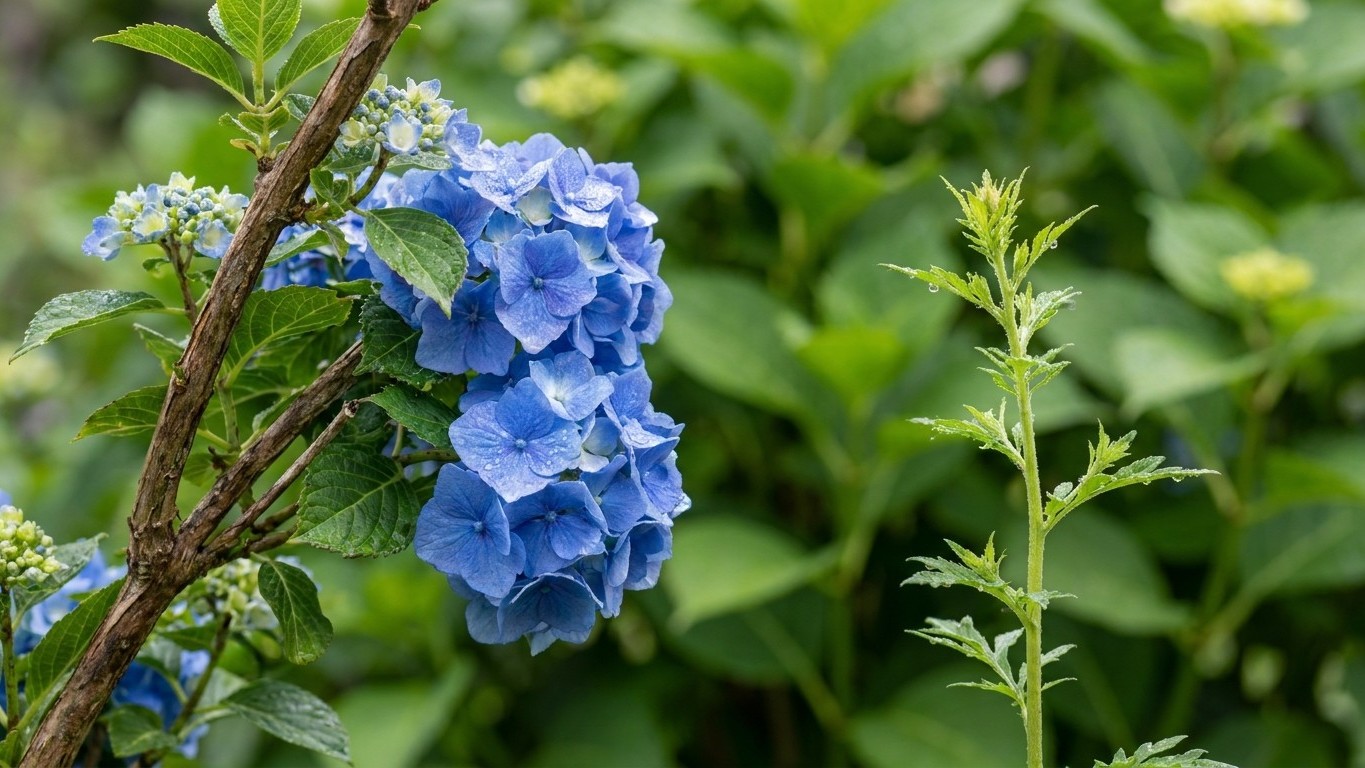

Arizona’s answer isn’t about frost at all: it’s alkaline desert soil. Most of the state’s ground is loaded with calcium carbonate, the same mineral that forms caliche, and that chemistry locks aluminum out of reach of hydrangea roots. Without available aluminum, bigleaf Hydrangeas bloom pink or red no matter how cold-hardy the cultivar is. Turning them blue means changing the soil, not the plant.
What this comes down to in Arizona

In the low desert around Phoenix, NOAA’s 1991-2020 climate normals show almost no reliable freeze at all. The station there recorded 32°F in just 6 of the last 30 springs, and NOAA lists the surrounding valley’s frost-free season as running a full 365 days. That absence of cold matters for a lot of garden decisions in this state, but it has nothing to do with why a hydrangea blooms pink here. The real switch is soil chemistry, and Arizona’s desert ground sits firmly on the alkaline side of that switch.
Bigleaf hydrangea, the species most gardeners mean when they picture a pink or blue mophead, changes color based on whether its roots can pull in aluminum. Aluminum is present in nearly all soil, but plants can only absorb it when the soil is acidic enough to dissolve it into a usable form. Arizona’s native ground, especially anywhere with caliche close to the surface, tends to sit well above neutral. That keeps aluminum bound up and unavailable, and the plant defaults to pink or red pigment in its sepals instead of blue.
The USDA Plant Hardiness Zone Map, built on average annual extreme minimum temperature, places Arizona anywhere from zone 4b to zone 10b depending on elevation. Phoenix sits at the warm end of that spread, while the high country runs cold enough to freeze hard every winter. That range explains which hydrangeas can survive the winter in a given part of the state, but it says nothing about bloom color. A hydrangea planted in Flagstaff and one planted in Phoenix can both turn out pink, for entirely different reasons tied to their local soil rather than their local winter.
Worth separating out here: not every hydrangea species responds to soil pH the same way. Panicle hydrangeas and smooth hydrangeas keep their genetic color regardless of aluminum uptake. If a plant in an Arizona yard refuses to shift toward blue no matter what gets added to the soil, checking the species tag is a faster fix than checking the pH meter.
Working it out for your own garden
Start with a soil test, not a bag of amendment. A basic pH kit from a garden center, or a sample sent to a county extension office, tells you where your ground actually sits. Desert soils frequently test above 7.5, sometimes higher near old caliche layers, and a hydrangea needs the soil closer to 5.5 or below before it can reliably pull in enough aluminum to turn blue. Guessing at this step wastes money and risks burning roots with too much amendment applied at once.
Once you know your starting pH, the method is incremental rather than a single treatment. Elemental sulfur or an aluminum sulfate product formulated for hydrangeas gets worked into the soil around the root zone, watered in, and left to act over several weeks. A gardener testing at 7.8 might apply a modest first dose, then retest six to eight weeks later rather than assuming one application solved it. Because caliche keeps releasing calcium carbonate into the root zone over time, that lowered pH tends to creep back up, which means this is a maintenance routine across multiple growing seasons, not a one-time fix.
Water source matters just as much as soil amendment. Much of Arizona’s municipal and well water is naturally hard, carrying dissolved minerals that push soil back toward alkaline with every watering. A gardener chasing blue blooms who keeps watering with straight tap water is fighting their own effort. Collected rainwater, or water run through a basic filter, avoids reintroducing the same minerals the soil amendment is trying to remove.
On timing: because the low desert rarely freezes, there is no narrow spring window forcing soil work into a few weeks the way there would be in a colder state. The real constraint is summer heat, which stresses hydrangeas enough that adding a strong soil amendment during the hottest months can do more harm than good. Working the soil in the shoulder seasons, when the plant is actively growing but not baking, gives amendments time to take effect without additional stress on the roots.
What changes across the state
Elevation is the biggest variable inside Arizona, and it works in two directions at once. The low desert around Phoenix and Tucson carries the most alkaline, caliche-heavy soil in the state, which pushes hardest toward pink blooms. Move up into the higher country around Flagstaff and the ponderosa pine belt, and soils tend to carry more organic matter and lean less aggressively alkaline, though they are rarely acidic enough on their own to guarantee blue without amendment.
Distance from irrigation water sources plays a role too. Areas relying on groundwater pumped through mineral-rich aquifers tend to have harder water than areas served by surface water systems, and that difference shows up in how fast a treated bed drifts back toward alkaline. A garden watered with hard well water will need more frequent pH correction than one on softer municipal supply, even if the starting soil test looked identical.
North versus south inside the state tracks mostly with elevation rather than latitude. Northern Arizona’s higher, cooler ground behaves differently from the low desert stretching across the southern half of the state, but the difference is really about how high above sea level a given yard sits, not simply which direction it faces on a map.
| Region | General soil tendency | Frost profile | Color outcome without amendment |
|---|---|---|---|
| Phoenix / low desert | Strongly alkaline, caliche-heavy | Frost-free most years | Pink or red |
| Mid-elevation valleys | Moderately alkaline | Occasional light frost | Pink, some drift toward purple |
| Flagstaff / high country | Less alkaline, more organic matter | Regular hard freezes | Pink to purple, blue possible with amendment |
The mistakes this state punishes

Watering with straight tap water while trying to turn blooms blue is the most common failure. The amendment lowers pH temporarily, then the next dozen waterings with hard, mineral-rich water undo the work before the plant ever shows a color change. Switching to rainwater or filtered water for at least the amended plants fixes this without much added cost.
Dumping a large dose of aluminum sulfate onto dry, untested soil is the second. In already mineral-dense desert ground, an aggressive single application can scorch roots rather than gradually shift pH, and the plant shows stress instead of blue blooms. Smaller, repeated doses tied to actual test results work better than one large gamble.
Planting a hydrangea in full afternoon sun in the low desert and blaming the soil when it struggles is another one worth naming. Heat stress, not soil chemistry, is what kills or stunts hydrangeas in Phoenix-area yards most often, and a stressed plant won’t hold color changes well regardless of pH. Morning sun with afternoon shade solves more problems here than any amendment does.
Finally, treating a Flagstaff-area garden like a Phoenix one ignores a real difference: the high country actually freezes hard most winters, and a hydrangea chosen or timed for the frost-free low desert can be caught off guard by an early fall freeze up there.
Checking this against your county
A statewide description of Arizona’s soil is a starting point, not a guarantee for any one yard. Caliche depth, irrigation water hardness, and even the previous use of a lot can shift pH readings block by block. A county extension office can run or interpret an actual soil test for your address, and the University of Arizona Cooperative Extension network, reachable through extension.arizona.edu, is the right place to start before buying amendments based on a general rule.
Common questions
Can I turn an Arizona hydrangea blue permanently?
Not without ongoing maintenance. Caliche and hard water keep pushing soil back toward alkaline, so the color shift holds only as long as you keep testing and reapplying amendment.
Does the USDA hardiness zone affect bloom color?
No. Hardiness zone tracks winter cold survival, not bloom color, which depends on soil pH and aluminum availability instead.
Will all hydrangea types change color with soil treatment?
Only bigleaf hydrangeas respond this way. Panicle and smooth hydrangea varieties keep their genetic color regardless of soil pH.
Is Phoenix tap water part of the problem?
It can be, since much of Arizona’s municipal and well water runs hard and alkaline, which works against any soil amendment aimed at lowering pH.