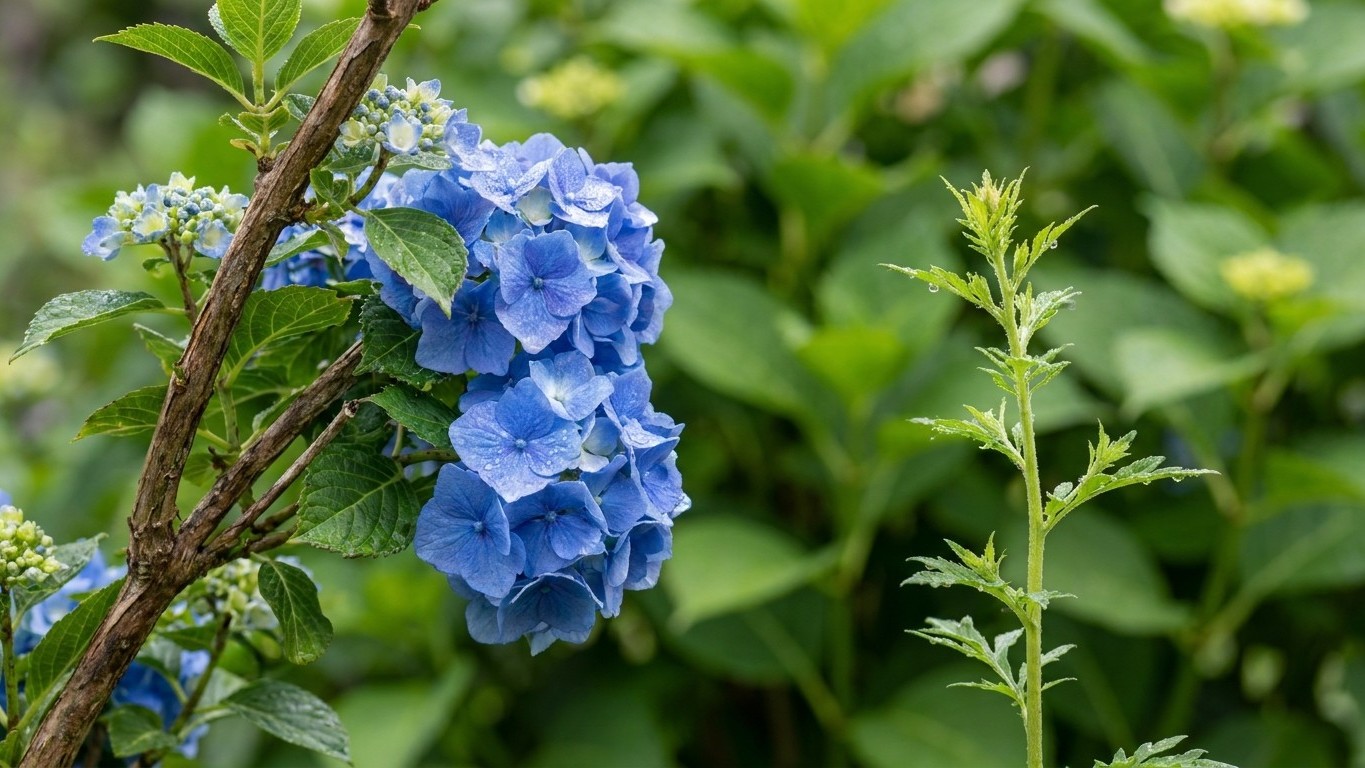

Hydrangea pruning in Arizona doesn’t follow the calendar most gardening advice assumes. In the low desert around Phoenix, frost is so rare (32°F showed up in only 6 of the last 30 springs, and NOAA lists a 365-day frost-free season) that timing your cuts around a freeze date makes no sense. What matters instead is the type of hydrangea you’re growing and how it holds up against summer heat.
What this comes down to in Arizona
Around Phoenix, where the reference climate data comes from, hydrangea pruning timing is driven almost entirely by bloom type and heat exposure, not by frost. NOAA’s 1991-2020 normals for that station show no dependable freeze window at all in most years; the rare cold snap that does occur runs from late December into mid-January, and even then it doesn’t happen every year. That single fact changes the whole pruning conversation compared to states where gardeners wait for a last-frost date.
Bigleaf and oakleaf Hydrangeas set their flower buds on old wood, meaning the stems that grew the previous year carry this year’s blooms. Prune those the same way you would anywhere else: right after the flowers fade, before the plant starts forming next year’s buds. In low-desert Arizona, that pruning window lands earlier in the year than it would in a cooler climate, because the bloom cycle itself runs earlier when spring warms up fast and summer heat arrives hard on its heels.
Panicle and smooth Hydrangeas bloom on new wood, the growth that comes up fresh each year. Those get pruned during dormancy, and this is where the desert really diverges from typical advice. Without a reliable freeze, there’s no true dormant season in the way a northern gardener would recognize it. The closest equivalent is that narrow, rare-cold stretch late in December through mid-January, when growth slows to its yearly minimum even without a hard freeze. That’s the practical dormancy window for new-wood pruning in the low desert.
Higher elevations inside Arizona, think Flagstaff and the surrounding high country, sit at the other end of the state’s USDA Plant Hardiness Zone range of 4b to 10b. Those areas freeze hard and repeatedly, and pruning timing there has to respect an actual frost risk to buds and stems, not just a heat-driven bloom cycle. The zone range itself, built on average annual extreme minimum temperatures, is the clearest signal of how differently the state behaves from one elevation to the next.
Working it out for your own garden
Start by identifying which of the two bloom types you’re dealing with, because that decision alone determines whether you’re pruning on a bloom-driven schedule or a dormancy-driven one. Old-wood bloomers (bigleaf, mophead, lacecap, oakleaf) get pruned within two to four weeks after the flowers fade. New-wood bloomers (panicle, smooth, most “Annabelle” types) get pruned while they’re dormant, before spring growth resumes.
For an old-wood bloomer in the Phoenix area, work backward from when your blooms typically finish. If flowering wraps up in early summer, and you give the plant two to four weeks to recover before it begins forming next year’s buds, that puts the pruning window in early-to-mid summer. Wait too long, and you’re cutting into the wood that would have carried next season’s flowers. Prune too early, before the blooms have finished, and you lose the last of this year’s display for nothing.
For a new-wood bloomer in that same low-desert setting, count on the state’s one dependable slow-growth stretch, the rare-cold window that NOAA records show running from late December into mid-January. Even in years when no actual freeze occurs, this remains the period of least active growth, and it’s the closest thing the low desert has to a true dormant pruning window. Cut back hard here, since the plant will push all its new growth, and its flower buds, from wood that emerges afterward.
In the high country, the arithmetic changes because frost is real and recurring. A gardener there needs to know the local last-freeze risk before pruning old-wood bloomers, because a late freeze after pruning can damage the exposed cuts or kill the very buds the plant needs to flower. That figure isn’t part of the reference dataset for this page, since it describes the Phoenix station specifically, so a Flagstaff-area gardener needs a local frost record, not the Phoenix numbers, before finalizing timing.
Working out which category your plant falls into is worth double-checking against the tag or catalog description it came with, since “hydrangea” alone doesn’t tell you whether you’re dealing with old or new wood. Getting that one detail wrong is the single most common reason gardeners cut off a whole year’s blooms without meaning to.
What changes across the state
Arizona’s USDA hardiness range of 4b to 10b is unusually wide for one state, and that spread comes almost entirely from elevation. The low desert around Phoenix sits at the warm end of that range, with mild winters and a frost-free season that NOAA records as a full 365 days in most years. Flagstaff and the surrounding high country sit at the cold end, with hard, repeated freezes that shape an entirely different pruning calendar.
Elevation is the main driver here, more than distance from any coastline (Arizona has none) or a large lake. As you move up from the desert floor toward the Mogollon Rim and the high country beyond it, average minimum temperatures drop steadily, and the rare, mild cold snap that Phoenix might see once or twice a decade becomes a routine, hard freeze at higher ground. That shift changes not just whether frost happens, but how long the cold season lasts and how much it matters for exposed pruning cuts.
Central Arizona, including areas like Prescott and the Verde Valley, sits at an in-between elevation and behaves accordingly: colder than Phoenix, milder than Flagstaff, without a single figure in the reference data to pin down exactly where that middle ground lands. A gardener in one of these transitional zones shouldn’t apply the Phoenix rare-cold window directly, since local frost risk is almost certainly higher, nor should they assume Flagstaff’s harsher freeze pattern applies either.
The practical takeaway is that a statewide hardiness range describes the extremes, not the middle. Anyone gardening outside the low desert needs to treat the Phoenix-based frost information here as a baseline for comparison, not a direct instruction, and should weigh their own elevation before setting a pruning date.
The mistakes this state punishes
The most common error among transplants to Arizona is pruning old-wood bloomers on a winter schedule out of habit, the way they might have in a cooler state. In the low desert, that habit removes the very stems that were about to carry next year’s flowers, because the plant never experienced the freeze that would have made a winter cut harmless elsewhere.
A second mistake is pruning during the hottest stretch of the year, when fresh cuts are exposed to intense sun and heat stress at the same time. New wood, tender and just emerging, doesn’t hold up well when it’s forced to recover from a cut while also fending off extreme desert heat. Timing the cut for the cooler, slower-growth stretch late in the year avoids stacking those two stresses on top of each other.
A third mistake, more specific to gardeners in the high country, is borrowing the low-desert logic wholesale and assuming frost isn’t a real concern anywhere in the state. Flagstaff and similar elevations sit at the cold end of Arizona’s 4b to 10b hardiness range, and a late freeze there can still damage a plant that was pruned as though it lived in Phoenix. What works at one end of the state’s elevation range can actively harm a plant at the other end.
The fix in every case is the same: match the pruning method to the bloom type first, then adjust the timing to the actual local climate, rather than to habit or to a single statewide reference point.
Checking this against your county
Everything above is built around one reference station near Phoenix, and Arizona’s terrain makes that a starting point rather than a rule. Before finalizing a pruning date, especially outside the low desert, check with your county’s Cooperative Extension office, reachable through the University of Arizona Cooperative Extension, for local frost records and hydrangea-specific guidance suited to your elevation and microclimate.
Common questions
Should I prune hydrangeas in winter in Phoenix the way I would in a colder state?
No. Without a reliable freeze, there’s no true winter dormancy to prune around. Base the timing on bloom type instead: old-wood bloomers right after flowering, new-wood bloomers during the coolest, slowest-growth stretch late in the year.
How do I know if my hydrangea blooms on old or new wood?
Check the plant tag or catalog description when you bought it. Bigleaf, mophead, lacecap, and oakleaf types bloom on old wood. Panicle and smooth types, including most “Annabelle” varieties, bloom on new wood.
Does the pruning timing change in Flagstaff compared to Phoenix?
Yes, significantly. Flagstaff sits at the cold end of Arizona’s 4b to 10b hardiness range and experiences hard, repeated freezes, so pruning has to account for actual frost risk to buds and cuts, unlike the low desert where frost rarely factors in at all.
What happens if I prune an old-wood bloomer too late in the low desert?
You risk cutting into the stems that were about to set next year’s flower buds, since those form on the wood shortly after this year’s blooms fade. Pruning too late trades away the following season’s display.