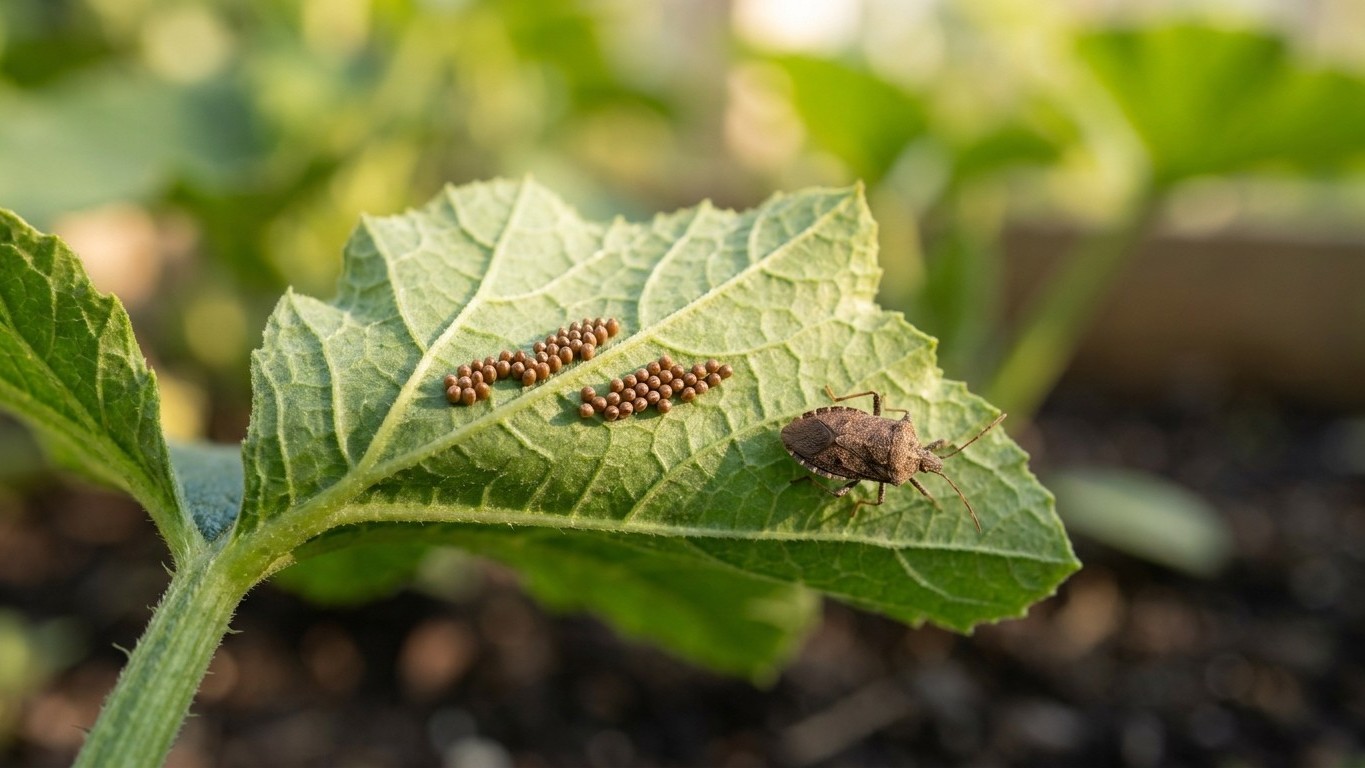

Squash bugs land in Indiana gardens right around Memorial Day, and they don’t leave until the first hard frost knocks back the vines in October. If your zucchini or pumpkin leaves are wilting despite plenty of water, and you’re finding clusters of bronze eggs on the undersides of leaves, you’re probably dealing with this pest right now, not some fungal disease or drought stress.
When Squash Bugs Show Up in Indiana

Indiana sits mostly in USDA hardiness zones 5b through 6b, and squash bugs track soil temperature more than the calendar. Adults overwinter as far north as Lake County, tucked under leaf litter, wood piles, and old squash vines left in the garden over winter. Once soil temps climb past 60 degrees Fahrenheit, usually mid to late May in southern counties and early June up north, those adults crawl out hungry and start looking for young cucurbit plants.
Egg-laying peaks in June. By early July, nymphs are hatching in droves across the state, from Evansville to South Bend. Southern Indiana, with its longer growing season, often sees a second generation move in by August, meaning gardeners in Posey or Knox County deal with two waves of pressure in a single summer. Farther north, one generation is typical, but it’s a long, destructive one that runs through September.
Activity tapers off after the first frost, which hits northern Indiana around mid-October and southern counties closer to early November. New adults from the summer’s final brood don’t die off, though. They find shelter and wait out winter, ready to repeat the cycle.
Identifying Squash Bugs Correctly
Mistaking squash bugs for stink bugs or other beetles is common, and it leads to the wrong treatment. Adult squash bugs measure about 5/8 inch long, flat-backed, and shield-shaped, with a brownish-gray body that sometimes shows faint orange stripes along the abdomen edges. When crushed, they release a sharp, unpleasant odor, similar to a stink bug but not identical.
The eggs are the giveaway most gardeners miss. They’re copper or bronze colored, laid in tight clusters on the underside of leaves, often right where a leaf vein forks. A single female can lay over 20 eggs at once, and she doesn’t stop at one batch. Nymphs emerge gray with black legs, growing darker and more armored as they molt through five stages before reaching adulthood, a process that takes roughly four to six weeks depending on temperature.
Squash, pumpkin, and gourds are the preferred targets. Yellow summer squash and pumpkins tend to get hit hardest, while cucumbers and melons are lower on the menu but not immune, especially once preferred hosts are already stressed or removed.
The Damage: Why Wilting Isn’t Always Drought
Squash bugs feed with piercing mouthparts, injecting saliva that breaks down plant tissue and blocks nutrient flow. The result looks a lot like water stress: leaves wilt, turn black at the edges, then crisp up and die, starting with the leaves closest to where the bugs are feeding. Gardeners often respond by watering more, which doesn’t help because the plant’s plumbing is damaged, not dry.
Left unchecked, heavy infestations can kill young plants outright within a couple of weeks. Squash bugs also carry cucurbit yellow vine disease, a bacterial infection that causes sudden vine collapse late in the season, right around harvest time when a healthy plant should be producing. That one-two punch of feeding damage plus disease transmission is why squash bugs rank among the more frustrating vegetable garden pests in the Midwest, not just an occasional nuisance but a genuine threat to a season’s harvest.
What Actually Stops Squash Bugs
Cultural Controls That Work Before Bugs Arrive
Timing and sanitation do more heavy lifting than most people expect. Clearing out old squash vines and debris each fall removes the shelter adult bugs need to survive an Indiana winter. Rotating cucurbits to a different part of the yard each year, rather than planting squash in the same bed season after season, breaks the cycle since overwintering adults emerge close to where they spent the fall.
Staggered planting helps too. Setting out a few transplants in mid-May, ahead of the main wave, then following with a second planting a few weeks later, means not all your squash is vulnerable during peak nymph activity in late June and July. Straw or plastic mulch under plants makes the ground less inviting for bugs looking for a place to hide during the day, since squash bugs tend to cluster at the base of plants and under mulch or boards when temperatures spike.
Physical Removal, Old-School but Effective
Handpicking remains one of the most reliable methods home gardeners have, especially early in the season when populations are still small. Check the undersides of leaves weekly starting around Memorial Day, scraping off egg clusters with a butter knife or piece of tape before they hatch. Drop adults and nymphs into a bucket of soapy water rather than just brushing them off the plant, since they’ll simply climb back on otherwise.
A trick that’s held up over generations of gardeners: lay a flat board or piece of cardboard near the base of squash plants in the evening. Adult squash bugs cluster underneath it overnight seeking shelter, and in the morning you can flip the board and remove them in bulk. It sounds almost too simple to work, but it’s a genuinely effective, chemical-free tactic for keeping numbers down.
Floating row covers offer strong protection for young plants, but they need to come off once flowers open so pollinators can reach the blossoms. Leaving covers on through bloom protects against squash bugs while also preventing the fruit set you’re trying to grow in the first place.
When Treatment Becomes Necessary
Nymphs are far easier to control than hardened adults, which is why scouting matters more than reacting after damage appears. Insecticidal soap and neem oil work reasonably well on young nymphs when applied directly, ideally in the early morning or evening when bees aren’t actively foraging. Adults have a tougher exoskeleton and shrug off these milder options more easily, which is another reason early intervention beats catching up later in the season.
Broad-spectrum insecticides can knock back heavier infestations, but they also kill the tachinid flies and other natural predators that help keep squash bug populations in check over time. The EPA’s pollinator protection guidance recommends applying any insecticide in the evening and avoiding spray during bloom, since squash flowers open in early morning and are actively visited by bees for much of the day. Anyone treating an infestation should read product labels carefully and time applications to protect the pollinators the plant depends on for fruit set.
Building Resistance Into Next Year’s Garden
Some squash varieties hold up better against squash bugs than others. Butternut squash, in particular, tends to show more resistance than zucchini or yellow crookneck, likely due to differences in stem structure and leaf toughness that make feeding harder. Gardeners who’ve struggled year after year with the same beds sometimes get better results simply by switching which cucurbit varieties they prioritize, planting more butternut and less zucchini in problem areas.
Fall cleanup deserves more attention than it usually gets. Pulling and destroying squash vines right after harvest, rather than letting them sit through October, removes overwintering habitat before adult bugs settle in for the season. Turning the soil in vegetable beds during late fall can also expose overwintering adults to cold and predators, cutting down on the population that emerges the following May.
None of these methods work perfectly in isolation. Combining sanitation, timed planting, hand removal, and targeted treatment when nymphs first appear gives Indiana gardeners the best shot at getting a full harvest before squash bugs take their share.
Related guides
- Squash bug in Michigan: When It Shows Up and What Stops It
- Squash bug in Kentucky: When It Shows Up and What Stops It
- Squash bug in Iowa: When It Shows Up and What Stops It
- Squash bug in Kansas: When It Shows Up and What Stops It
- Seedcorn maggot in Indiana
- Squash bug in Delaware: When It Shows Up and What Stops It
- Squash bug in Oklahoma: When It Shows Up and What Stops It