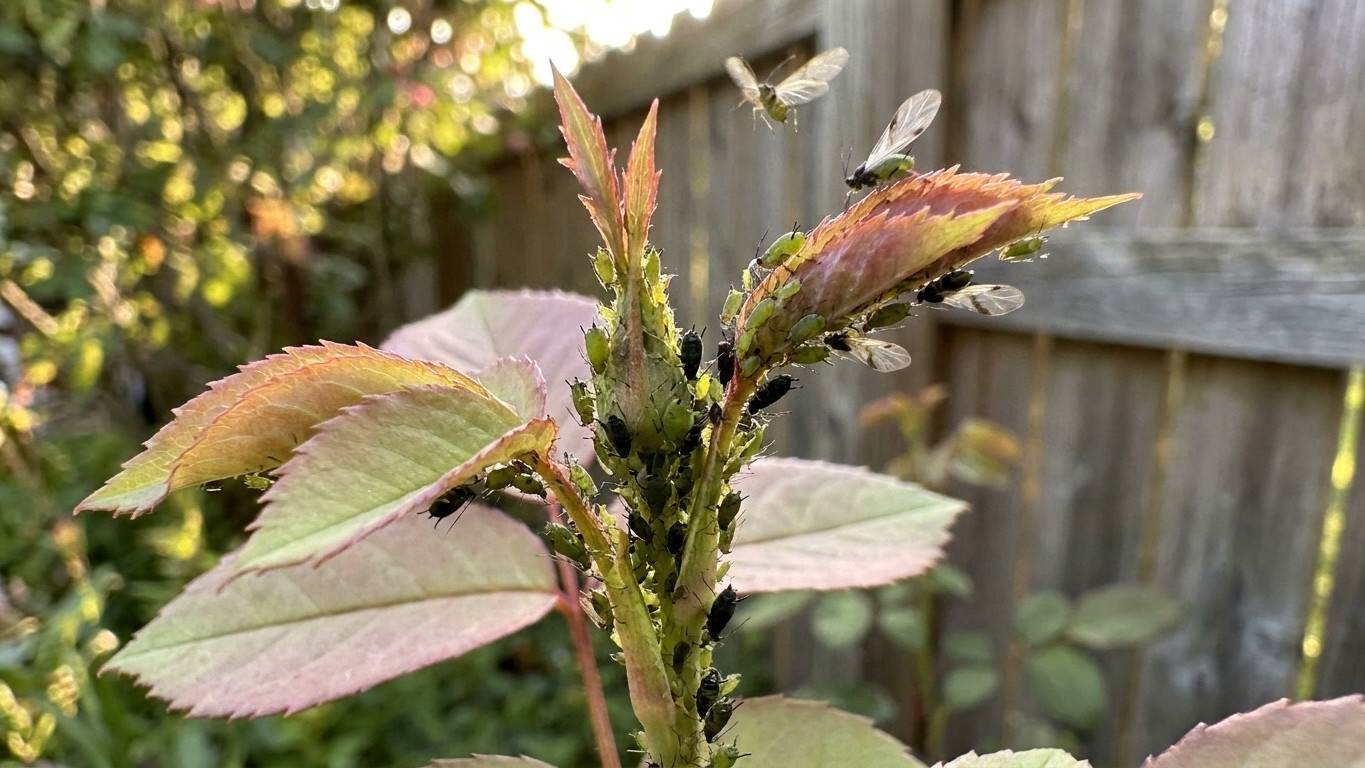

Aphids typically appear across Utah in mid to late April as fruit trees and roses push new growth, then surge again in September when cooler nights slow plant defenses. Between those two windows, populations can explode within two weeks on a stressed plant, which is why so many Utah gardeners swear the bugs came “out of nowhere.” They didn’t. They were waiting for exactly the right combination of tender leaves and warm, dry air.
When Aphids Actually Show Up in Utah

Timing shifts depending on where you live in the state. Along the Wasatch Front, from Ogden down through Provo, aphids start feeding on rose buds and aspen leaves as soon as daytime temps hold above 55 degrees for a stretch, usually the last two weeks of April. In St. George and the Dixie corridor, where spring arrives three to four weeks earlier, aphids can be active on citrus and stone fruit as early as mid-March. Higher elevation towns like Park City or Logan see the first wave later, often not until May, because new growth on trees and shrubs simply hasn’t emerged yet.
A second, often larger population spike hits in late August and September. Summer heat actually slows aphid reproduction somewhat, since females struggle to produce as many live young once temperatures push past 90 degrees for extended periods. When nights cool down and irrigation keeps landscape plants pumping out soft new growth, aphids rebound fast. This fall generation is the one that often produces winged forms, the ones you’ll see drifting onto porches and window screens on warm afternoons.
Home gardeners in northern Utah frequently notice a third, smaller flush in early October on late-season vegetables like kale and broccoli, crops that stay tender well after most other plants have toughened up for winter.
Why Utah’s Climate Feeds Aphid Outbreaks
Utah is one of the driest states in the country, and that dryness actually works in aphids’ favor more than people expect. Heavy rain physically knocks aphids off plants and disrupts their feeding, something the Wasatch Front and southern Utah rarely get during the growing season. Without that natural pressure, colonies build up undisturbed on anything getting regular water: lawns, drip-irrigated flower beds, and fruit trees on automatic sprinklers all create the humid microclimate aphids prefer, even while the surrounding air stays bone dry.
Fertilizer habits make things worse. Aphids feed on plant sap, and sap loaded with nitrogen is basically a buffet. Utah’s alkaline, often nutrient-poor soils push a lot of homeowners toward heavier nitrogen fertilization to get green lawns and lush roses. That extra nitrogen produces the soft, fast-growing tissue aphids are built to exploit. A rose bush pushed hard with fertilizer will almost always carry a heavier aphid load than one grown on a lean feeding schedule.
Then there’s the ant factor, which surprises a lot of people. Several ant species common in Utah yards, including odorous house ants and pavement ants, actively farm aphids for the honeydew they excrete. Ants will carry aphids to new growth, defend them from ladybugs and lacewings, and even move them indoors to overwintering spots on houseplants. If you’re seeing ant trails running up a tree trunk or rose cane, there’s a decent chance they’re tending an aphid colony you haven’t spotted yet.
Signs You Actually Have an Aphid Problem
Curled or puckered new leaves are usually the first visible clue, especially on roses, cherry trees, and peppers. Peel back a curled leaf and you’ll often find a cluster of small, soft-bodied insects clustered on the underside, ranging from pale green to black depending on the species and host plant. Utah landscapes commonly host green peach aphids on vegetables, rose aphids on, unsurprisingly, roses, and woolly aphids on apple and crabapple trees, the last of which look almost like tiny cotton tufts.
Honeydew is the giveaway most people notice before they ever see the insect itself. It’s a sticky, clear residue aphids excrete after feeding, and it coats leaves, patio furniture, and parked cars underneath infested trees. Left alone, honeydew grows a black fungus called sooty mold, which can coat entire branches and block enough sunlight to weaken the plant over time. If your car has a persistent sticky film under a street tree every August, that’s aphids, not sap or pollution.
- Distorted, curled, or yellowing new growth
- Sticky residue on leaves, walkways, or vehicles below trees
- Black sooty mold coating leaf surfaces
- Visible ant trails moving up plant stems
- Clusters of small soft-bodied insects on stem tips and leaf undersides
What Actually Stops Aphids in a Utah Yard
A hard spray of water from a garden hose remains one of the most effective and cheapest tools available. Aphids have weak mouthparts anchored into plant tissue, and a strong stream dislodges them without harming the plant. Doing this every two or three days during a population spike, especially on roses and vegetable transplants, can knock numbers down enough that natural predators catch up.
Insecticidal soap and horticultural oil work well as a next step, particularly on smaller shrubs and vegetable plants where thorough coverage is realistic. Both need direct contact with the insect to work, so spraying the undersides of leaves matters more than soaking the top surface. Neem oil offers similar contact control while also disrupting feeding and reproduction over repeated applications, though it should be applied in the evening to avoid harming pollinators visiting open blooms.
Beneficial insects handle a lot of the heavy lifting if you let them. Ladybugs, lacewing larvae, and parasitic wasps are already present in most Utah landscapes and can consume enormous numbers of aphids in a season. Broad-spectrum insecticides wipe these predators out along with the aphids, which often leads to worse outbreaks later because the natural check on the population is gone. Utah State University Extension has long recommended reserving stronger chemical treatments for severe infestations on high-value plants, rather than routine spraying.
Cutting back on nitrogen fertilizer, particularly on roses and lawns bordering vegetable beds, reduces the soft new growth aphids prefer without sacrificing overall plant health. Pruning out heavily infested shoot tips in early spring, before populations build, also removes a large percentage of the colony in one pass. For fruit trees, a dormant oil application in late winter, before buds break, smothers overwintering eggs and can meaningfully reduce the size of the first spring generation.
When to Call a Pest Control Professional
Most aphid problems on ornamental plants and garden vegetables respond to the steps above within a couple of weeks. Professional treatment becomes worth considering when a mature shade tree shows heavy woolly aphid activity on the trunk or major limbs, since reaching that canopy safely and effectively usually requires equipment homeowners don’t have. It’s also worth a call if honeydew and sooty mold have built up for multiple seasons on the same tree, a sign the infestation has outpaced what spot treatments can manage, or if ant colonies tending the aphids have moved into the structure of a home itself.
One detail Utah homeowners rarely expect: aphid outbreaks tend to be worse on trees planted near reflective surfaces like light-colored concrete or stucco walls, where bounced heat and light stress the plant just enough to trigger the soft growth aphids target first.