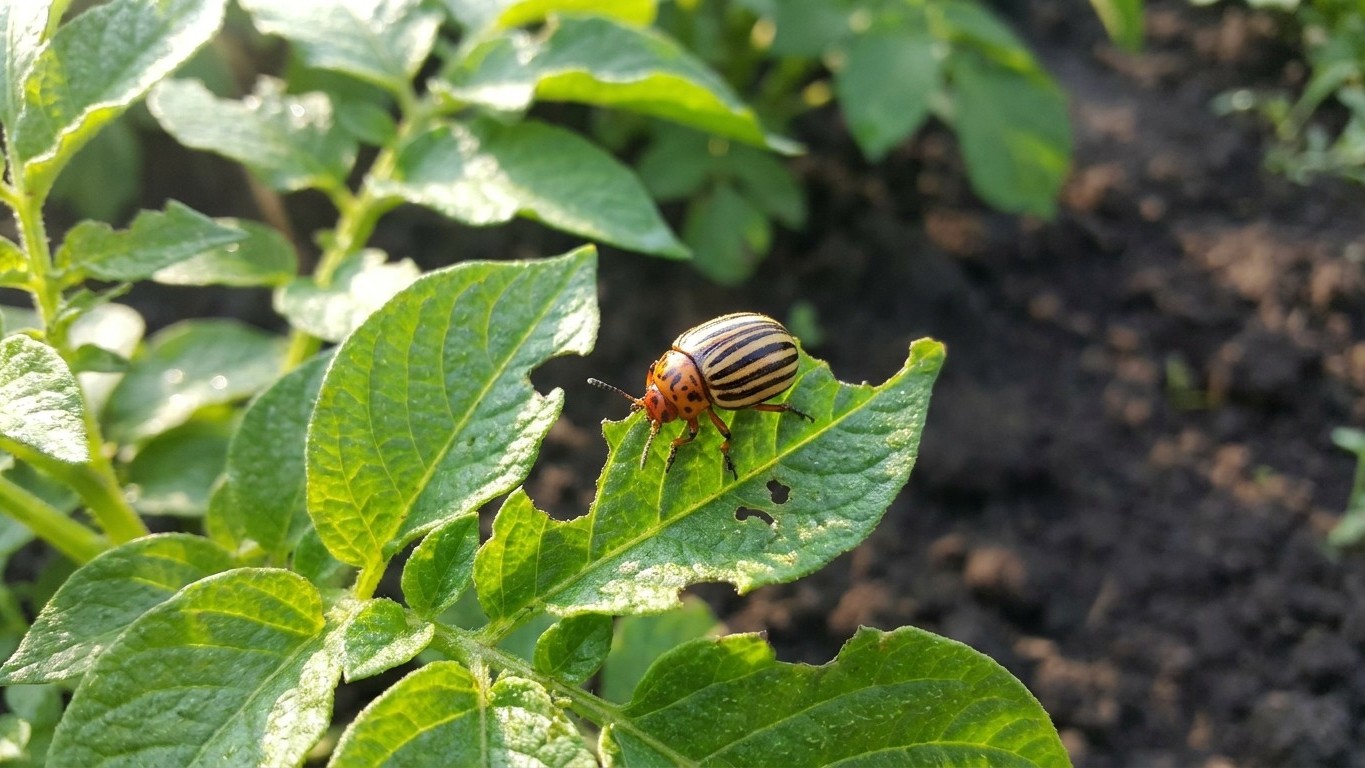

Five. Of the twelve garden insects SDSU Extension documents for South Dakota, five feed on potato, and the Colorado potato beetle does the most visible harm. The others chew young leaves, tunnel into tubers where you can’t see them, or show up late in dry spells. The remaining seven belong to squash, cucumbers, cabbage and asparagus. Timing separates them, and the season here is short. For more on the crop itself, see Growing Potatoes in South Dakota.
Which pests attack potato in South Dakota

SDSU Extension documents these garden insects for the state: asparagus beetles, blister beetles, cabbage looper, Colorado potato beetle, cucumber beetles, diamondback moth caterpillar, flea beetles, grasshoppers, imported cabbageworm, squash bug, squash vine borer and wireworms. That is the full list, and nothing gets added to it here. Documented in the state is not the same as documented on potato, so the list needs sorting before it means anything for a potato row.
The five that eat potato
- Colorado potato beetle: the namesake pest. Adults and larvae both chew potato foliage.
- Flea beetles: tiny, jumpy beetles that chew small holes in leaves, hardest on young plants.
- Wireworms: soil-dwelling larvae that bore into tubers.
- Grasshoppers: generalist chewers that will strip a potato leaf as readily as anything else.
- Blister beetles: adult beetles that feed on leaves, often in groups. Wear gloves if you handle them, because they can raise blisters on skin.
The Extension list covers vegetable gardens generally, so it doesn’t say by itself which crop each insect prefers. That sorting comes from what each insect is known to feed on.
The seven that belong elsewhere
Squash bug and squash vine borer live on squash, pumpkins and their relatives. Cucumber beetles follow the cucumber and melon family. The cabbage looper, the diamondback moth caterpillar and the imported cabbageworm are cabbage-family insects, feeding on broccoli, kale and cabbage. Asparagus beetles need asparagus. An occasional caterpillar or beetle may wander onto a potato leaf, but none of these seven is drawn to a potato patch or shows up on it as a regular problem. If you find one of them on your potatoes, treat it as a stray and look harder for the real culprit.
When each one shows up, and what it does first
The calendar starts with your frost date. The NOAA NCEI 1991-2020 Climate Normals for the reference airport station (USW00014944) put the last spring frost, at 32F in the 30-70% probability band, between April 29 and May 9. That is one airport, not your garden. Suburban and rural plots usually see the last spring frost one to two weeks later, and more at elevation. A first fall frost figure is not published here, so check that with your county office too. Count your planting back from your own date using When to Plant Potatoes in South Dakota: Counting Back From Your Last Frost.
Right after the plants emerge
Flea beetles come first, and the symptom is a leaf peppered with tiny round holes, worst on the youngest plants. Adult Colorado potato beetles arrive about the same time. They overwinter in the soil, so they are already nearby when shoots break the surface. What you see first is chewed leaf edges and a few striped adults. Soon after, look on the undersides of leaves for clusters of eggs, then for the humpbacked larvae that do the heaviest feeding. SDSU Extension’s list doesn’t give emergence dates for either insect, so the honest marker is your own planting date and the first true leaves, not a calendar month.
Midseason and later
Grasshoppers and blister beetles are summer problems. Grasshoppers tend to work in from weedy edges and ditches, leaving ragged, chewed leaves, and pressure builds in hot, dry stretches. Blister beetles show up as groups of adults on the foliage once the season is well along. Wireworms are the odd one out. They have been in the soil since planting, and you usually learn about them only when you dig and find narrow tunnels in tubers. Nothing above ground warns you, which is why the garden’s history matters: wireworm trouble is more likely where grass or sod was growing recently.
Telling the damage apart from everything else
Holes and yellow leaves have many possible causes, and insects are only some of them. The mistake that costs the most is treating for an insect you never found. Look at the plant, under the leaves, and at the soil before deciding anything, and if the evidence stays unclear, take it to your extension office rather than guessing.
A quick comparison
| What you see | Could point toward | What settles it |
|---|---|---|
| Many small round holes in young leaves | Flea beetles; hail or wind damage | Tiny beetles that hop when you brush the leaf |
| Chunks missing, ragged edges, dark droppings | Colorado potato beetle larvae; grasshoppers | Larvae or droppings on the plant, egg clusters on leaf undersides |
| Lower leaves yellowing, no chewing | Nutrient shortage; water stress; disease | No insects found on close inspection; ask extension |
| Wilting in the afternoon that recovers by morning | Moisture stress | Dry soil a few inches down; recovery overnight |
| Curled, mottled, stunted plants | Virus, often carried in uncertified seed | Whether the seed was certified; extension can advise on testing |
| Narrow tunnels inside tubers | Wireworms | Small round tunnels, as opposed to a clean-edged gash |
| Gouged or sliced tuber, fresh-colored wound | Digging damage from a fork or shovel | Wound edges match the tool and the color is fresh, not weathered |
Why the seed question matters
Uncertified seed carries virus. A virus-stricken plant can look like an insect problem, with distorted leaves and poor growth, but no spray will fix it. Buying certified seed is a plain, inexpensive way to remove that variable, and it makes every other diagnosis easier. If you’re choosing what to plant, Potato Varieties That Suit South Dakota covers the season classes that fit a short season.
What actually works here, and what is a waste of time
On a short season, the calendar does more than any product. The insects that hit potato hardest are the ones already waiting when the plants come up, so the best tools are barriers and timing.
What works
A floating row cover laid over the planting, with the edges sealed to the soil, keeps flea beetles and adult Colorado potato beetles off young plants. It has to go on at planting, before the first beetles arrive, because a cover placed over plants that already have insects under it just protects the pests. Potatoes form tubers without pollination, so the cover can stay on for weeks, though you should lift it on hot afternoons and watch for heat buildup.
Rotation helps for the same reason. Move the patch away from last year’s spot so overwintering beetles have to walk to find it. Picking adults, egg clusters and larvae by hand into a bucket of soapy water sounds slow, but on a small garden it is often enough if you start early. For wireworms, avoid planting where sod or heavy grass grew recently, and keep weedy edges cut back to give grasshoppers less to work from.
What wastes time
Spraying after the foliage is already stripped comes too late to help, and spraying for an insect you never identified may do nothing at all. Planting late to dodge the early pests gives away scarce warm weeks. And no treatment fixes a virus from uncertified seed. This site doesn’t recommend specific pesticides. SDSU Extension knows what is registered for use in South Dakota, so send those questions there.
Where to check this for your own county
SDSU Extension is the source for the insect list used here, and its county and regional offices are the place to bring a real question. Pest presence varies inside the state. A list built for South Dakota as a whole doesn’t tell you what is in your garden, and the frost figures come from one airport weather station, not from your yard. Your last spring frost is likely later than April 29 to May 9, and the timing of every pest above shifts with it.
When you call or visit, bring evidence. A leaf in a sealed bag, the insect in a jar, or a photo taken in good light, with a close-up of the leaf underside, gives the office something to work from. Note when you planted, when the plants emerged, and what grew in that spot last year. Ask what is registered for potatoes in your county before buying anything.
Start with one action this week: find your county extension office’s contact page and save the number before the first beetle shows up.
Common questions
Do squash bugs or cucumber beetles eat potatoes?
Not as a regular problem. Squash bugs and squash vine borers are squash-family insects, and cucumber beetles follow cucumbers and melons. If you find one on a potato plant, it is likely passing through, so keep looking for the actual cause of the damage.
When should I start looking for Colorado potato beetles?
As soon as the shoots break the surface. Adults overwinter in the soil and find young plants quickly. Check the undersides of leaves for egg clusters, since catching them there is easier than dealing with the larvae later. Your own planting date is a better marker than a calendar month, and it depends on your frost date.
Is tuber damage always wireworms?
No. Narrow tunnels point that way, but a clean-edged gash with fresh-colored flesh is more likely digging damage from a fork or shovel. If you can’t tell, take the tuber to your county extension office.
Does certified seed prevent insect damage?
No. Certified seed guards against virus, which uncertified seed can carry. Insects like flea beetles, Colorado potato beetles and wireworms are a separate matter and call for barriers, rotation and good timing.